Introduction
When thinking about sourcing, there's one concern that always comes up.
・Sourcing domestically seems safer
・Sourcing from China seems more profitable but I'm worried about potential problems
In the end, I don't know which one to choose
First, there's something I want to make clear.
Domestic sourcing and sourcing from China aren't about which is better.
The criteria for choosing are “what stage your business is currently in” and “what you want to stabilize.”If you make the wrong decision, you won't turn a profit with domestic sourcing and you'll fail with sourcing from China.
In this article, I’ll break down the real factors that determine whether to source domestically or from China—not based on gut feelings but on a clear, structured analysis.
The Difference in the "Roles" of Domestic and Chinese Sourcing
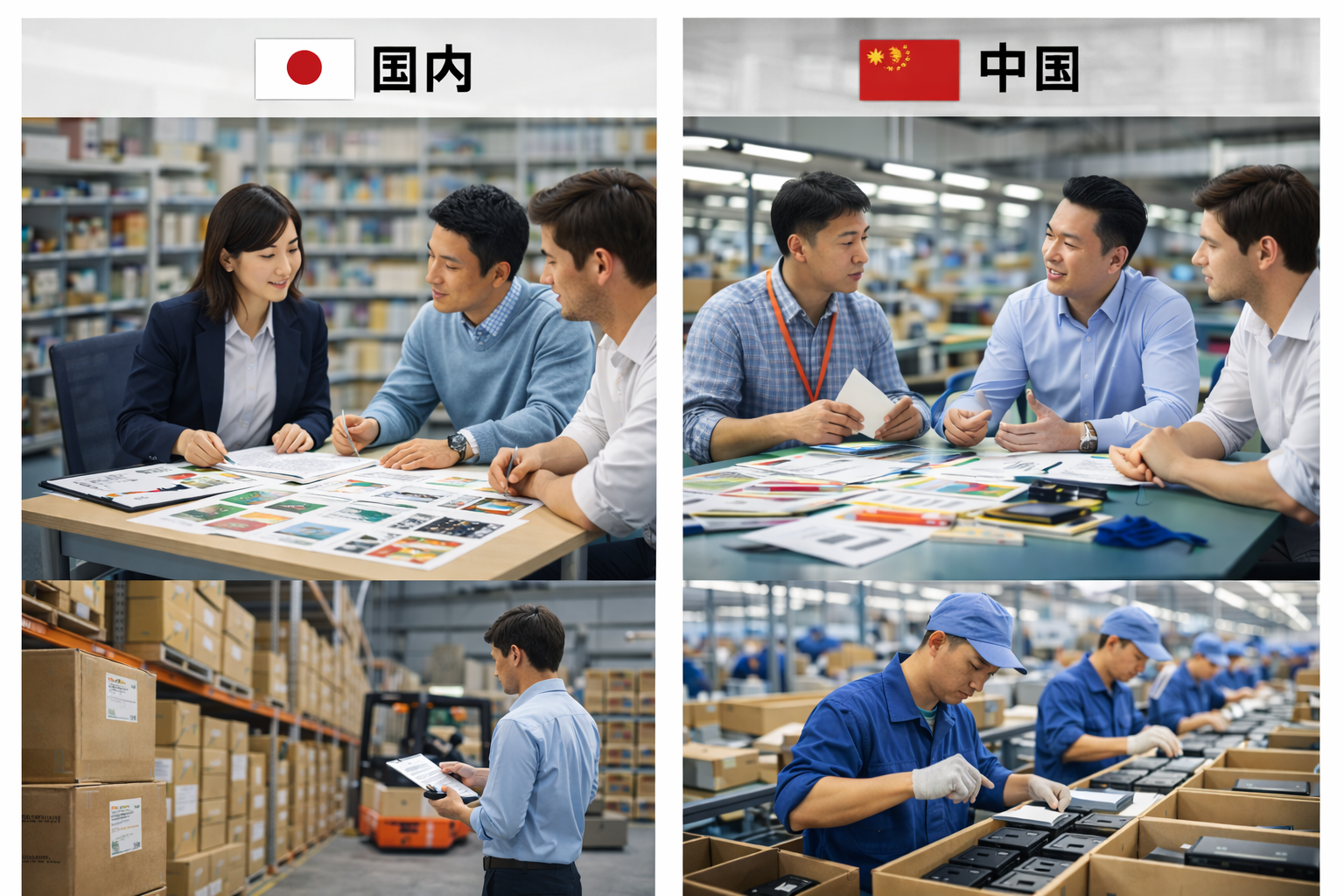
First, let's outline the role of each procurement method.
・The Essence Of Domestic Sourcing
The strengths of domestic sourcing are the following three points:
・Clear transaction rules
・Low communication costs
・Quick resolution in case of issues
In other words, domestic sourcing prioritizes “stability” and “reproducibility.”
This is particularly true
・Early stages
・When cash flow is tight
・When you have limited experience
it is a highly rational choice.
・The Essence of Sourcing from China
On the other hand, the strengths of sourcing from China are as follows:
・You can set the cost yourself
・You can adjust everything from specifications and materials to packaging
・Wide scope for differentiation
In other words, sourcing from China is a strategy that prioritizes “control” and “scalability.”
However, this also means
・Responsibility for decision-making
・Management workload
・Dealing with unforeseen issues
all fall back on you.
When to Choose Domestic Sourcing
① When you haven't yet been able to articulate why your product sells
・Why is it selling?
・Who is buying it?
・What is the deciding factor?
Until you've sorted these out, sourcing domestically is by far the safer option.
Sourcing from China should be about“reinforcing what you already know,” not “taking a gamble on the unknown.”
② When you don't have much cash flow
Domestic sourcing allows for:
・Small batches
・Short lead times
・Fast inventory turnover
In a phase where cash flow tends to get tight, ensuring cash flow is more important than profit margins.
If you choose to source from China at this stage, you're likely to end up in a situation where “you can produce cheaply but the cash doesn't come back.”
③ When you can't handle troubleshooting on your own
・Quality issues
・Delivery delays
・Specification discrepancies
When these issues arise, domestic sourcing allows for corrections.
With Chinese sourcing, however, there is always the assumption that it takes more time and effort to make corrections.
When to Choose Sourcing from China
① When you reach a "limit" with domestic sourcing
The following situations are signs that you should consider sourcing from China.
・You can no longer win in price competition
・All products have started to look alike
・Profit margins are not growing beyond a certain point
This is not a problem with domestic sourcing, but a structural limitation.
Only at this stage does sourcing from China become a“proactive option.”
② When the area for improvement lies with the “manufacturer”
There is an important criterion for judgment.
Can the issue be resolved by switching suppliers
or
does it require changes to the manufacturing process?
- Want to change the size
- Want to change the material
- Want to change the packaging
There are limits to what can be achieved with domestic sourcing.
If the areas for improvement clearly lie on the manufacturing side, it's time to move to sourcing from China.
③ When you can treat problems as “within expectations”
When sourcing from China, issues will inevitably arise.
The key is whether you perceive them as “abnormal situations” or as “management items to be anticipated.”
・Include quality inspections
・Order in small batches
・Allow time for corrections
Once you can naturally think of these steps, you’ve reached the stage where you can handle sourcing from China.
The "Decisive Factors That Determine the Choice" Between Domestic and Chinese Sourcing
Let me summarize the key difference in a nutshell.
Domestic sourcing is “selective sourcing,” while sourcing from China is “decision-based sourcing.”
・Domestic sourcing: Choosing from available options
・Sourcing from China: You determine the specifications yourself
Whether you can take on the “responsibility to decide” is the biggest difference.
Common Mistakes People Make When Choosing
Common Mistakes in Domestic Sourcing
・Too safe to stand out
・No profit margin
・Unable to escape price competition
This doesn’t mean domestic sourcing is inherently bad; it simply means you’re using it at the wrong stage.
Common Pitfalls in Sourcing from China
・Moving to OEM too early
・Insufficient demand verification
・Underestimating management workload
This, too, is simply a matter of poor timing.
In Conclusion: The Correct Answer Is "Someone Who Can Adapt"
There is no single right answer to the question of whether sourcing domestically or from China is the better option.
There is one common trait among those who come closest to the right answer.
They are able to switch sourcing methods depending on the situation.
・Start with domestic sourcing
・Switch to sourcing from China once sales picks up
・Once sales stabilizes, use both
The more flexible you are, the less likely you are to fail at sourcing.
If you're currently struggling with the question of “which one to choose,” it's not a sign of indecision—it's a sign that you're ready to move to the next stage.
The key is to calmly assess which sourcing method is best suited for you right now.
If you can do that, both domestic and Chinese sourcing will become powerful tools for you.