Pick the right FBA business model
It's important to define your business model before you start sourcing because it will affect the kinds of suppliers you work with and your whole process.
Private Label (the most common type for FBA brands that can grow)
This means finding a product, putting your own brand on it and selling it in a listing that is different from others.
Best for: making more money and building a brand that will last.
Wholesale (selling well-known brands again)
You buy things from authorized brands or distributors and then sell them on listings that are already there.
Best for: getting started quickly but margins are lower and there is more competition.
Multipacks and bundles
You put together several items to make a new, one-of-a-kind SKU.
Best for: standing out without having to do a lot of product development (as long as you follow Amazon's bundling rules).
Tip: If your goal is to control pricing, margins and listing stability, private label is generally the most dependable long-term strategy.
Choose a product that won’t get you crushed
A good FBA product usually has the following traits:
• Long-lasting: few chances of defects and returns • Small and light helps keep FBA and shipping costs down
- Easy to use cuts down on the number of questions and support requests from customers
• Few rules and regulations: this is especially important for beginners
- Easy to tell apart: can be improved, bundled or made better with better packaging
Avoid at the beginning
• High-risk groups, like baby products, medical supplies or safety gear
• Advanced electronics: unless you know how to test and get certified
• Fragile goods: things that are likely to get damaged or break
- Copycat products are things that look like branded designs in a clear way, which can cause problems with intellectual property.
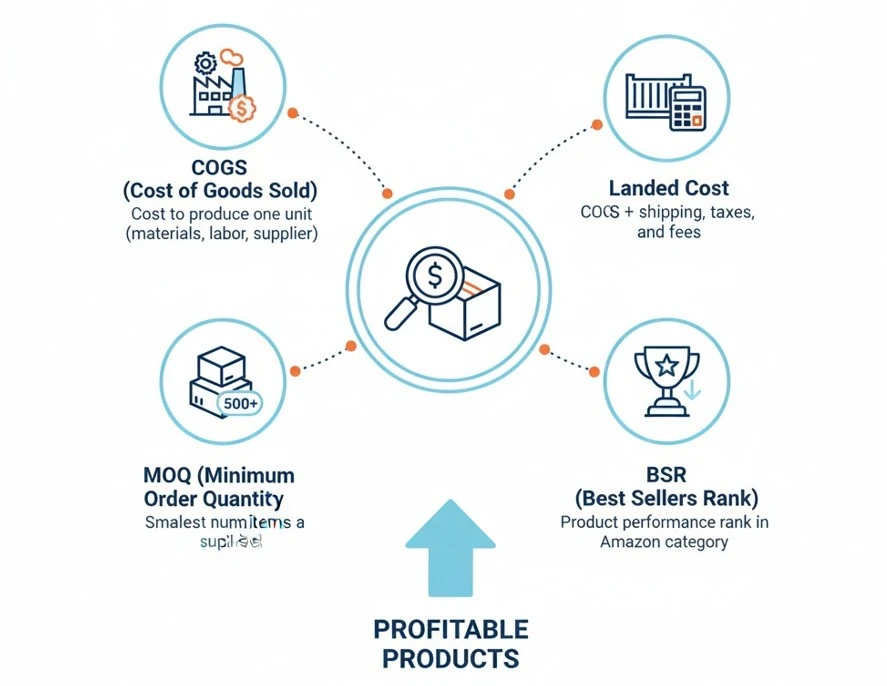
Run the math first: landed cost + FBA fees
Before asking for samples, you should think about how much money you could make.
Most of the time, your actual costs will include:
• The price per unit from the supplier
• Costs of packaging (custom boxes, inserts and instruction manuals)
• Shipping within China (from the supplier to the warehouse)
• Shipping to other countries (by air, sea, or express)
• Taxes and duties on imports (depending on the country of destination)
• Getting ready and putting on labels (FNSKU labels, poly bags, bubble wrap, etc.)
• Fees from Amazon, such as referral fees, FBA fulfilment and storage
If your margins only make sense when everything goes perfectly, the product probably won't do well.
Always add a buffer to cover any unexpected cost increases.
Where to source products for Amazon FBA
Option A: Alibaba (best for most beginners)
Benefits
• The suppliers have exporting experience.
• In general, communication in English is more fluid.
• Documentation and payment procedures are simpler.
Drawbacks:
• Compared to local Chinese sourcing sites, prices are frequently higher
.Option B: 1688 (often cheaper but needs local support)
Benefits
• Availability of local Chinese prices
• An extensive selection of products
Drawbacks:
• Difficulties with domestic shipping, local payment methods and language barriers
• Usually calls for a purchasing service/sourcing agent.
Option C: Trade shows (best for serious scaling)
• Exhibitions and trade displays, including the Canton Fair, Global Sources fairs and other business gatherings
Benefits
- Facilitates supplier verification and evaluation
- Offers more robust negotiation opportunities
Drawbacks:
• Needs a substantial time and travel commitment
How to shortlist reliable suppliers (FBA-first)
Reach out to ten to twenty private label providers, then select the top three to five.
Important supplier verifications for FBA:
• The capacity to appropriately add manufacturer barcodes or FNSKU labels
• The capacity to adhere to packaging regulations, such as carton limitations, suffocation labels and poly bag warnings
• Dependable quality control procedures and readiness to permit inspections
• Clearly stated lead times and pricing based on order numbers
• Have shipping experience with your intended market
Important warning indicators:
• General or unclear answers such as "no problem" without verifying details
• Significantly lower prices than the going rate (potential bait-and-switch)
• Payment pressure prior to confirming product details
• Refusing to permit inspections prior to shipment
Send an FBA-specific RFQ (copy/paste template)
Template for a message:
• Product: [name + image or link]
• Quantity of planned order: [e.g., 300 units]
• Differences: [colors, sizes, etc.]
• Materials and specifications: [specific needs]
• Branding: [packaging, inserts, logo]
• Requirements for FBA preparation:
Each unit has a FNSKU label (or UPC, depending on your option).
If necessary, poly bagging with a suffocation warning label
- Carton parameters (weight and dimension restrictions) and carton labeling
- Bundling with a "Sold as set" label, if applicable
• Request for quote: Unit pricing for various numbers (300, 500 and 1000 units)
- The MOQ or minimum order quantity
- Sample price and delivery schedule
- Lead time for production
- Costs of packaging
- Terms of payment
- Verify if pre-shipment inspection is permitted
Advice: Reputable vendors typically provide well-structured responses and may probe further to elucidate your needs.
Samples: test like an Amazon buyer
Purchase samples from two or three different vendors, then thoroughly examine them.
Verify the following:
• The overall performance and durability of the product
• Finishing quality (scratches, print alignment, odor, adhesive problems, etc.)
• Uniformity across several sample units
• Durability of packaging, including simple drop testing
• The simplicity and precision of applying labels
Advanced advice: After paying the deposit but before full manufacturing starts, request a Pre-manufacturing Sample (PPS).
By doing this, circumstances where sample quality is high but mass production quality is poor will be avoided.
Lock specs in a Purchase Order (PO)
Make sure everything is properly recorded in your purchase order (PO) and never rely solely on chat interactions.
Add the following information:
• Details of the finished product, such as size and materials
• The authorized sample's reference (picture and product code)
• Specifications for packaging and insert information
• Instructions for labeling (FNSKU, carton marks, safety warnings, etc.)
• Order quantity, including the percentage of allowable overage or shortage
• Inspection requirements, stating that approval is necessary prior to final payment
• The agreed-upon shipping date and production schedule
• Terms and conditions of payment
• Incoterms, such as DDP, FOB and EXW
Important point: To prevent misunderstandings during production and shipping, your PO should be clear and comprehensive.
Quality control (QC) that protects your listing
For FBA sellers, QC is not optional.
Minimum standard
Defined pre-shipment inspection (PSI) before final payment
This catches defects before goods leave the factory.
Recommended for larger orders
• When conducting a production inspection (DPI):
• Defect categorization combined with random sampling:
• If applicable, functional testing
The following should be included in the inspection report:
• Photographic and video proof
• A summary of the flaws found
• Examining labeling and package compliance
• Verification of carton weight and dimensions
Make the shipment FBA-ready (avoid Amazon rejections)
If the packing or labeling does not match Amazon's requirements, it may reject incoming goods. Important prerequisites frequently consist of:
• Appropriate labels for product identification (FNSKU or UPC)
• When appropriate, poly bagging with suffocation warnings
• Packaging that protects delicate goods, such as "Fragile" labels and bubble wrap
• Adherence to carton size restrictions and accurate labeling
• Bundles that are distinctly identified as a single set of FBA prep choices consist of:
## Leaving preparation to the supplier (reliable only if they are dependable and knowledgeable)
• Making use of a third-party prep facility, which is frequently the safest choice
• Overseeing preparation using an internal staff or your own warehouse
Advice: To reduce potential hazards when working with a new supplier, it is best to employ a prep center for your initial shipment.
Shipping strategy: DDP vs FOB for FBA
DDP (Delivered Duty Paid)
Benefits
• Simple "door-to-door" price, which frequently incorporates taxes and charges
- Less administrative work, which makes it simpler for invoices
Drawbacks:
• Reliance on the supplier's quote due to a lack of awareness into actual prices
• Details need to be carefully confirmed because not all "DDP" arrangements are comprehensive.
- FOB (Free On Board) + your forwarder
Benefits
• Increased cost, process visibility and control
• Easier to assess and contrast freight and shipping choices
Drawbacks:
• Needs more direct supervision and coordination.
Easy method for beginners:
DDP to your warehouse or a prep facility, then ship to Amazon.
FOB + a reliable forwarder + scheduled inventory cycles is the scale strategy.
Avoid the most common FBA sourcing mistakes
•Ignoring shipping and FBA fees until after the order is placed.
•Skipping inspections to "save money"
•Purchasing an excessive amount of inventory initially
•Allowing suppliers to choose packaging on their own
•Failing to estimate the lead time for reorders (stockouts need costly air delivery)
•Selecting goods that pose a danger to intellectual property and compliance
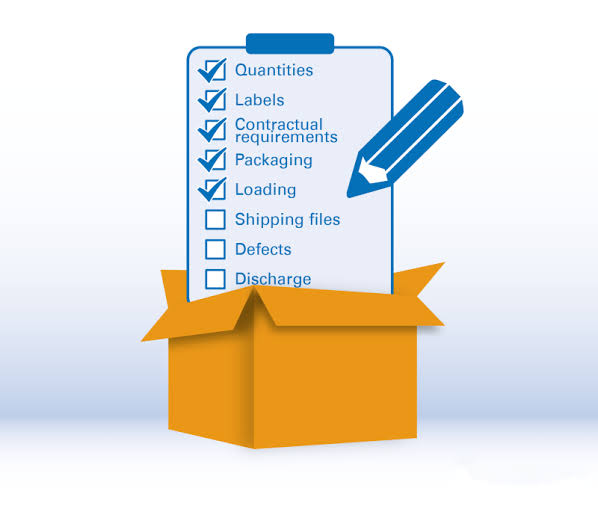
Quick checklist: sourcing for Amazon FBA
Verify the degree of competition and product demand.
• Determine the entire cost of landing and Amazon fees, accounting for a safety margin.
• After contacting ten to twenty vendors, select three to five qualified applicants.
• Buy products from two to three chosen vendors.
• Verify FBA labelling and package specifications beforehand.
• Send out a purchase order that includes all specifications and an authorized sample reference.
• Before releasing the final payment, perform a pre-shipment inspection.
• Decide whether to ship via DDP or FOB with a freight forwarder.
• Verify that the labels and cartons adhere to FBA regulations.
• To avoid stock shortages, plan your restocking program in advance.
FAQ
How many units do I need to order for my first FBA shipment?
Usually, 200 to 500 units is a good starting point, but this can change based on the price of the product and how many people are likely to want it. The goal is to test the market while keeping the risk low.
Is it okay to get things from 1688 for FBA?
Yes, it can lower prices, but it is harder to run. A lot of sellers like to use a sourcing agent to buy from 1688, combine products and check their quality.
Do you need certifications?
It depends on what kind of product it is and where you want to sell it. Some categories, like electronics, children's products and things that touch the skin, need to be tested or certified for compliance.