


Summary of this article:Whether you run an online boutique, a physical store, sell on marketplaces, or source blanks for customisation, purchasing apparel in bulk is one of the best methods to start or expand a fashion business. Knowing where to get products, how to assess suppliers, and how to figure out total expenses to prevent unsold stock are all critical to success. From choosing a niche to placing your first order and creating a reliable supply chain, this comprehensive guide walks you through every step of the process.
Decide what type of wholesale clothing you need
You must have a clear understanding of your business model before contacting vendors. "Wholesale clothing" can refer to a variety of sourcing methods:
Boutique wholesale (ready-to-sell fashion)
•Styles that follow trends and are regularly updated
•Lower minimum order quantities (often sold in packs)
•Perfect for fast product testing and boutiques
Manufacturer wholesale (factory production)
•Greater profit margins on scale
•There are private label and customization choices.
•Fit for creating a lasting brand
Private label / OEM / ODM
•Your own labels, packaging, and branding
•Custom patterns or designs may be included.
•Stronger planning and quality control are necessary.
•Ideal for building a brand
Blanks / basics (for printing or embroidery)
•Repeatable colors and sizes and standardized styles
•Perfect for merchants and providers of uniforms
Pro tip: define your key requirements first
•The target consumer's age, style, and budget
•Fabric preference (cotton, blends, polyester, etc.)
•Size range and fit inclusivity
•Minimum order quantity (budget-based)
•Expected delivery time
Choose the best places to buy wholesale clothing
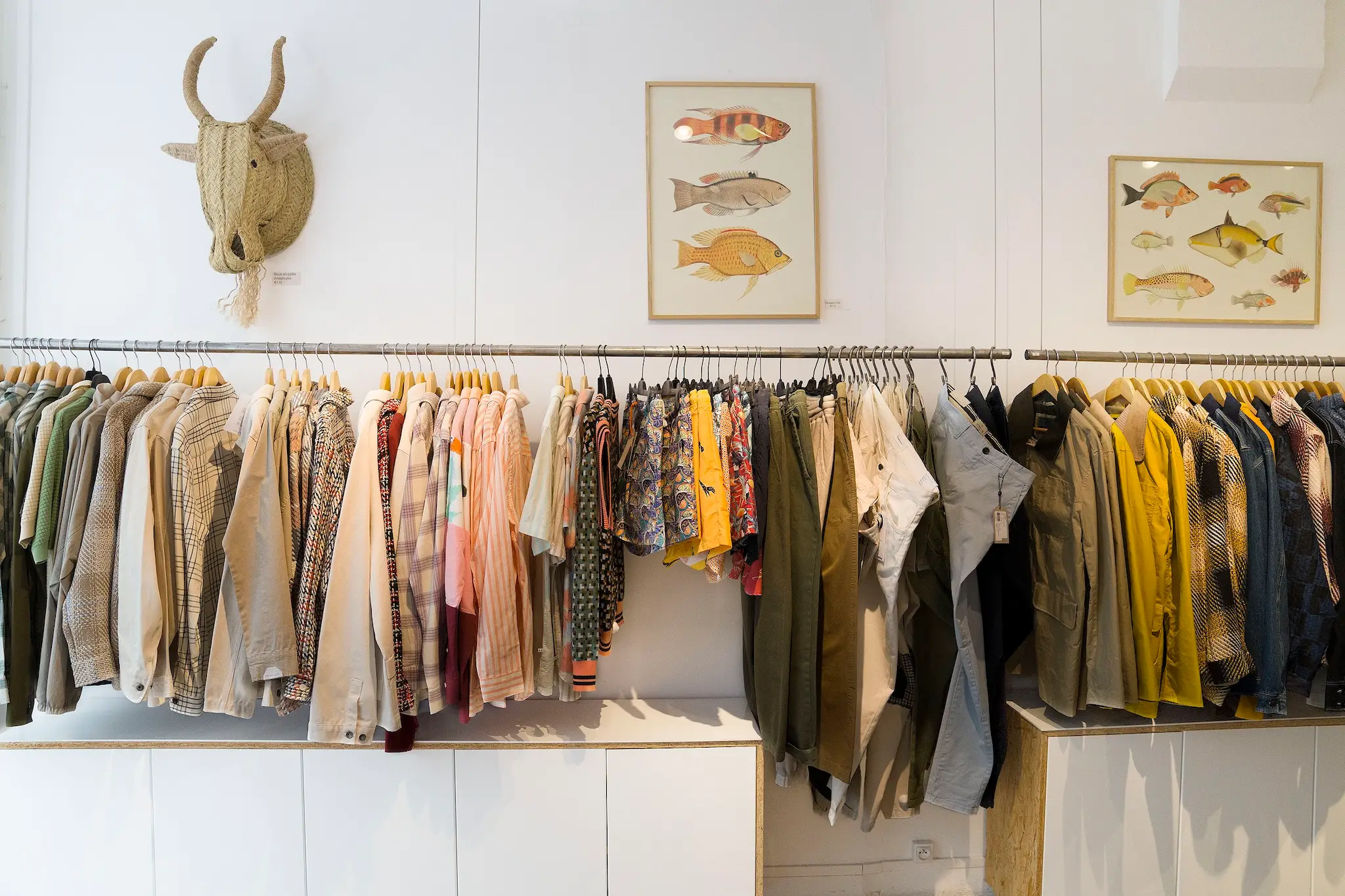
A) Domestic wholesale platforms (fast delivery, simpler process)
Ideal for novices and small business owners who need to refill quickly Examples: Faire, Tundra, Abound, Handshake (varies by region)
Pros:
•Faster shipping and communication
•Easier returns and logistics
Cons:
•Higher unit prices than overseas sourcing
B) Global B2B marketplaces (wide sourcing options)
Best for comparing suppliers and sourcing internationally Examples: Alibaba, Global Sources, Made-in-China
Pros:
•Large supplier variety
•Customization opportunities
Cons:
•Quality inconsistency: samples and verification are necessary
C) Fashion trade shows and wholesale markets (high trust sourcing)
Best for boutiques and trend discovery Examples: MAGIC (US), apparel trade fairs
Pros:
•Inspect products in person
•Build direct relationships with suppliers
Cons:
•Travel and time costs
D) Local garment districts and distributors
Best for quick replenishment and physical inspection
Search: “wholesale clothing district + your city”
Pros:
•Hands-on quality checking
•Easy reordering
Cons:
•Limited product uniqueness
E) Direct factory sourcing (highest margins at scale)
Best for private label and long-term production
Pros:
•Lower cost per unit at scale.
Cons:
•Higher MOQs and longer production timelines
Understand wholesale clothing pricing structures
Wholesale clothing pricing usually follows these models:
•Per unit price (e.g., $6 per T-shirt)
•Pack pricing (pre-set size or color bundles)
•Tiered pricing (discounts for larger orders)
•FOB vs DDP pricing (different shipping responsibilities)
Always calculate landed cost:
Landed cost = product cost + local shipping + international freight + customs/taxes + packaging + QC fees
A low unit price can become expensive once logistics and duties are included, especially for bulky garments.
Vet wholesale clothing suppliers (essential step)
Clothing quality can vary significantly between batches, so supplier screening is critical.
Supplier verification checklist
•Manufacturer or trading company?
•Can they provide real production photos/videos?
•Do they offer detailed sizing charts and fabric specs?
•Can they show past order examples or references?
•Do they support sampling?
•What is their return/defect policy?
Product quality checklist (for samples)
•Fabric texture, thickness, and GSM
•Stitching strength and finishing quality
•Color consistency under different lighting
•Shrinkage after washing tests
•Size accuracy across all sizes
•Label and packaging quality (for private label)
•Expert advice
Expert Advice:
Always test garments on real people or mannequins. Many returns come from poor fit, not design issues.
Order samples strategically
Instead of relying on one supplier, use a comparison approach:
•Select 5–10 suppliers
•Request samples from 3–5 of them
•Evaluation:
•Quality
•Fit accuracy
•Packaging
•Communication speed
•Total landed cost
•Choose the best supplier and place a small test order
Speed and responsiveness also indicate supplier reliability.
Understand MOQs, size runs, and color options
MOQs (minimum order quantities) may apply to:
•Each style
•Each color
•Each size
•Or per pre-packed bundle
Examples:
•100 units per style, minimum 20 per color
•Mixed size packs like S/M/L/XL distributions
To reduce risk, request:
•Mixed size packs
•Multiple colors in one order
•Small initial trial quantities
Select shipping terms and logistics method
Clarify Incoterms before placing orders:
•EXW: buyer handles full logistics
•FOB: supplier delivers to port, buyer manages shipping
•CIF: supplier covers freight to destination port
•DDP: supplier handles delivery and customs (simplest option)
Shipping methods:
•Air freight: fast but costly (best for samples/small batches)
•Sea freight: cheaper for bulk orders
•Courier: suitable for small shipments but expensive at scale
Always confirm carton size and weight due to volumetric pricing.
Implement quality control (QC) before scaling
Variations between batches might occur even from reputable vendors.
Minimum QC standards:
•An acceptable rate of defects, such as less than 2%
•Tolerance for measurements (±1-2 cm, depending on item)
•Standards for color constancy
•Requirements for packaging (tags, polybags, barcodes)
For larger orders:
•Pre-shipment checks by third parties
•Production-stage inspections
•Random sampling based on AQL
Build a smart buying strategy to avoid excess stock
One of the biggest risks in wholesale fashion is overbuying.
Effective strategy:
•Start Start with a wider range of sizes but fewer styles. Reorder popular items as soon as possible.
•Monitor sales results each week.
•Use small batches to test new trends.
Simple reorder rule:
•If a product sells 70% within 2–3 weeks → reorder
•If it sells under 30% within 4–6 weeks → discount and discontinue
Supplier outreach message (copy/paste)
Hi [Supplier Name], I’m interested in your wholesale clothing products. Please provide:
•MOQ per style/color/size (and whether mixed sizes are allowed)
•Pricing for 50 / 200 / 500 units (including pack options)
•Fabric composition and full sizing chart (in cm)
•Sample cost and shipping cost to [Country/City]
•Sample and bulk production lead times
•Packaging details and carton dimensions/weight
•Shipping terms (EXW/FOB/DDP) and recommendations
•Return/defect policy and quality handling process
Kindly also share real product photos or videos (not only catalog images). Thank you.
FAQ: how to buy wholesale clothing
Do I need a business license to buy wholesale clothing?
While many foreign vendors do not demand it, some domestic suppliers do. Proper shipping and business information is still required, though.
Is boutique wholesale better than factory sourcing?
For novices, boutique wholesale is simpler and less risky. Once demand is established, factory sourcing is preferable for scalability and brand development.
How can I avoid sizing problems?
Always refer to sizing charts, ask for samples, perform wash tests, and make sure product lists provide precise measurements.
What is the most common mistake beginners make?
Purchasing an excessive number of unproven styles. Start small, gauge demand, and then scale in accordance with actual sales data.
Conclusion
Developing a repeatable sourcing system is essential to learning how to purchase apparel in bulk: 1. Identify your target market and niche. 2. Choose the appropriate channel for sourcing 3. Examine vendors and request samples 4. Determine the actual landed cost 5. Start small and use sales and quality control data to grow.