


Summary of this article:One key point to pay special attention to when sourcing from China is the "differences in sizing between Japan and China." Overlooking this could lead to returns or customer complaints. In this article, we’ll provide a detailed explanation of Chinese clothing and shoe sizing standards, as well as key points to keep in mind when selling these products.
About Clothing Sizes in China

Clothing sizes in China are similar to those in Japan, so they often seem the same.
However, in reality, they are often different.
If you assume the sizes are the same and proceed with sales, you’ll end up dealing with complaints and returns from buyers.
Make sure to familiarize yourself in advance with how Chinese clothing size labels differ from Japanese ones.
① Chinese Clothing Size Labels
China has a standard sizing specification known as the "GB Standard."
In addition to the GB standard, Chinese clothing sizes are also labeled as M, L, and so on.
Sometimes only one is listed, and other times both are listed.
Let’s check the conversion chart between the GB standard and standard sizing.
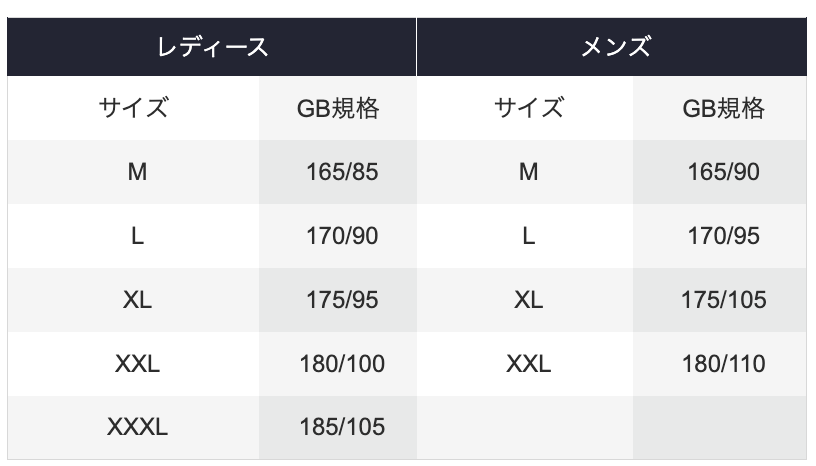
In the case of the GB standard, sizes may be listed as 160–165 (height)/84–86 (chest circumference).
② Japanese Clothing Size Notations
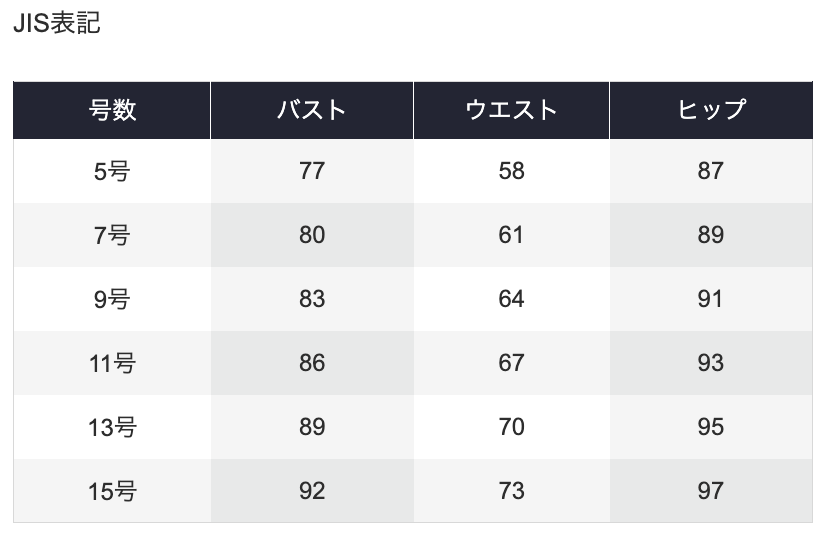
In Japan, the "JIS standard" serves as the standard for clothing sizes.
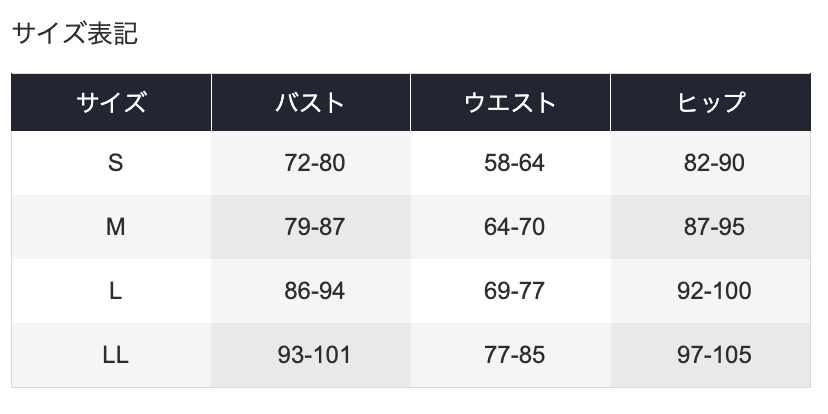
Sizes are often indicated as "No." or "S" and "M," right?
In reality, sizes are divided into more detailed categories based on height and hip measurements, but for simplicity, we’ll use the standard body type range of 154–162 cm for our examples.
③ Comparison Chart
Let’s compare Chinese sizes with Japanese sizes.
We’ll look at women’s sizes.
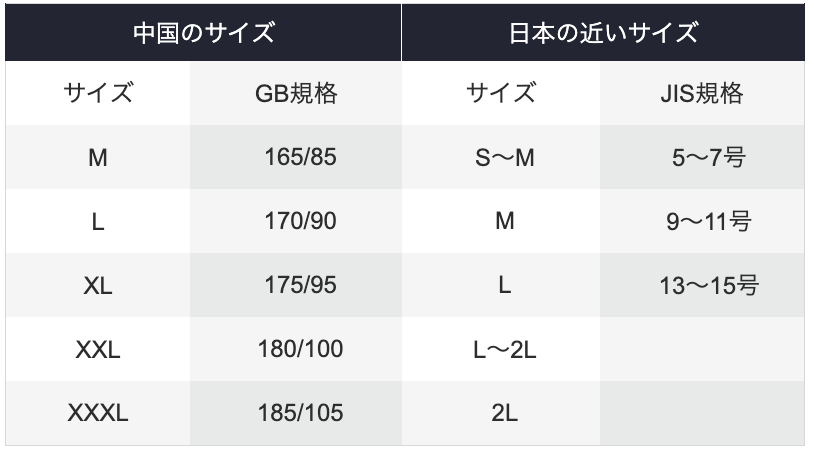
As you can see, Chinese sizes differ slightly from Japanese ones.
If you order based on Chinese sizing standards, you may find that the clothes don’t fit properly.
Chinese size labels are one size larger than Japanese size labels.
For example, it’s helpful to remember that a Chinese size L is equivalent to a Japanese size M.
Also, when selling, indicating that the items are made slightly larger than Japanese sizes can help prevent issues before they arise.
It is even better to clearly state the intended height, chest circumference, and length for each product.
If you have samples you’ve ordered in advance, measuring them yourself will give you a more accurate idea.
It is also important to place this information in a prominent location on the product page.
About Shoe Sizes
China is also a major producer of shoes sold all over the world.
However, did you know that shoe size labeling varies from country to country?
Let’s cover some key points that will be useful when sourcing from China or providing accurate information to buyers.
① Shoe Size Labels in China
Shoe sizes in China are not labeled in centimeters. Basically, they follow the system below.

② Japanese Shoe Sizing

Japanese shoe sizes are listed in centimeters (cm).
③ Comparison Chart
Let’s compare Chinese and Japanese sizes.
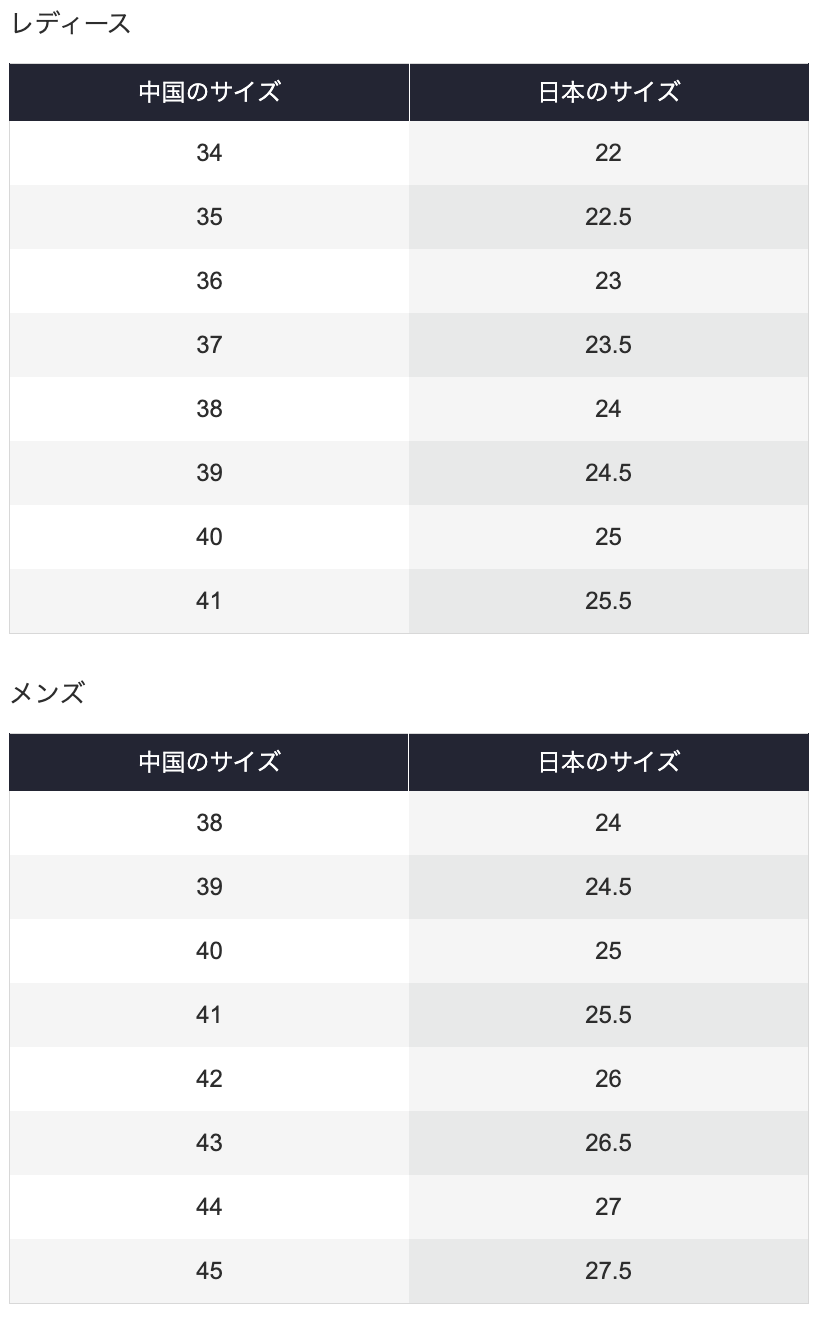
It’s very handy to save this comparison chart.
I’ve also included a simple conversion guide from Chinese sizes to Japanese sizes.
〜〜〜〜〜〜〜〜〜〜〜〜〜〜〜〜〜〜
Chinese Size → Japanese Size
(Chinese size + 10) ÷ 2 = Japanese size
Example: (Chinese size 34 + 10) ÷ 2 = Japanese size 22 cm
〜〜〜〜〜〜〜〜〜〜〜〜〜〜〜〜〜〜
When selling shoes, if you ship the product without any explanation,
buyers may be confused by the unfamiliar sizing notation, which can lead to complaints or returns.
By clearly stating that sizing conventions differ between China, other countries, and Japan, and indicating the approximate equivalent in centimeters, buyers can make purchases with peace of mind.
Points to Note Regarding Size Labels When Importing and Selling Clothing from China
① China's "GB standards" are labeled differently from Japan's "JIS standards."
② Chinese sizes are generally one size larger than Japanese sizes.
③ When selling, clearly indicate height, chest circumference, and length in an easily visible location.
Points to Note Regarding Size Labels When Importing and Selling Shoes from China
① Chinese shoe sizes are not listed in centimeters.
② (Chinese size + 10) ÷ 2 = Japanese size
③ When selling, clearly indicate the corresponding Japanese size.
Summary
People often think sourcing from China is difficult, but it’s actually very easy if you know the key points.
One of the appeals of this industry is that anyone can get started easily.
With this, you’ll be well on your way to successfully sourcing and selling products from China!
At hubbuyer, we wholeheartedly support the success of business owners as we work to grow the Chinese import business.
If you have any questions or concerns, please feel free to contact us at any time.
Leave your Alibaba and Taobao sourcing, as well as FBA direct shipping, to hubbuyer.