What is FBA and Why is China a Good Choice for China Sourcing?
Chinese suppliers have tons of FBA-friendly categories like: home, pets, beauty, toys, sporting goods, electronic accessories, kitchenwares etc.
•What this means for FBA sellers:
•Great prices and large supplier pools.
•Private labeling options available with custom packagings.
•MOQ flexibility and rapid product improvement cycles.
•Established factory designs that can be branded or bundled.
•The ability for a factory or agent to prep packaging and apply labels for Amazon.
What Amazon sellers should be aware of: Choose sourcing that supports Amazon's fees. Stay away from very bulky or fragile items or low profit margin items. These will eat up all your profit with FBA.
Amazon FBA Economics
Before you even think about products you will need to determine if any product will be able to survive a costly Amazon warehouse:
•Total Cost Components for FBA:
•Product cost, packaging, branding and shipping within China.
•Product inspection, international shipping, tariffs and taxes.
•Referral fee and FBA fulfillment fee.
•Receiving, labeling, inbound fees.
•Amazon ad cost, possible return costs, removal/disposal cost.
•Unit defect rates and currency exchange rate fluctuations.
Amazon FBA Profit Calculation:
Selling Price-Total Costs-Possible Return Cost = Real Profit
Selling price - landed cost - referral fee - fulfillment fee - storage cost - ad costs - return allowance = real profit
Warning: You must be able to predict the profit after taking into account any potential costs with Amazon advertising. Categories with high competition can have extremely high PPC costs-price defensively.
Good FBA product characteristics:
Selecting Smart Products for FBA:
•Clear customer demand and only moderate competition.
•Profitability after considering all costs.
•Relatively small size, light, not fragile and unlikely to have high return rates.
•Good quality control and not likely to have many compliance concerns.
•Regular ordering potential and potential for branding or bundling opportunities.
Categories to research further:
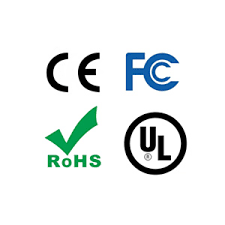
Batteries, certain electronics and wireless products, baby and kid products, toys, anything that comes into contact with food, cosmetics, medical-related claims, PPE, chemicals or products with copyrighted brands or patent designs will usually require more stringent testing and procedures, specific labeling or require special permission from Amazon. Remember, if you are selling on Amazon, it is your responsibility to make sure your products comply with local laws and regulations as well as Amazon’s individual product policies.
Finding FBA Products in China:
•Channel where it works best
•Alibaba English-speaking suppliers,private labeling possible, good for talking to factories directly.
•1688 less expensive, you will need sourcing agent for FBA packaging, inspection and bundling.
•Canton Fair/Trade Shows better for comparison, direct conversations with vendors and buyer/supplier relationship building.
•Wholesale markets (Yiwu, Guangzhou, Shenzhen etc.) Great for generic products, cheap gadgets and accessories as well as packaging.
•Sourcing agents help with negotiations, inspections, packaging, labeling and shipping.
Alibaba is the simplest and most common way for a new FBA seller to source for a product. If getting lower prices is the highest priority or you want to source a number of products together, then 1688 along with an agent can be a better way to source for FBA.
Supplier Due Diligence
Don't be fooled by good prices and fancy websites.
Before you place any order with a supplier:
•Verify the company name, address and expertise.
•Look for years of experience, factory videos and product pictures and export experience etc.
•Test the availability of the product and the communication ability of the supplier.
•Request for a sample and find out whether or not supplier will cooperate with an inspector.
•Test their packaging expertise, whether or not they can help prepare packaging and labeling for Amazon.
Key FBA Related Questions to Ask a Potential Supplier:
•Have you shipped to an FBA warehouse before?
•Will you be able to label FNSKU's and cartons correctly for me?
•Are you able to label Amazon's shipping cartons?
•Will you adhere to Amazon's packaging specifications?
•Can I use my own inspector at the factory?
•What happens if a shipment is not compliant upon inspection?
Few Red Flags To Avoid: evasive answers, not wanting to let you use an inspector, personal payment methods (like PayPal with their own name) sudden changes to the company name or pushing for quick payment.
Sample and Put It to an Amazon Customer Test
Amazon FBA samples shouldn't just be tested for functional and quality purposes but rather through the eyes of an Amazon shopper.
•Consider these qualities as you test your samples:
•Size, weight, color, materials and how it works.
•The feel, texture, smell and the packaging of the product.
•Whether labels and barcodes are applied correctly.
Ask yourself:
•Will a customer enjoy this product enough to leave a positive review?
•Is the packaging sturdy enough for shipping through the Amazon warehouse system?
•Are there any sharp points, fragile parts, chemical smells, poor construction or other safety issues?
•Does the sample resemble the pictures you will use on the Amazon listing?
It's significantly more cost-effective to reject a poor sample than to receive several bulk shipments of unsatisfactory goods and subsequently get bad reviews.
It's Your Product, Not Just a Branded One
Just slapping a logo on a product from a supplier might not be enough. Real customization comes from enhancing the overall offer to the customer:
•Providing better materials, useful accessories or more detailed instructions than others in the market.
•Using more robust packaging, more secure stitching or more accurate sizing or sturdier buckles.
•Including specific colors, bundles of products, special inserts, drawstring bags or unique finishes.
•When you start customizing, you open up to some risks such as: MOQ quantities, sample lead times, sample costs increment; production lead time prolongation; additional product defect complexities and a whole lot more.
Before agreeing to production, ensure you've confirmed the: MOQ, sample cost, logo format , packaging, color variation, defects resolutions and production lead times.
Note That: Do not approve mass production until your samples have been perfectly executed and customized.
Packaging and Labels for FBA
Amazon has specific labeling and packaging requirements. FBA shipments that aren't prepared correctly can be delayed or rejected at the warehouse and the necessary corrections will often fall back on you at a higher cost.
What You Need to Know about FBA Packaging and Labeling:
•All sellable units need to have a scannable barcodes (either manufacturer barcodes or FNSKU) in the correct position on the packaging.
•FNSKU labels need to match the designated SKU and be placed so they aren't covered by tape or poly bags.
•There might be a suffocation warning needed if the poly bags used are over 3 inches; check your marketplace's rules.
•You must provide appropriate protection for fragile products; bundled products need to be packaged together as one sellable unit.
•Each individual carton needs to have an FBA box ID label that you'll generate in Seller Central.
•All cartons must be rigid, six-sided boxes, with their flaps securely closed.
•Cartons must be within Amazon's designated size and weight limits.
•Assume your supplier has no knowledge of FBA packaging and labeling; provide them with clear, detailed instructions regarding the logo file format, packaging size/dimensions, SKU assignments and the quality of packaging to be used.
FBA Quality Control Before Shipping
Defective products which are detected while the product is still with the manufacturer could be way more cost effective. FBA warehouses are significantly more difficult and costly than detecting defects before it's shipped from the manufacturer's place. A flawed product that makes its way to an FBA warehouse can lead to negative reviews, high return rates, listing suspensions, account health warnings, removal fees and a ruined product launch.
FBA's Quality Control Inspection Checklist:
•Product quantity, visual appearance, size and function.
•Color, material, logo placement and quality packaging.
•Barcode accuracy, placement of FNSKU label and accuracy of any included bundles.
•User manual, accessories, carton markings, dimensions and total carton weight.
•The overall defect rate compared to AQL (acceptable quality level) classification (critical/major/minor).
•Double-check the carton's weight and dimensions to make sure they correspond to your shipment plan. Mismatched carton details can cause significant issues from the shipping line all the way down to the Amazon receiving dock.
If the product is deemed defective by the quality inspection, you can request rework, sorting, replacement, a discount on the products or a re-inspection before paying the supplier's outstanding balance.
How to Ship from China to Amazon FBA
Best Shipping Methods Include:
•Express courier sample orders, urgent top-up stock or small re-stocking orders.
•Air freight medium to large time-sensitive orders.
•Sea freight large orders, cost is minimized and can accommodate very large products.
•For DDP shipping, you'll pay one price but thoroughly vet documentation and compliance.
•With Amazon, the goods will be sent to a third-party logistics provider where they will either re-label, store or distribute items among multiple FBA warehouses.
When Shipping, Be Sure to Confirm:
•The shipment plan is completed and published in the Seller Central, with your assigned FBA warehouse information.
•Total carton count, carton dimensions, total carton weight and number of units per carton.
•You have all FBA box labels generated and are clear on any the palletization required and the importer record.
•All customs documents, duties and taxes are handled and payed; and you've scheduled delivery appointment times if necessary.
- Ensure estimated delivery time and adequate cargo insurance.
Don't forget that Amazon adds a significant fee for inbound placement which depends on the product size, shipping weight and assigned fulfillment center(s); factor this into your product's profitability. Don't wait until the product is finished to prepare your shipment; begin by understanding the logistics involved.
FBA Fees and Landed Cost Should Be Calculated Before Scaling
Amazon's FBA fees are constantly fluctuating. The average FBA fee per unit in the U.S. Rose by $0.08 last year and an extra 3.5% was added to cover fuel and logistics expenses on April 17, 2026.
Use the Amazon Revenue Calculator and visit the Seller Central fee pages.
Three Scenarios to Model Before Scaling:
•Best Case Minimal shipping fees, maximal selling price, minimal PPC spend, low returns.
•Realistic Case Average PPC, average return rate, average shipping fees.
•Worst Case Expensive shipping, minimal selling price, maximal PPC spend, minimal sell-through.
A slight shift in FBA fees can wipe out your margins, especially if you're selling a low-profit product. Including PPC and returns in your profit calculations is essential.
Inventory and Reordering Strategy
If you're selling through FBA, be prepared that your orders can take 60-80+ days to get to you (from production and quality inspection to international shipping, customs and receiving at Amazon). If you're only reordering when you are almost out of stock, you will always run out.
•When you're considering your inventory management strategy, you need to factor in:
•Daily sales velocity and the reorder point.
•Lead times from when you place your order to when it's actually at Amazon and ready to sell; production, international shipping and customs clearance all take time.
•How long it takes Amazon to receive and prepare your inventory and the seasonality of your product.
•The amount of safety stock you have available, your supplier's capacity and the capital you have on hand.
•Don't go by initial launch sales volume alone to make large reordering decisions. Base your reordering based on: actual sales data, search ranking, conversion rates, reviews, return rate and true profit margin.
The Biggest Mistakes FBA Sellers Make When Sourcing From China
•Sourcing a product without considering the Amazon fees first. A product might seem profitable at the supplier level but end up being an unprofitable money drain after fees, PPC spend and returns.
•Sourcing a bulky product without fully assessing dimensional weight costs, storage fees and fulfillment fees.
•Skipping or rushing the sample approval. Photos and videos simply aren't a good substitute for touching and physically testing a product as a customer would.
•Putting the responsibility for FBA packaging and labeling solely on the supplier. Always provide explicit instructions and confirm they were followed.
•Shipping items to Amazon without performing a quality check. Defective products in FBA warehouses are much harder and more expensive to deal with.
•Ignoring product compliance until Amazon demands documentation. You risk listing suspension or stranded inventory.
•Over-ordering to get a cheaper unit price, hoping they'll sell. This only works if they actually do.
•Not establishing a backup supplier network for a successful product.
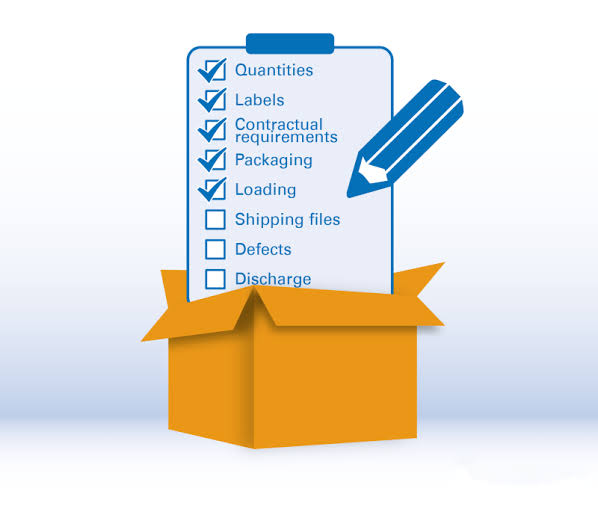
The Final FBA China Sourcing Checklist:
•Is the product profitable considering competition and its appeal? Is it restricted or too risky?
•Are FBA fees and total landed cost calculated?
•Have you sourced from multiple suppliers and vetted them?
•Have you approved your samples?
•Are you aware of all product compliance standards and requirements?
•Do you have detailed instructions on packaging, labeling and carton size and weight?
•Are your payment and inspection terms finalized with the supplier?
•Have you arranged a pre-shipment quality control inspection?
•Have you prepared your shipment plan, FBA box labels and scheduled delivery?
•Have you factored in PPC, returns and storage costs?
•Do you have a realistic reorder plan based on the full lead time to Amazon?
Conclusion
FBA sellers who consistently perform well aren't just looking for the cheapest supplier. They're committed to finding products that fit the FBA platform well, to rigorous supplier vetting and sample testing, to stringent quality control and preparation, to calculating true profit and to careful growth scaling based on real data.
Success on Amazon FBA goes beyond sourcing; it's about creating a well-oiled supply chain that delivers consistent quality, positive customer experiences, healthy account metrics and sustained profitability.