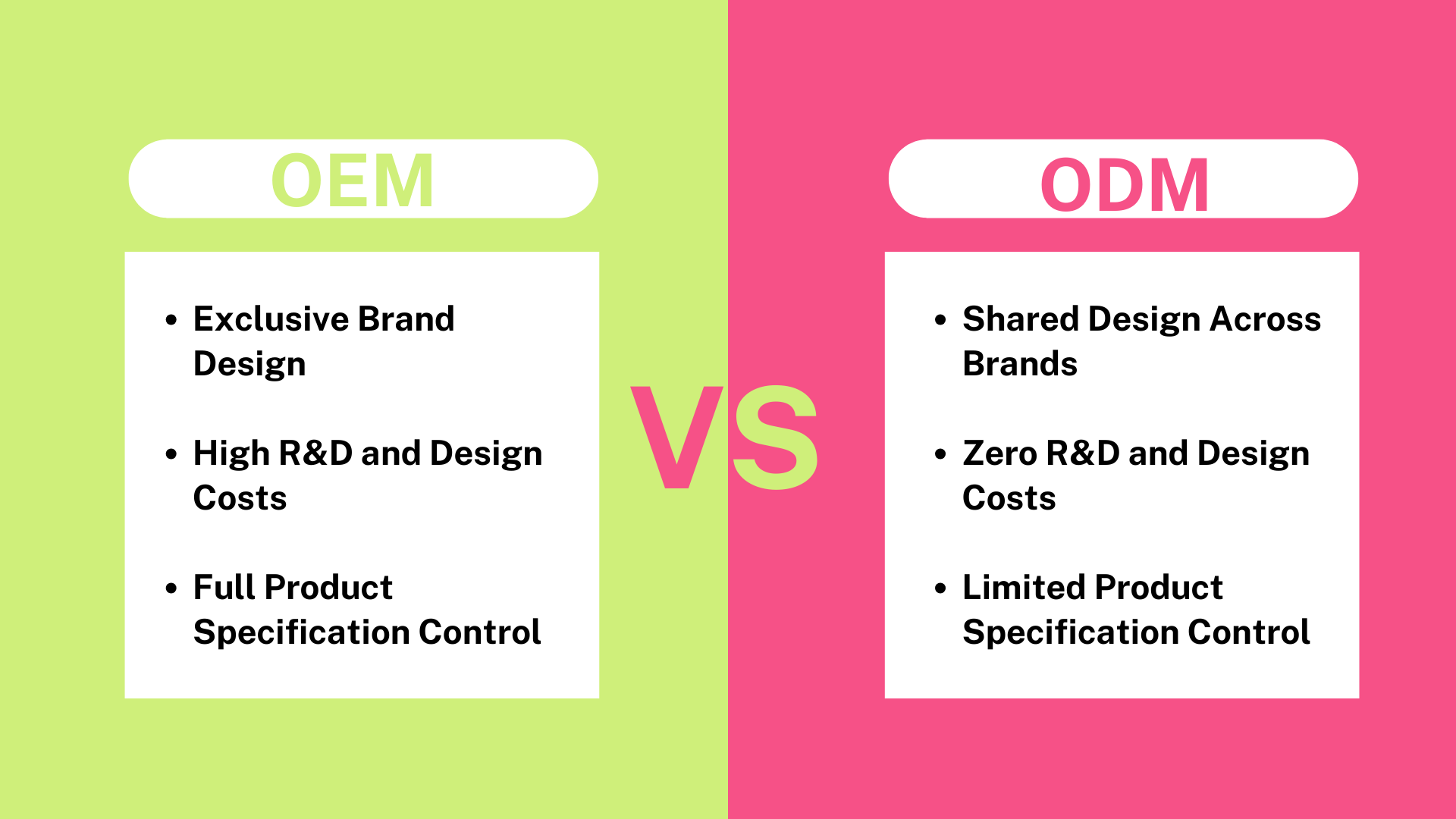
What does OEM mean?
OEM, or Original Equipment Manufacturer, means that the factory makes a product based on your plans or designs.
In an OEM project, you usually give:
●Design of the product, drawings, and sizes.
●Needs for materials.
●Performance standards and functional specs.
●Requirements for branding and packaging.
●Instructions for printing and placing the logo.
●QC standards and requirements for acceptance.
The main job of the factory is to
●Make things the way you want them.
●Help make production more feasible (DFM).
●Take charge of production, quality control, and delivery.
For example, you come up with a new kitchen tool, tell the factory what materials to use and how big it should be, and they make it for your brand.
What is ODM?
ODM stands for "Original Design Manufacturer." This means that the factory gives you a ready-made product design (or base model) that you can change to fit your brand.
In an ODM project, the factory usually owns:
●The first design
●Molds or tools
●Structure and technical drawings
You usually customize:
●Logo, colors and packaging
●Small changes to the design (details about the shape, materials, and accessories)
●Sometimes works, depending on the item
For example: The factory already makes a model of a blender. You put your brand on it, change the color and packaging and sell it as your own brand.
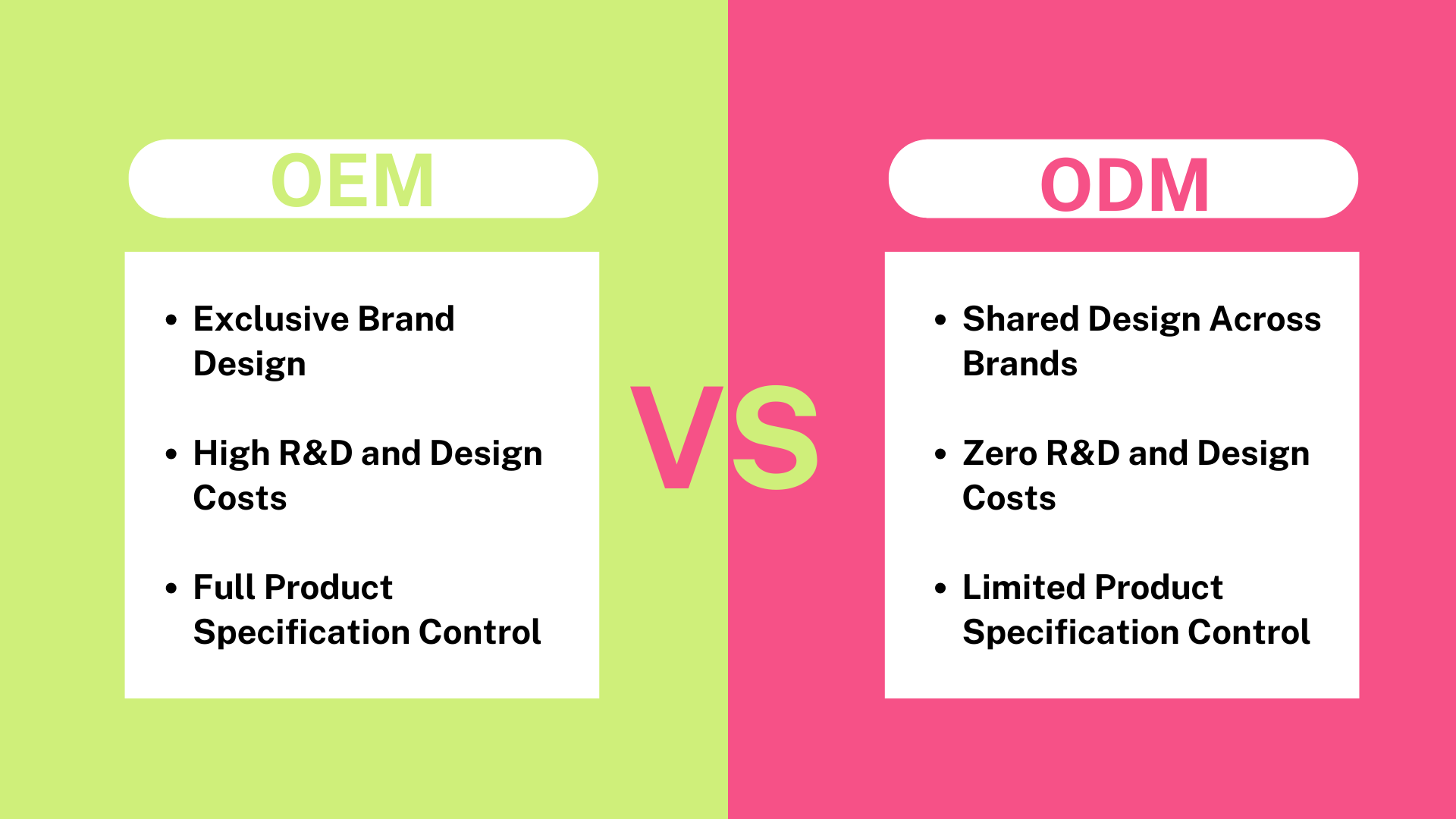
OEM vs ODM: Key Differences
| Aspect | OEM | ODM |
| Who owns the design? | You (or jointly, depending on contract) | Factory (usually) |
| Development time | Longer | Shorter |
| Upfront cost | Higher (molds, R&D, prototyping) | Lower (often existing molds) |
| Customization level | High | Medium to low (usually) |
| MOQ requirements | Often higher | Often lower or more flexible |
| Competitive differentiation | Stronger | Weaker (similar products exist) |
| Speed to market | Slower | Faster |
| IP risk | Lower if managed well | Higher (same base model may be sold to others) |
Pros and Cons of OEM
✅ OEM Advantages
1. More distinct differences.
2. You can make a one-of-a-kind product and not have to compete directly with "same product" companies.More power.
3. More control over the materials, features, tolerances, and user experience.
4. Long-term brand value: Unique products help keep prices high and customers loyal over time.
❌ OEM Disadvantages
4. More expensive to develop.
5. You might have to pay for molds, prototypes, changes to the design, and testing.A longer time frame.
6. OEM projects need to be approved, validated, and sampled.More responsibility for management.
7. You need to be very careful when you handle specs, testing, QC plans, and production risks.
Pros and Cons of ODM
✅ ODM Advantages
1. Quick start.
2. You can quickly start selling with a design you already have.Less money needed up front.
3. You don't usually need new molds (you make only small changes).
4. An easier process.There are fewer technical choices to make than when building from scratch.
❌ ODM Disadvantages
1. Not as unique
2. Other brands may sell similar things, which makes the competition tough.
3. You might not be able to make deep changes to the features.IP limits: You usually can't claim full ownership because the factory owns the design.
When to Choose OEM vs. ODM:
Choose ODM if you want:
●Quick time to market.
●Less money needed up front.
●To try out a type of product before expanding.
●A private label model with changes to the branding and packaging.
●Little to moderate customization.
Best for: e-commerce sellers just starting out, retailers trying out new lines, and seasonal product launches.
You can choose OEM in situations such as:
●A product that is really unique.
●More profit and the ability to set prices.
●Better protection for brands.
●Long-term plans for products and reorders.
●Custom materials, features or structure.
Best for: brands that want to grow their best-selling products, companies that want to build long-term product lines, and premium categories where differentiation is important.
What to Expect in Terms of Cost, MOQ and Timeline
The Typical Reality Of ODMs.
●MOQ: more flexible most of the time.
●Timeline: quick (with existing tools).
●Cost: lower at first, but the unit price may be higher than for large OEM volumes later on.
The Typical Reality Of OEMs.
●MOQ: usually higher.
●Timeline: longer (from design to prototype to sampling to pre-production to mass).
●Cost: higher at first (for molds, tools, and testing), but better long-term unit economics when scaling.
Tip: A lot of companies start with ODM to test a product and then switch to OEM once they know it works.
The IP and Contract Side (Very Important)
OEM IP points to check
●Who owns the molds and tools.
●Who has the rights to drawings and design files.
●If the factory can sell your goods to other people.
●NDA and non-compete clauses (if they can be enforced).
●What happens if you move factories?
ODM IP points to confirm.
●If you get exclusivity (which is rare unless you have a lot of sales).
●If the factory can sell the same model to other companies.
●If you can change the structure, not just the logo and packaging.
●Ownership of trademarks and packaging (you should own your brand assets).
Truth: With ODM, your best protection is often speed, marketing and building your brand, not design exclusivity.
A smart hybrid strategy is the best way to go.
This is the path that many successful businesses take:
1. Begin with ODM.
2. Start quickly, check to see if there is demand and find the best SKUs, then upgrade to "semi-OEM".
3. Make changes that matter, like using better materials, better packaging, adding accessories, and making functional upgrades.Move to full OEM.
4. Once sales are steady, spend money on molds and unique designs to make a product line that can stand up to competition.This method strikes a balance between speed and uniqueness.
Things to Avoid Making Mistakes About
●Thinking that OEM always means "fully custom" (sometimes it just means logo or packaging).
●Not writing down specifications (this makes mass production inconsistent).
●Not paying attention to testing and compliance needs.
●Paying for molds without having to own them.
●Thinking that ODM designs are only for you without a contract.
● Scaling before checking defect rates with test orders and quality control.
OEM vs. ODM: Frequently Asked Questions
Q1: Is it possible for a product to be both OEM and ODM?
Yes. Many suppliers sell ODM base models and let you make changes at the OEM level, which are often called "semi-OEM" or "customization."
Q2: Which is better for sellers on Amazon or Shopify?
If you want to go fast, start with ODM. If you want to stand out in the long run and make more money, go with OEM.
Q3: Do I need an agent to help me find OEM/ODM?
Not required, but useful, especially for checking suppliers, keeping track of specs, quality control, and communication during development.
Final Thoughts
OEM and ODM are two different ways that manufacturers can make things. Starting an ODM business is faster and cheaper. OEM is better for long-term brand value and differentiation. Your budget, timeline, and growth plan will help you choose the best option.