


Calculating international shipping quotes involves multiple factors, with the most common methods being weight-based and volume-based. Below is a detailed explanation of both approaches and the key elements to understand during the calculation process:
1. Calculating Shipping Costs by Weight
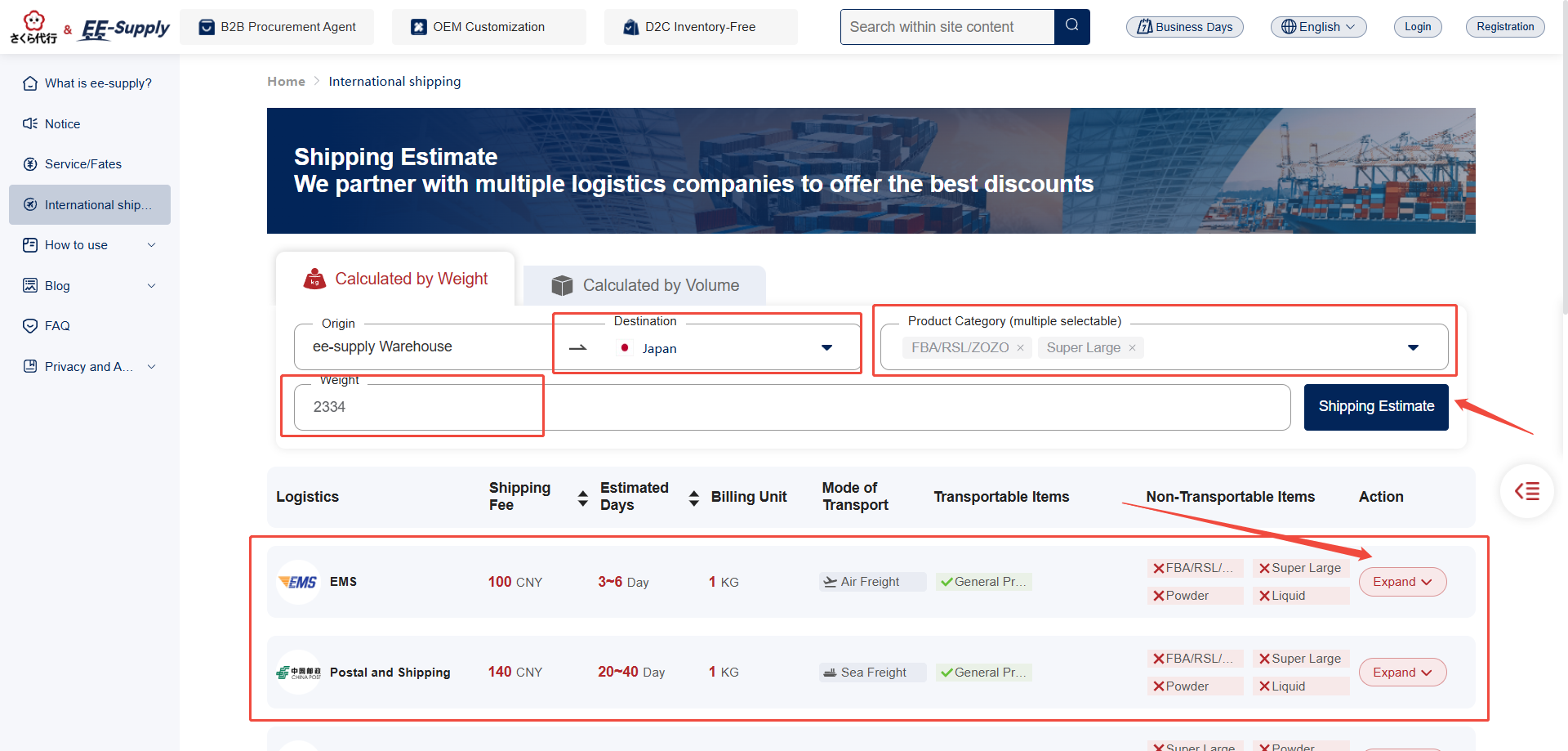
Calculate shipping costs based on the actual weight of the product. The typical calculation method is as follows:
Select Destination:
First, choose the destination country (e.g., Japan, South Korea, etc.), as shipping costs can vary significantly between countries.
Select the type of goods being shipped:
Different types of goods may be subject to varying logistics service restrictions and requirements. For example, some carriers may not accept hazardous materials or specific categories of goods.
Enter Actual Weight:
After selecting destination and item type, input the total actual weight of the goods. This weight includes packaging and does not refer to the item's net weight alone.
Shipping Cost Estimate:
After clicking the "Estimate Shipping Cost" button, the system will filter suitable logistics companies based on the actual weight and selected destination, providing the following information:
Shipping Company Information: Displays the names and logos of logistics companies that meet your requirements.
Shipping Cost: An estimated shipping fee calculated based on weight and the carrier's rate schedule.
Estimated Transit Time: The projected shipping duration, expressed in days or shipping cycles.
Shipping Method: Such as sea freight, air freight, etc., for customer comparison and selection.
Acceptable Item Categories: Lists the types of goods the carrier can transport.
Non-Shippable Categories: Items or categories prohibited from shipment.
Important Notes: Includes special requirements or restrictions that may arise during transit, such as insurance and packaging requirements.
View Logistics Details:
Customers can click on a specific logistics company to view more detailed cost breakdowns, package restrictions, transportable categories, and important notes.
2. Volume-Based Shipping Rates
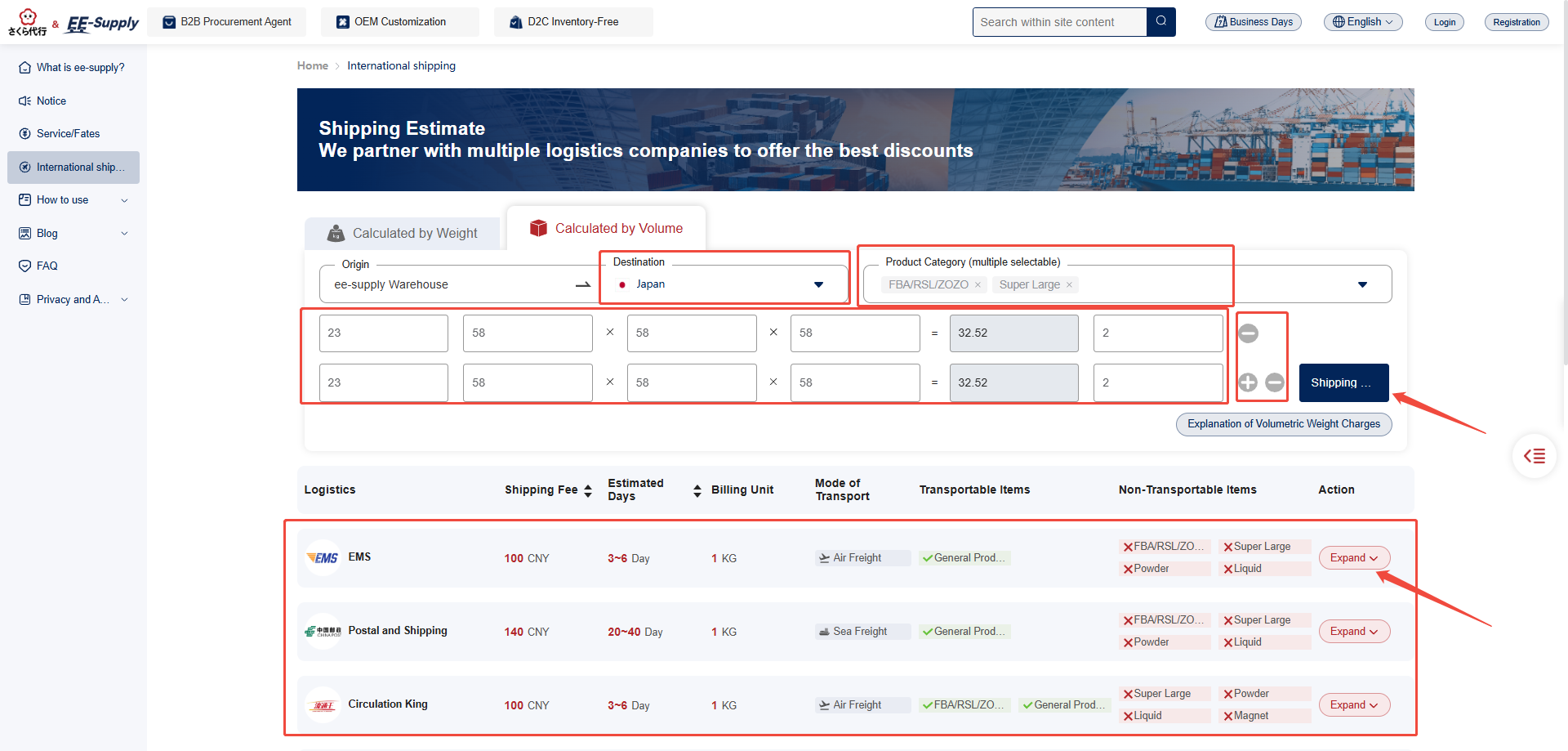
For certain goods, calculating shipping costs by volume may be more accurate, especially for items that are large in size but light in weight. The steps for volume-based shipping cost calculation are as follows:
Select destination:
Similar to weight-based calculation, choose the shipping destination.
Select shipping category:
Filter suitable carriers based on your product type.
Enter Actual Weight and Volume per Box:
Actual weight per box: Refers to the actual weight of each individual package.
Length, Width, Height: Enter the dimensions of each box in centimeters (cm).
Number of boxes: Enter the quantity of each packaging type. If you have multiple boxes of different sizes, click the "Add" button to continue adding boxes with different specifications.
Freight Estimate:
After completing the form, click "Freight Estimate." The system will automatically calculate logistics solutions that meet your requirements, including:
Carrier Name: Displays suitable logistics providers for your needs.
Shipping Cost: Estimated shipping cost calculated based on the volumetric weight of each box and the carrier's rate schedule.
Estimated Transit Days: The projected shipping duration.
Shipping Method: Examples include air freight, sea freight, etc.
Acceptable and Prohibited Items: Lists the types of goods that can and cannot be shipped.
Important Notes: Includes shipping requirements, packaging regulations, etc.
View Logistics Details:
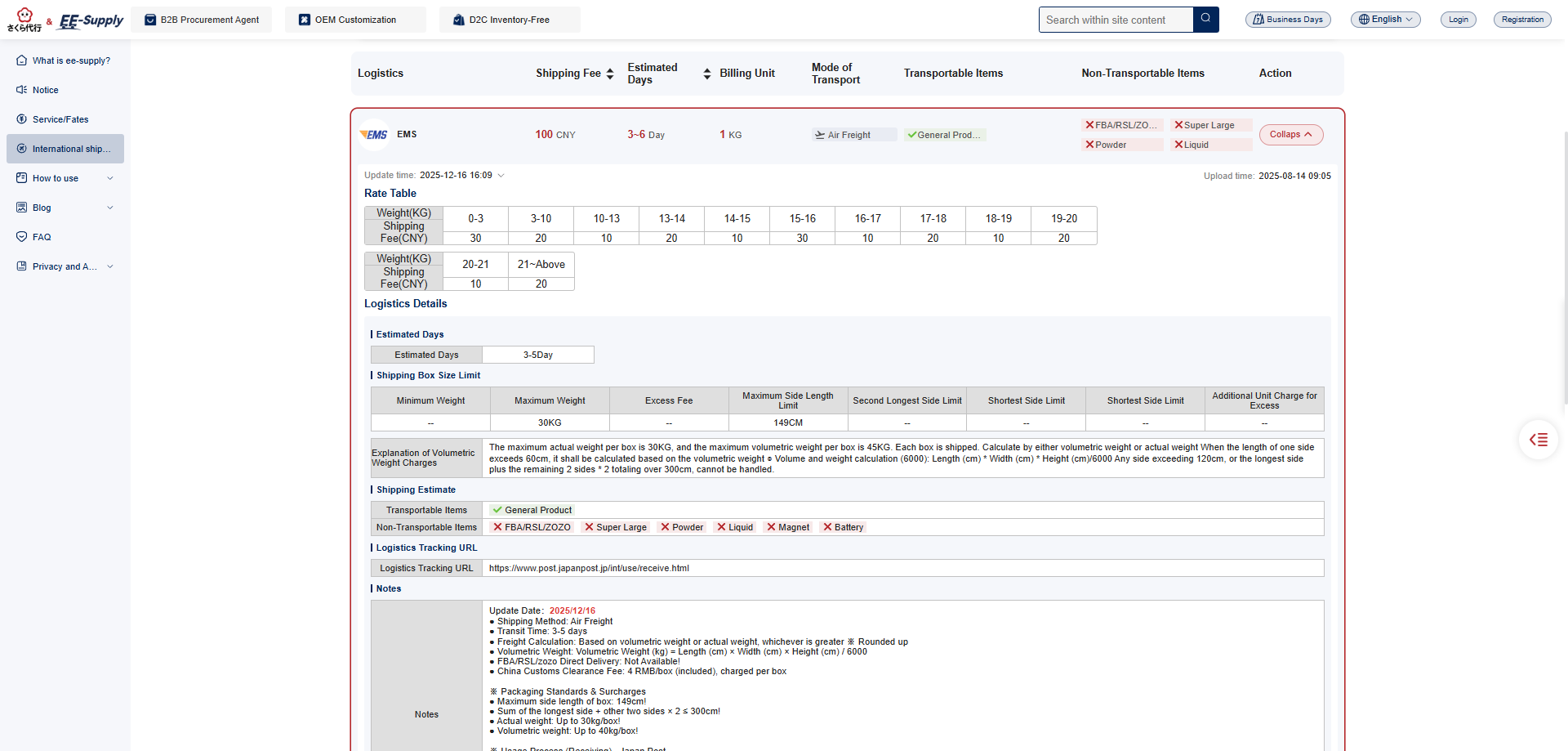
Customers can also access detailed information about specific carriers, including rate tables, package restrictions, and transit times, to make informed decisions.