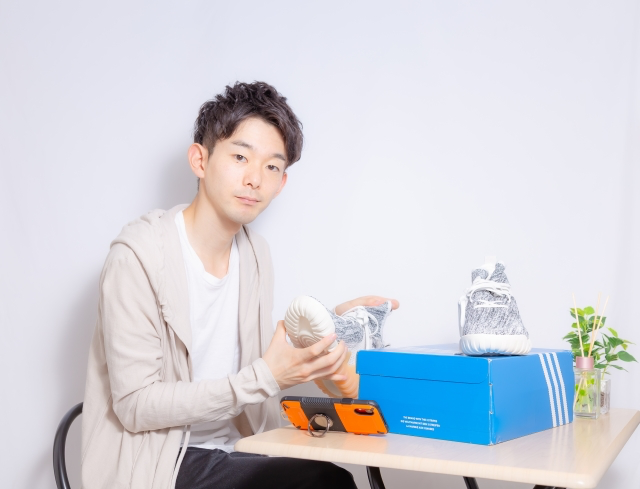
Always make a test purchase before placing a large order!
1. What Is a Test Purchase (Ordering Samples)?
Test purchasing, or ordering samples, refers to placing an order for a small quantity of goods before purchasing a large quantity.
This practice is particularly common in the import business, allowing you to physically verify the product’s quality, functionality, and packaging.
It also provides a good opportunity to evaluate the supplier’s reliability and the accuracy of their delivery times.
2. Why You Should Conduct Test Purchases
Test purchasing is a very important process.
First, by verifying product quality before making a bulk purchase, you can mitigate the risk of defective or non-compliant goods.
It also allows you to test the product’s market acceptance on a small scale and verify its suitability for the market before making a bulk purchase.
This allows you to identify effective sales strategies and formulate a sales plan for after the bulk purchase.
Furthermore, it is important to build a relationship of trust with suppliers through initial test purchases, laying the foundation for a long-term business relationship.
By taking this step, you can avoid the financial risks associated with bulk purchasing in advance and manage your funds effectively.
Test purchases play a particularly significant role when entering new markets or launching new products.
This increases the likelihood of business success and minimizes losses resulting from failure.
How to Conduct Test Purchases
1. Purchasing directly from suppliers
Purchasing directly from suppliers primarily refers to buying goods directly from manufacturers or wholesalers.
This method is particularly suitable when considering bulk purchases or when planning to carry specific products over the long term.
Communicating directly with suppliers makes it easier to customize products, set quality standards, and coordinate delivery schedules.
However, smooth communication will be difficult without knowledge of Chinese.
You must also be well-versed in Chinese business negotiation practices and the country’s long holidays.
In addition, minimum order quantities (MOQs) are often set, and negotiations may be necessary if the order volume is small.
2. Sourcing through trade shows and exhibitions
Sourcing through trade shows and exhibitions allows you to meet suppliers face-to-face and see and feel the products firsthand.
This allows you to directly verify the product’s texture, size, and color, and also provides an opportunity to build relationships with suppliers and explore new business opportunities.
Furthermore, since many suppliers typically gather in one place at trade shows, you can compare and evaluate multiple options.
However, business-level Chinese is still required.
Furthermore, since attending trade shows requires time and money, you must conduct research in advance and select the right trade show for your objectives.
It is rare to have the chance to meet high-quality suppliers who do not exhibit at trade shows.
3. Sourcing through an import agent is reliable and recommended
Import agents handle everything from sourcing and shipping to negotiating with suppliers and even customs clearance.
This significantly reduces the complexity and risks involved in the import process.
Additionally, you don’t need to speak Chinese.
Import agents have staff who speak Japanese and can convey your instructions to suppliers in Chinese.
You also don’t need any business skills specific to China.
By using an import agent as an intermediary, you can resolve various challenges associated with international trade, such as language barriers and adapting to different business cultures.
Furthermore, experienced import agents can assist in selecting the right suppliers.
For example, the import agency "HubBuyer" can select and introduce suitable suppliers to businesses from among thousands of partner factories.
Since these partner factories include reputable manufacturers that do not participate in trade shows, you can efficiently find suppliers that suit your needs.
In addition, by conducting price negotiations through an import agent and receiving expert advice on quality control and other matters, you can increase your chances of business success.
Types of Test Purchases and How to Conduct Them
1. Test Purchases for Quality Verification
For test purchases for quality verification, you typically order 2 to 3 samples.
It is recommended that you leave one of these with the representative at the import agency and ship the remaining one or two to Japan.
The advantage of this method is that the supplier, the agent, and your company can all communicate while looking at the same product.
This reduces the likelihood of misunderstandings or errors and improves overall efficiency.
Furthermore, by physically inspecting the products yourself, you can identify specific quality issues and areas for improvement, which will be useful when negotiating with the supplier.
2. Test Purchases for Sales
For test purchases for sales, it is common to purchase 10 or more items.
This is done to assess how the product is actually received in the market.
If the quantity is too small, it becomes difficult to accurately assess how well the product will actually sell in the market.
By conducting test sales using 10 or more samples, you can determine at what price and over what period the products will sell.
This allows business owners to plan bulk purchases with greater confidence and manage inventory appropriately to meet market demand.
Solutions for Test Purchases
1. When a product comes in many sizes and colors
When testing purchases for products with color and size variations—especially apparel and fashion accessories—strategic planning is essential.
For example, if you purchase three units of each size and color, you may need to make a large test purchase of several dozen units to cover all possible combinations.
However, it is not always necessary to test-purchase every single variation.
It is important to conduct sales research and select the sizes and colors predicted to have high market demand.
For apparel products, it is advisable to focus test purchases on sizes generally considered to be in high demand, such as M and L.
This allows you to target only the necessary sizes, reducing costs and enabling efficient test purchases.
By conducting test purchases with variations selected based on market demand, you can effectively check product quality and assess sales performance.
As a result, you can source products in a more strategic and low-risk manner.
This is particularly important to consider when investing in new markets or product lines.
2. If you want to reduce shipping costs
Even for test purchases, international shipping fees are required when shipping goods from China to Japan.
If you want to reduce these shipping costs, consult an import agent.
Since import agents typically handle large volumes of goods, they have bargaining power with shipping carriers and are likely able to arrange delivery at lower rates than usual.
Furthermore, if you place orders with multiple suppliers, the agent can consolidate the goods and ship them together, which can also reduce shipping costs.
They can also remove excess packaging to reduce weight or compress items upon request.
Reducing weight and volume helps keep shipping costs down.
3. If you want to verify the product without shipping it to Japan
The most recommended approach for test purchases is to have the products shipped to Japan so that you can inspect them in person.
However, if this is not possible for some reason, you should still consult with an import agent.
The agent will receive the products from the supplier within China, take photos, check details such as quality, and write a report.
By sending this report to the business owner in Japan, you can verify the products.
Furthermore, if you specify what kind of photos you want or what points to focus on during the inspection, they will accommodate your requests.
Another advantage is that import agents who typically adhere to strict inspection standards for the Japanese market will also rigorously inspect test purchase items, making them highly reliable.
Costs and Time Required for Test Purchases
There may be some differences depending on the import agent.
I’ll explain this in detail using HubBuyer, a Chinese sourcing platform, as an example.
For example, let’s say you order a product priced at 100 yuan.
Regarding purchasing fees, for Economy and Business members, the fee is 0 yuan.
For international shipping, let’s assume we use EMS.
The total estimated delivery time is approximately 6 to 8 business days.
This includes 3–4 business days for product procurement within China and an additional 3–4 business days for international shipping.
The fact that the purchasing fee is free is particularly attractive from a cost-saving perspective.
Additionally, by understanding the total delivery time, you can accurately estimate when the goods will arrive, allowing you to plan your business more efficiently.
〜〜〜〜〜〜〜〜〜〜〜〜〜〜〜
To summarize briefly:
[Costs and Delivery Times for Orders Placed via HubBuyer]
Example Product Price: 100 yuan
Purchasing Fee: 0 RMB (Economy & Business Members)
International shipping: EMS (Rates vary by weight; click here for details)
Estimated delivery time: Approximately 6–8 business days
Domestic shipping within China: 3–4 business days
International shipping: 3–4 business days
〜〜〜〜〜〜〜〜〜〜〜〜〜〜〜
Sales Strategies and Advice for Products Imported from China
1. Sales Platforms for the Japanese Market
When selling products imported from China in the Japanese market, it is important to choose a sales platform that suits your business.
The Japanese market features a variety of online platforms, each with its own unique characteristics and target audience.
For example, while Amazon and Rakuten Ichiba provide access to a wide range of customers, C2C platforms like Yahoo! Auctions and Mercari are better suited for peer-to-peer transactions.
Furthermore, depending on the type of product and target customers, it can be effective to use specialized platforms or build your own e-commerce site.
The key is to determine the channel best suited for the products you sell and focus your efforts there.
2. Sales Promotion and Marketing Tips
When it comes to sales promotion and marketing for products imported from China, product differentiation is key.
You must clearly communicate the uniqueness and advantages of your products compared to competitors.
Next, it is important to understand the needs and expectations of your target customers and develop marketing strategies that meet those needs.
This includes social media marketing, leveraging influencers, SEO strategies, and email marketing.
Additionally, promotions and sales campaigns are effective for acquiring new customers and encouraging repeat purchases from existing ones.
Furthermore, improving the quality of customer service leads to better word-of-mouth and higher repeat purchase rates.
By constantly monitoring market trends and flexibly adjusting strategies, you can carry out effective sales promotion and marketing.
Summary
What did you think?
We’ve explored the importance of test purchases when importing from China, how to develop a sales strategy, and tips for effective marketing in the Japanese market.
While importing from China offers many opportunities, it requires a strategic approach and meticulous attention to detail.
Mitigating risks through test purchases, selecting the right sales platform, and implementing marketing strategies tailored to your target customers are the keys to success.
We hope this article serves as a useful reference for those starting a business importing from China and helps guide your business toward success.
By keeping a close eye on market trends and proceeding with a strategic yet flexible approach, you will be able to make the most of the opportunities presented by importing from China.
HubBuyer has offices in both Japan and China, and our mission is to handle all operations within China and delivery to Japan (including direct FBA shipping) on behalf of our business partners.
If you are considering importing and selling products from China, we encourage you to use HubBuyer’s services.
Related Articles
All articlesYiwu Market Guide for International Buyers
The Yiwu Market is a place to find suppliers in China especially for people looking for small items wholesale products with low minimum order quantities, mixed orders, gifts, household stuff, accessories, toys, stationery, packaging and seasonal products. The Yiwu Market is huge it has thousands of suppliers showing their products in one place. You can find anything you need here at the Yiwu Market. The Yiwu Market is not like a store where you pick something and take it home. It is a market. Most booths are like showrooms. Buyers visit the Yiwu Market, place orders and then the products are made or prepared. After that the goods are shipped from the Yiwu Market. To succeed in sourcing from the Yiwu Market you need to know how it works. You should understand what the Yiwu Market is good for, how to choose suppliers at the Yiwu Market how to check product quality at the Yiwu Market and how to ship products from the Yiwu Market. You have to do your research and plan carefully to get the best out of the Yiwu Market. Buyers need to understand the Yiwu Market to source successfully from the Yiwu Market. The Yiwu Market is good for commodities and MOQ wholesale products. The Yiwu Market has products across every consumer category. Buyers should know how to evaluate suppliers at the Yiwu Market and control quality at the Yiwu Market. Logistics is also important once you have bought something from the Yiwu Market.

Why Does Customs Hold Things Up Over "Just One Document"?
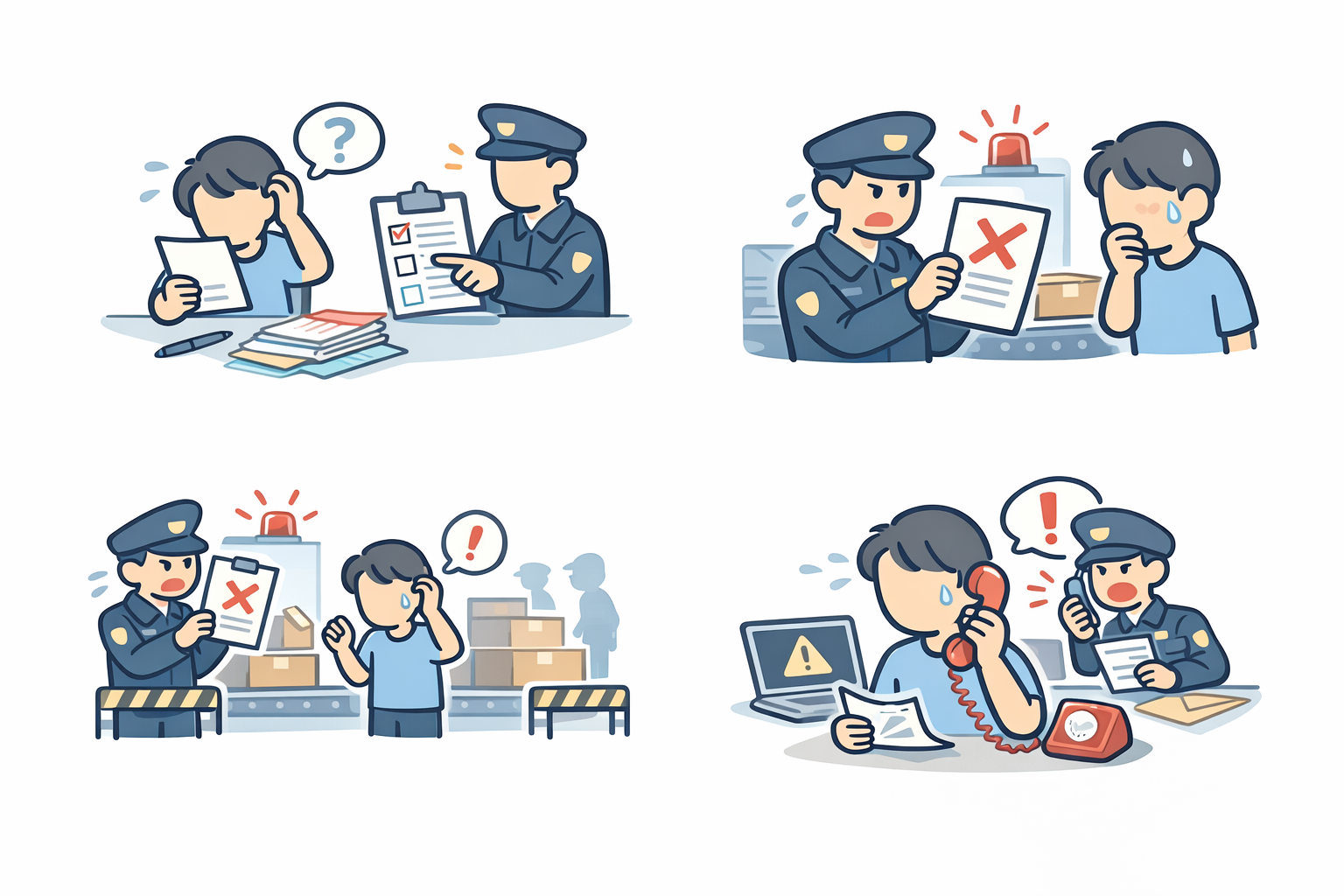
“We’re stuck because of paperwork”—this is a phrase you often hear in the world of imports. The goods seem fine. The quantities match. Yet, customs clearance isn’t moving forward. Why does paperwork alone cause such a major problem? In this article, we’ll break down the reasons from a structural perspective.
Yiwu's Ultimate Market Sourcing Guide For Global Buyers In 2026
The Yiwu International Trade Market, also well known as the "World's Supermarket" is the world's largest wholesale market for small commodities. This trading market has been designed to serve importers, product distributors, commodity retailers and e-commerce sellers from across 210+ world countries and regions. With over 75,000 physical booths and 400,000+ product SKUs ranging from small to medium and extra large products, of all diversities,categories and types, the Yiwu International Trade Market has become the top sourcing destination for global buyers seeking cost-effective, diversified and customizable wholesale products. The Yiwu's Ultimate Market Sourcing Guide For Global Buyers In 2026 is a guide aimed at elaborating on the Yiwu Market's core advantages, district layouts/product types, standard procurement/purchasing processes,common pain points, professional sourcing solutions and sourcing agent options for global newcomers and long-term buyers.

Hardware Products and Tools Sourcing from China
When you purchase hardware products from China you can earn a lot of money. However if you only consider the price you will likely end up losing money. You need to think about the strength of the hardware products materials and how accurate the sizes of the hardware products. You also need to consider how well the hardware products resist corrosion and the quality of the surface treatment of the hardware products. Hardware products from China are really different from the things you can buy in stores. China is one of the places in the world where they make hardware and tools. They make all sorts of things like hand tools, fasteners, hardware for furniture, tools for building and tools for gardening. If you want to buy hardware products from China and do well you have to be very careful. You need to be careful about what hardware products you're buying and who you are buying the hardware products from. You need to check the quality of the hardware products. What certificates the hardware products have. You also need to think about how you will get the hardware products, from China to where you need the hardware products to be.