Introduction
One of the most common causes of import problems is incomplete documentation.
However, in practice, it is not uncommon for these documentation issues to be taken lightly.
- Typing errors in numbers
• Differences in notation
• Minor omissions
People often assume that such errors can be “fixed later” or that “the content is correct, so it’s not a problem.”
However, for customs authorities, these documents serve as the basis for determining the import itself.
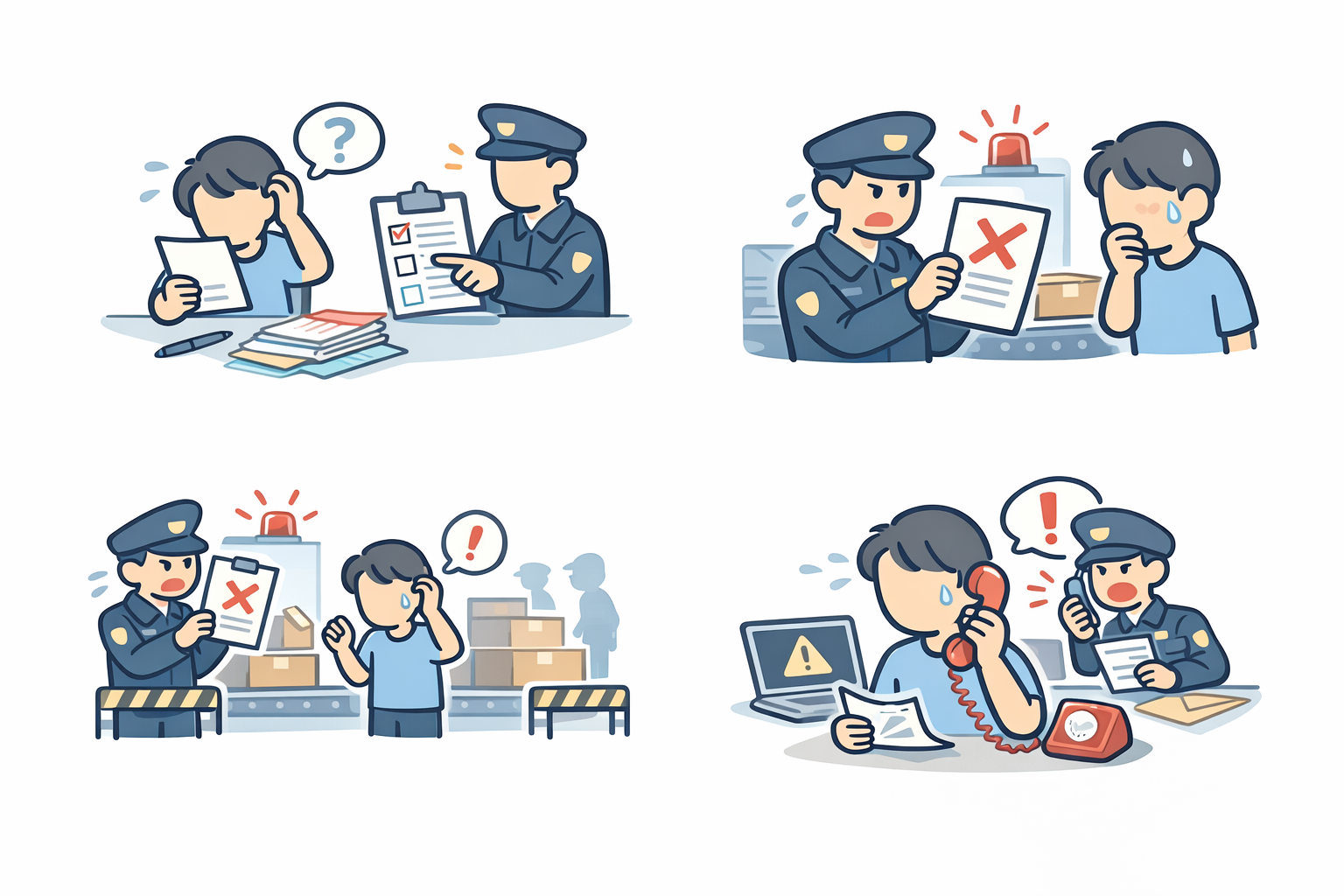
If customs cannot make a determination based on the documents alone, they have no choice but to hold the shipment for verification.
In this article, we will explain why document deficiencies lead to serious import problems—not based on anecdotal evidence or subjective opinions, but by examining the structure of the customs clearance process itself.
What Does "Document" Mean to Customs?
Customs does not conduct a detailed physical inspection of imported cargo right from the start.
First, they review the submitted documents.
Specifically, these include:
- Invoice
- Packing list (P/L)
- Documents related to the contract terms and conditions of trade
Customs makes its determination regarding the cargo based on these documents.
For customs, these documents are the sole basis for determining “what” the shipment is, “how much” it costs, and “what kind of transaction” it involves.
In other words, customs can only understand the contents of the shipment through these documents.
Therefore, if the content of the documents is ambiguous, customs cannot correctly assess the shipment.
If they cannot make a determination, they will hold the shipment for verification.
This is not a matter of strictness, but rather a perfectly natural response given the structure of Customs operations.
Common Patterns of Incomplete Documentation
Even when we talk about “incomplete documentation,” the common patterns we see are pretty much always the same.
- The details on the invoice and the packing list (P/L) do not match
• The product name is too vague to identify the actual item
• The calculations for quantity, unit price, and total amount do not add up
• Vague descriptions such as “set,” “promotional item,” or “sample”
What these issues have in common is that they prevent customs from accurately determining the contents of the shipment.
Customs authorities rely on the information in the documents to determine taxation, classification, and whether any laws or regulations apply.
If the information necessary for these determinations is lacking, customs officials have no choice but to verify the details.
Documents that are particularly prone to causing problems are those that appear to be in order but contain insufficient descriptions.
Whether the paperwork is formally correct and whether customs officials can make an accurate determination are two entirely different matters.
Why Can't "Documents Prepared by the Chinese Side" Be Used As Is?
One of the most common problems with imports is when companies simply use the documents prepared by the exporter as-is.
The documents appear to be in proper order. It is not uncommon for them to seem perfectly fine on the surface.
However, Japanese customs officials do not focus on the “form” of the documents.
• Whether the explanations comply with Japanese laws and regulations
• Does the content provide sufficient information to determine taxation and HS code classification?
These are the criteria used by customs authorities.
Documents from the Chinese side are prepared solely with the aim of meeting the “minimum requirements necessary for export.”
As a result, there is often a discrepancy between these documents and the level of detail required by Japanese customs—such as explanations for “why that particular product” or “why that price.”
As long as this discrepancy exists, customs cannot make a determination.
For cargo they cannot assess, customs has no choice but to hold it for verification.
The result is a customs clearance hold.
Customs isn't looking for "correctness" but rather "explanability."
There is a common misconception among many importers.
It is the belief that “as long as the information is correct, there’s no problem.”
What customs officials prioritize—even more than whether the information is correct—is whether you can explain it.
• Why was this product name chosen?
• Why this quantity?
• Why is the price this amount?
If you cannot explain these points consistently throughout the documentation, Customs cannot make a determination.
Customs does not infer facts by looking at the documents; it makes its determination based solely on the content written in the documents.
Therefore, no matter how accurate the actual circumstances may be, it is meaningless if the explanation does not hold up.
Documents that cannot be explained will be treated as “cargo requiring verification” at that point.
Specific Problems Caused by Incomplete Documentation
When there are errors in documentation, the consequences don't end with just one problem.
A chain reaction of problems ensues.
- Delays in customs clearance
• Requests for additional documentation
• Corrections to the customs declaration
• Incurrence of storage and inspection fees
These are not issues that can be resolved simply by checking the contents of the documents.
If the documentation is insufficient, customs officials may suspect that “there is a discrepancy in the declaration itself.”
As a result, even the validity of the assessable value and HS codes may be subject to review.
In other words, incomplete documentation is not merely a single mistake.
Once doubts arise, the entire transaction becomes subject to scrutiny.
Why It’s Not Just a “Minor Correction”
"If I just fix the numbers, it'll be done." "If I rewrite it, it'll get approved." It's only natural to think that way.
However, in reality, once a document is amended, the level of scrutiny by customs increases.
This is because the very fact that a correction was necessary implies that “there was a discrepancy in the original declaration.”
If a discrepancy is found in one place, officials will check other items to see if similar discrepancies exist.
As a result, the entire declaration—including quantities, prices, product details, and terms of trade—becomes subject to review.
In this way, an error that initially seemed minor can escalate into a major customs clearance problem.
What You Really Need to Do to Prevent Incomplete Documentation
Preventing document errors doesn’t require specialized knowledge or complicated tricks.
What’s needed is to review the documents from the customs authority’s perspective.
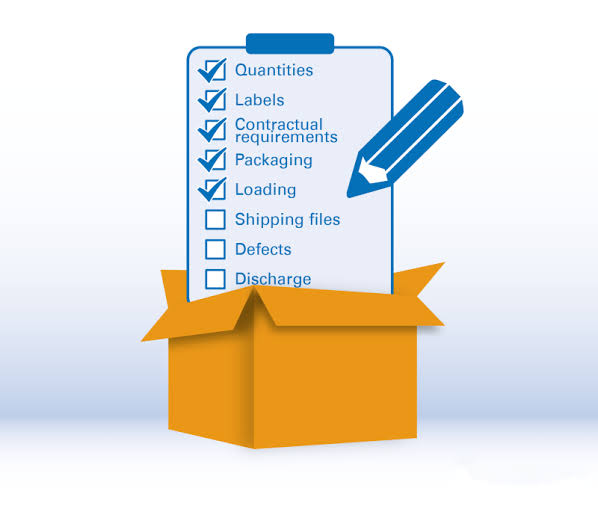
Specifically, simply checking the following three points before importing can prevent many problems:
- Do the documents match the actual goods?
• Can a third party understand the content?
• Does the explanation make sense from the customs perspective?
If these three points are met, customs can make a determination based on the documents alone.
Conversely, if even one of these points is missing, the shipment will be flagged for further verification.
The key to preventing documentation issues is not simply to create neat documents, but to ensure the information is presented in a way that allows customs officials to make an informed decision.
The True Nature of Document-Related Problems That "Arise Even When You've Delegated Them"
"I've left the paperwork to someone else, so it'll be fine." The very people who think this are the ones who notice errors in the paperwork the latest.
The reason is simple.
It’s because the person preparing the documents and the person responsible for their content are not the same.
Agency firms and exporters merely prepare the documents.
However, it is always the importer who is ultimately held accountable for the content.
Customs looks at “who imported the goods,” not “who prepared the documents.”
Consequently, the more you rely on others to handle the process, the more likely you are to put off verifying the content.
As a result, by the time problems come to light, customs clearance has often already been halted.
Incomplete documentation is the first step toward import problems.
Incomplete documentation in and of itself is not the root cause of import issues.
The real problem is that incomplete documentation reveals a lack of understanding of the structure of the import process.
Price, product details, and terms of trade.
If these elements are not clearly defined, that ambiguity will inevitably show up in the documents.
Documents are a mirror reflecting the state of the import process.
An import process with an unstructured foundation will inevitably come to a halt somewhere, no matter how well the paperwork is presented.
A Practical Approach to Preventing Paperwork Problems
To prevent document-related problems, it isn't necessary to create perfect documents.
What’s important is to clarify the basis for your decision before creating the document.
- Be able to explain why the content is as it is
• Be able to explain why the content is as it is
• The necessary conditions for determining taxation and classification are in place
If these conditions are met, the documents will naturally be approved.
Conversely, if you prepare the documents while the underlying assumptions remain vague, the process will inevitably stall at some point.
Preventing documentation issues isn’t about creating documents skillfully; it’s about organizing your approach to importing.
Summary
Import issues caused by incomplete documentation are not merely simple clerical errors.
They are simply a manifestation of a lack of understanding of the import process, reflected in the documentation.
Documents serve as explanatory materials for customs.
If that explanation is consistent, many problems can be prevented before the goods are even imported.
Before questioning the documents, verify that the fundamentals of the import process are properly organized.
That is the most practical measure for avoiding customs clearance issues.