Introduction
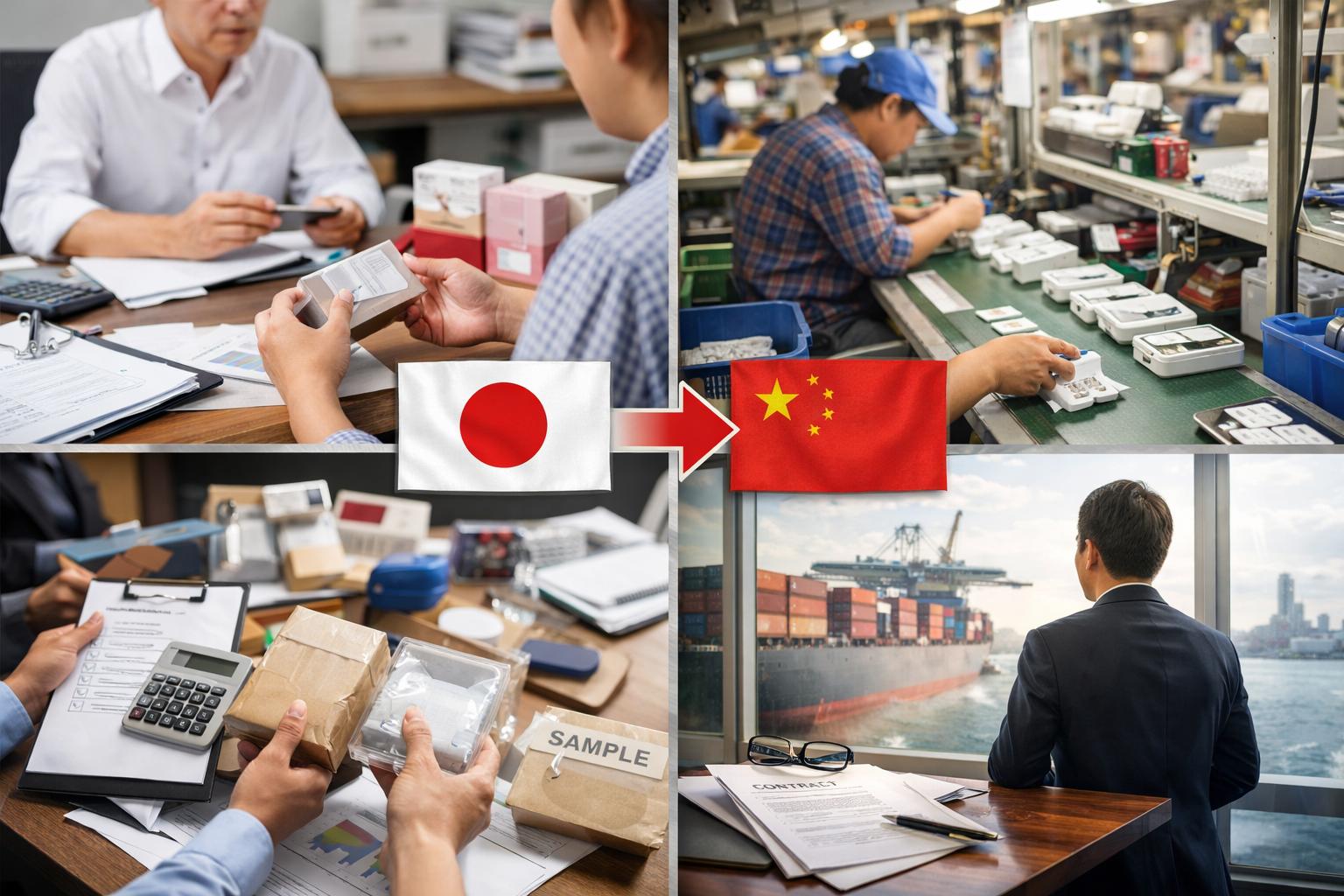
Among the customers who consult with HubBuyer, there are not only those who say, “I want to start sourcing from China,” but also
but also business owners who have been sourcing from Japan for several years.
The case we’re introducing today involves a client who originally used domestic Japanese suppliers and had a stable sales track record,
eventually decided to partially shift to sourcing from China.
The key point here is that
・Their sourcing from Japan wasn’t failing
・They didn’t switch to sourcing from China all at once
.
In this article, I will focus on the “on-the-ground thought process”
and the “on-the-ground thought process” that led to that decision.
Situation prior to consultation: Our sourcing operations in Japan were "running smoothly."
At the time of consultation, this client was already in the following situation:
・Continuously purchasing from wholesalers and manufacturers within Japan
・Stable monthly sales
・No major complaints or delivery issues
・Internal operations were already well-established
On the surface, it could be said that they were in a state where they “had no particular problems.”
In fact, the initial consultation wasn’t even a clear request to “switch to sourcing from China.”
The Source of the Unease (Part 1): Even as Sales Grow, the Structure Remains Unchanged
As we conducted our interviews, the clients repeatedly expressed the following sentiment:
“Even though sales are growing, I don’t feel like the business is really moving forward.”
When we asked for more details,
・Even when sales increase, purchasing terms remain unchanged
・Even when we increase order volumes, it’s difficult to see that reflected in our cost of goods sold
・There was little room for improvement in product specifications or packaging
This situation had been ongoing.
While this is not uncommon in the Japanese sourcing industry, he reportedly felt uneasy about the fact that the amount of effort he put in did not correspond to structural improvements.
The True Nature of the Discomfort, Part 2: Thinking You're Negotiating, But Actually Just Listening to an Explanation
Another major issue was my unease regarding the negotiations.
・Why this price?
・Why are these the only specifications available?
・Why can’t the terms be changed?
Even though I asked these questions, the only responses I got were, “It’s the manufacturer’s policy,” or “This is how we operate.”
More than the fact that they couldn’t lower the price, the feeling that I couldn’t get to the root of the issue was slowly becoming a source of stress.
What prompted me to start considering sourcing from China
At this stage, we hadn’t yet reached the conclusion that “our sourcing in Japan was poor.”
Rather, the client had clarified the following points:
・Where do we want to have discretion moving forward?
・Which areas do they want to be able to decide on themselves?
・Which areas they did not want to remain a “black box”
As a result of this analysis, it was determined that a structure in which the company had no involvement in the upstream processes of manufacturing, cost, and specifications could potentially limit future growth.
It was only then that sourcing from China emerged as a “potential option.”
Sourcing from China wasn't as easy as I thought
Even as a HubBuyer, we would never tell you at this stage that “sourcing from China is easier.”
As you proceed with your actual evaluation,
・Sample costs
・The level of detail required for specification confirmation
・The frequency of revisions and reworks
and other factors, it became clear that the practical workload would increase significantly.
Nevertheless, the reason we continued to consider this was that
・The ability to break down specifications into individual elements for discussion
・The cost structure is transparent
・There is “room for change” depending on the conditions
We saw value in these points.
The transition was carried out in stages
The key point is that this client didn’t suddenly stop sourcing from Japan altogether.
The actual approach is as follows:
・ Continue sourcing from Japan
・Testing sourcing from China for only a select few SKUs
・Comparing costs, man-hours, and risks in parallel
This was the approach taken.
This period lasted for over six months. It was a period dedicated not to generating profit, but to assessing the necessary information and evaluating the differences in decision-making authority.
Reasons for shifting away from sourcing primarily from Japan
Ultimately, the reason we shifted away from sourcing primarily from Japan is clear.
It wasn’t a matter of good or bad; it was a difference in structure.
・Who makes the final decision?
• Where are costs determined?
・To what extent can we intervene when problems arise?
In these three areas, sourcing from China was a “structure that was difficult but understandable.”
Our clients have told us that, rather than continuing to leave things to others without understanding them, they chose the option of understanding the process—even though it was difficult.
The Different Reality I Discovered After Switching to Sourcing from China
Of course, switching to sourcing from China has also created new challenges.
・Responsibility for judgment errors falls back on our company
・Inadequate verification can lead directly to problems
・Complacency once you’ve gotten used to the process is the most dangerous
With sourcing from China, all the risks that were previously absorbed when sourcing from Japan become fully visible.
However, these are also “manageable risks.”
Summary: The essence of switching lies in deciding “where you want to make the decision”
What this customer case study reveals is that the shift from sourcing in Japan to sourcing in China is not simply a matter of cost.
The essence of the matter is
・Where you want to make decisions
• To what extent do you want to maintain control in-house?
• Which parts should not be treated as a black box
—in other words, a choice regarding business structure.
At HubBuyer, rather than simply “recommending” sourcing from China, we prioritize creating a situation where you can make an informed choice based on an understanding of that structure.
Whether you decide to continue sourcing from Japan or switch to sourcing from China, both can be the right choice.
What matters is whether you are making a decision you can explain.