


Summary of this article:Many importers and online sellers use the term "Factory China" to describe China's strong manufacturing ecosystem, which includes millions of suppliers, deep industrial clusters, quick product development and very low prices but getting goods from China is more than just "finding a cheap factory." The real problem is making a supply chain that always delivers the same quality, a stable lead time and a total cost that can be predicted. This guide tells you what people mean when they say "Factory China," why China is still a top place to make things, how Chinese factories work, how to find and check out the right factory and how to avoid common sourcing risks.
What does the term "Factory China" mean?
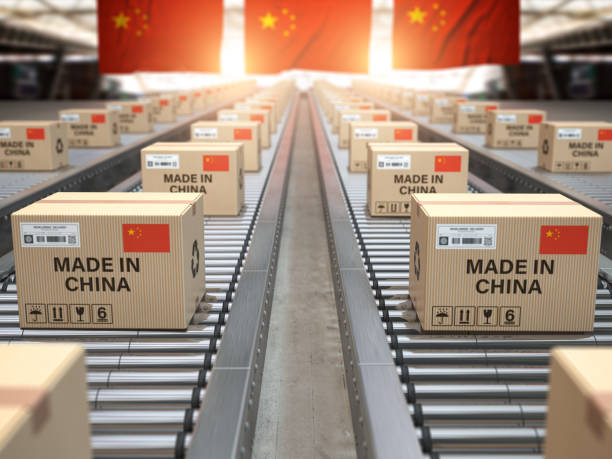
"Factory China" usually means that China is a major manufacturing center for the world, where businesses get:
●Things people buy (home, lifestyle, gifts, toys).
● Gadgets and their parts.
●Clothes, bags, and other fashion items.
●Things like furniture and building materials.
●Parts and packaging.
●Custom products made by OEM/ODM.
Low prices aren't the only thing that makes China better. It's the mix of size, specialization, and depth of the supply chain.
Why China Is Still One of the Best Places in the World When It Comes To Production.
1、 Industrial clusters (specialization by category)
China has very concentrated manufacturing areas where skilled workers, suppliers, raw materials, parts and packaging are all in the same place. This speeds up and makes production more efficient.
Some examples (in general):
●Shenzhen/Dongguan: electronics and their parts.
●Foshan: furniture, tiles and building materials for homes.
●Yiwu: small goods and a wide range of products.
●Guangzhou: clothing and fashion supply chain.
2、 Strong OEM/ODM skills
China's OEM/ODM ecosystem is one of the most advanced in the world when it comes to custom packaging, logo branding, changing materials or redesigning products.
3、 A flexible network of suppliers
Buyers can often find:
●Suppliers with low minimum order quantities for testing.
● Factories of medium size for steady production.
● Big factories for size and capacity.
4、 An Export Infrastructure That Works
China has well-developed ports, freight forwarding networks and international logistic solutions that make it possible to ship goods all over the world on a large scale.
Types of Factories in China(Know Who You're Buying From)
When people say "Chinese factory," they could be talking about different kinds of suppliers:
1、 Direct Manufacturers
Factories that make things on their own production lines.
Best for: scaling, quality control, OEM/ODM and getting better prices when you buy in bulk.
2、 Companies that trade
Middlemen who handle sourcing from more than one factory.
Best for: teams that work with a lot of different SKUs, buyers who want less management
Costlier and less clear are the trade-offs.
3、 Wholesalers and market suppliers
A lot of sourcing hubs and wholesale markets have them.
Best for: quickly finding a variety of small goods
Trade-off: quality levels are different and it may not be clear where the factory is located.
A smart buyer picks the type of supplier based on the stage of the business, the size of the order and the risk level of the category.
The Best Ways to Find a Factory in China
1、 Begin with the right group
Find out where most people make your product. Searching for a product, factory, and city or region together gives you better results and helps you compare prices.
2、 Find things using online platforms
B2B platforms can quickly make a long list. But use them as a way to find things out; you still need to check them.
3、 Go to trade shows if you can.
Trade shows are great for OEM/ODM and long-term suppliers because they let you see samples, compare quality levels and meet people who can make decisions.
4、 Use the web to search and supplier websites
Some strong factories don't spend a lot of money on platforms because they want to keep their buyers.
5、Work with a Sourcing Agent or Procurement Partner.
If you're in another country or looking for more than one supplier, a local partner can help:
●Check out factories and stay away from scams.
●Handle sampling, quality control, and follow-up on production.
●Combine shipments and improve logistics.
How to Make Sure a Chinese Factory Is Real (Avoid Problems with "Fake Factories")
Here is a useful checklist for verification:
A、Check the evidence from the factory
● photos and videos of the production line (not just the showroom)
●information about the equipment and the process
●the address of the factory and whether it can accept visits or audits
●proof of the export packing area and warehouse
B、 Ask technical questions
A real factory can tell you:
●different grades of material and how they affect the cost
●steps in production and quality checks
● common defect problems and how they deal with them
C、Check the ability to export and document
●commercial invoice and list of items in the box
●Experience with HS codes
●certificates or test reports if you need them
●making sure your labels and packaging are right for your market
D、Look over the communication and paperwork
Factories that talk to each other clearly usually do a better job.
The Real Dangers of Getting Things from China (And How to Handle Them)
Risk 1: "Good sample, bad bulk"
The answer is to use sampling, a spec sheet, a golden sample and change control.
Risk 2: Costs that aren't obvious
Later on, there may be fees for mold, labeling or better packaging.
Use a standard RFQ and make sure you know what's included.
Risk 3: Defects and inconsistent quality
Solution: a clear defect policy and a QC plan that includes both in-process and pre-shipment checks.
Risk 4: Delays in lead time
The answer is to follow up on production, check capacity and make predictions for the busy season.
Risk 5: Damage during shipping
Packing standards, optimizing cartons, palletizing and supervising loading are all solutions.
Best Practice: The China Sourcing Workflow (Step by Step)
1. Set the rules for specs, packaging, and compliance.
2. Make a list of 10 to 20 suppliers.
3. Check to see if it's a factory or a trading company.
4. Send out a standard RFQ to get similar quotes.
5. Order samples and lock a spec sheet.
6. Place a test order and check the quality.
7. Put everything together and ship it with the right paperwork.
8. Keep an eye on how well your suppliers do when you reorder.
9. Make sure that the best-selling SKUs have two sources.
"Factory China" Frequently Asked Questions
Is it safe to buy things from factories in China?
Yes, as long as you check your suppliers, use clear specifications, check the items before shipping, and keep your paperwork in order.
Is it always better to be cheaper?
No. The lowest unit price often means a higher total cost because of defects, delays, and claims. Pay attention to the total landed cost.
Do I need an agent to find things?
Not all the time. A local partner, on the other hand, lowers risk through quality control, follow-up, and consolidation if you're overseas, buying a lot of SKUs, or sourcing complicated products.
Final Thoughts
"Factory China" can give your business a huge edge with low prices, a huge selection, and strong OEM/ODM capabilities. But the buyers who treat sourcing as a system—verification, documentation, QC, and logistics planning—are the ones who win.