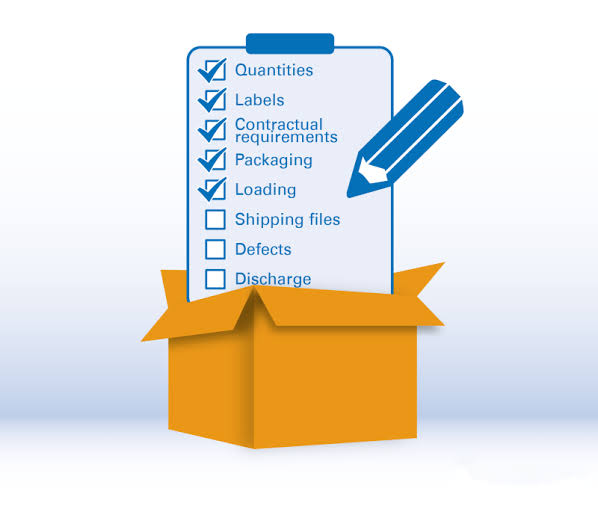
What is the role of "documentation" in imports to Japan?
The biggest stumbling block for many people when importing goods into Japan isn’t product selection or price negotiation.
In fact, the most common cause of problems is incomplete documentation or a lack of understanding.
Why do some shipments get cleared while others are held up, even though they’re the same products?
Why do you suddenly receive a call from customs?
Why do additional costs and delays occur?
Most of these issues stem not from the difficulty of importing itself,
but rather because there is no clear understanding of “which documents are required, for what purpose, and to what level of detail.”
In this article, we will systematically explain the documents required for imports to Japan
not just as a simple list, but systematically, covering their structure, purpose, and key considerations.
Our goal is to transform the vague anxiety—such as “importing is scary” or “my shipment might get held up at customs”—
from understandable anxiety into a manageable task.
First, there is a fundamental premise you need to understand.
Import documents are not merely formalities to be submitted.
Customs officials focus on the following three points:
・What is this shipment? (Nature of the goods)
・What price was the transaction made at? (Reasonableness of price)
・Whether it complies with Japanese laws (legal regulations)
In other words, the documents are
a collection of evidence intended to demonstrate that “this import is legitimate and safe.”
If even one of these points cannot be explained,
customs will deem the shipment “requiring verification.”
This is what is commonly referred to as “being held up at customs.”
Essential documents required for all imports
Now let’s move on to the specific documents.
First, here are the basic documents required for almost all commercial imports.
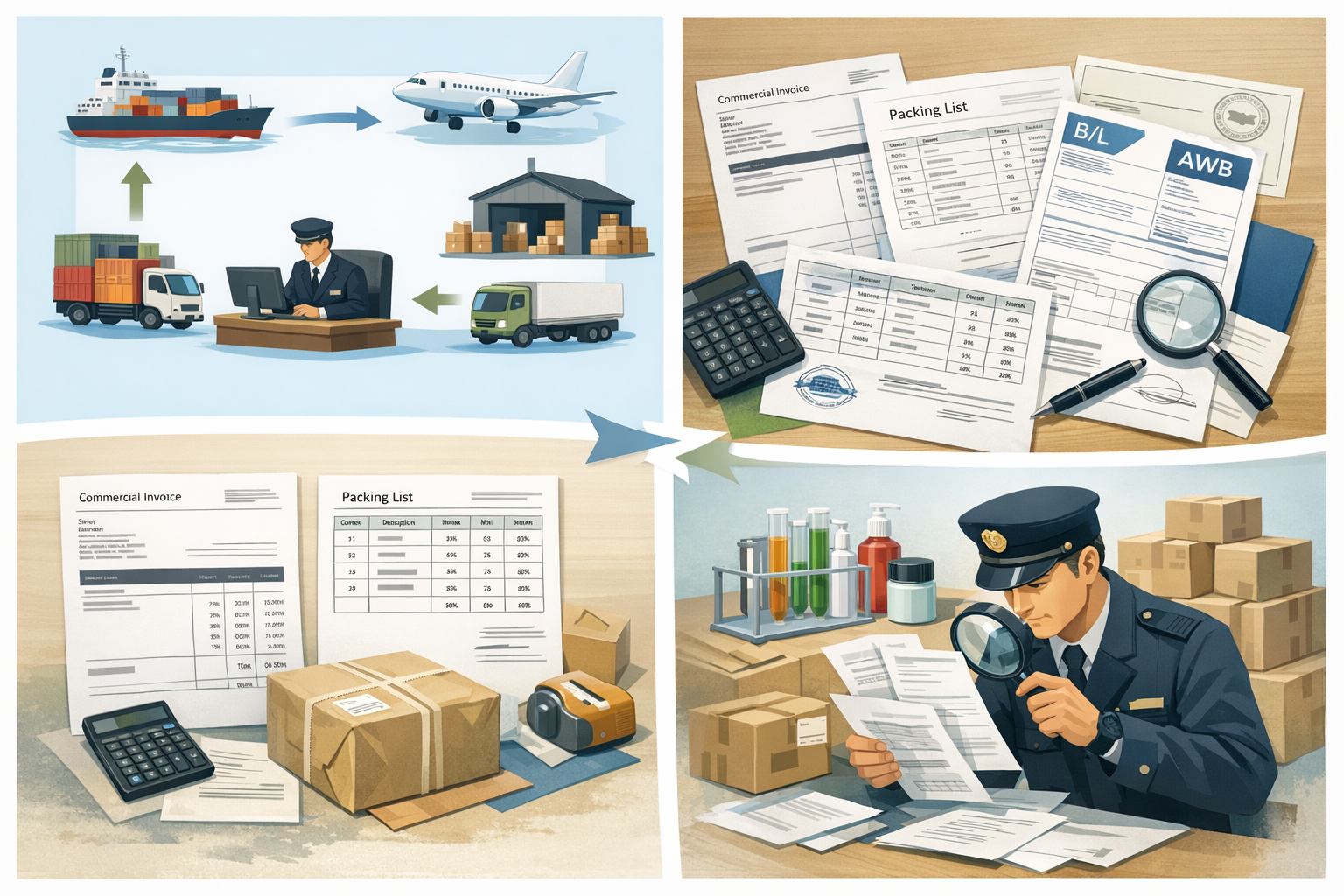
1. Commercial Invoice
The commercial invoice is the most important document among import documents.
Customs inspections are largely centered around this document.
[Main Items to Include]
・Seller (Exporter) Information
・Buyer (Importer) Information
・Product name (specific and objective description)
・Quantity, unit price, total amount
・Currency
・Terms of Trade (FOB, CIF, etc.)
Common Concerns and Issues
・Vague product names (e.g., only “miscellaneous goods” or “parts”)
・Price is extremely low compared to market prices
・Does not match the actual payment amount
Although an invoice is a “bill,”
it serves as an official document for Japanese customs to verify the validity of the price.
If anything seems off, they will definitely investigate.
2. Packing List
A packing list is
a document that physically describes the contents of the shipment.
[Main Items to Include]
・Number of packages (number of cartons)
・Contents of each box
・Weight (Gross Weight, Net Weight)
・Dimensions
If an invoice is a "statement of amounts,"
the packing list is a "description of the actual goods."
Common Issues
・The quantities on the invoice do not match
・The actual packaging differs from the description
During customs inspection (X-ray or physical inspection),
officials verify that the documents match the actual goods.
3. Bill of Lading (B/L) and Air Waybill (AWB)
These are shipping documents.
・Sea Freight: B/L (Bill of Lading)
・Air Transport: AWB (Air Waybill)
[Purpose]
・Who shipped the cargo, from where, and to where
・Proof of the transport contract
Since these documents are issued by the logistics company,
it is not created directly by the importer;
it is important that they match the invoice and packing list.
"Import Declaration Documents" to be submitted to Japanese Customs
4. Import Declaration
An import declaration is a document submitted to customs
formally declaring to customs, “We are importing these goods.”
Typically, a customs broker prepares and submits it via NACCS.
[Items Verified Here]
・HS Code (Tariff Classification)
・Taxable value
・Tariff rate
・Consumption tax calculation
Although importers rarely prepare this themselves,
the importer is responsible for the content.
"Additional Documents" Required for Certain Products
This is where many people start to feel anxious.
In Japan, laws vary depending on the product category.
5. Ingredient Lists and Material Lists
For products such as those listed below,
detailed information on ingredients and materials is required.
・Cosmetics
・Food contact products
・Apparel
・Miscellaneous goods
Products for which you cannot explain "what they are made of"
cannot be imported as a general rule.
6. Various Notifications and Permits
Depending on the product, notification to the relevant government agencies may be required.
・Food and Tableware: Notifications to the Ministry of Health, Labour and Welfare
・Electrical appliances: PSE-related documents
・Wireless equipment: Technical Conformity Certification documents
The key point here is that
"whether or not an item can be imported" is determined not by Customs, but by the relevant regulatory agency.
Customs is in the position of verifying that determination.
7. Certificate of Origin (if required)
When utilizing an EPA or FTA,
a Certificate of Origin is required.
・Documentation required to receive preferential tariff treatment
・Preferential treatment is invalidated if there are errors
This is a document that “is not mandatory, but having it can affect the tax amount.”
Differences in Documentation Requirements Between Personal and Corporate Imports
[For Personal Imports]
・Small quantities
・For personal use
In this case, the process may be simplified, but
if it is deemed to be for commercial purposes, the regulations become much stricter.
【For Corporate Imports】
・Clear commercial purpose
・Emphasis on document consistency
For corporate imports,
excuses such as “I didn’t know” or “It was my first time” will not be accepted.
Common Problems Caused by Incomplete Documentation
Here, we’ll outline some common scenarios.
・Invoice price is too low, resulting in price rejection
・Inquiries to government agencies due to unknown ingredients
・Corrective action ordered due to violation of labeling requirements
・Delays in customs clearance due to document corrections
All of these are
problems that can be prevented in advance.
Why the feeling of "I've got everything, but I'm still anxious" won't go away
Many people say this.
“I’ve gathered all the necessary documents.”
The reason the anxiety doesn’t go away is
they don’t understand the “connections” between the documents.
・Invoices and actual goods
・Packing list and packaging
・Ingredients list and product description
Customs does not look at documents in isolation.
They look at the overall consistency.
A Approach to Reducing Anxiety About Importing
Finally, I’d like to share the most important point.
Importing is not
not simply “the process of transporting goods.”
It is the process of fulfilling your accountability.
・Can you explain the product?
• Can you explain the price?
• Can the documentation be explained?
If these three points are in place,
importing is by no means something to be afraid of.
In Conclusion: Anxiety Stems Not from a "Lack of Information" but from a "Lack of Clarity"
There are certainly a lot of documents required for imports into Japan.
However, it’s not as complicated as it might seem.
・Everything has a purpose
・There is a purpose
・There is a connection
Once you understand this structure,
importing becomes a business
but a manageable business operation.
If you’re currently wondering,
"I wonder if this product or the paperwork is okay,"
,
that’s not a red flag—
but proof that you’re trying to handle things properly.
That first step will lead to a trouble-free import process.