Know what you need before you call factories.
Make a simple "product requirement sheet" before you start looking:
●Product specs: size, materials, color/variants, and performance needs
●Target order quantity: trial order plus the amount you expect to sell each month or quarter
●Target price range: based on the cost of getting the item to you (unit + packaging + shipping + duties)
●Requirements for packaging: the strength of the carton, the unit packaging, the inserts, and the labeling/barcodes
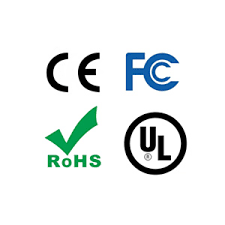
●Requirements for compliance: test reports, labeling rules, and certifications (depends on the market)
●Lead time goal: the time it takes to make and ship the product
If your needs aren't clear, factories will make different guesses, and you'll end up comparing the wrong numbers.
Where to Find Chinese Manufacturers
A. Start with the Right Manufacturing Clusters
China's factories are grouped by industry. You can find more specialized factories by searching for a product and a city or region.
Some examples (very general):
●Shenzhen/Dongguan for electronics and accessories
●Foshan has furniture and building materials.
●Yiwu for small goods
●Guangzhou and the area around it are the main places where textiles and clothing come from.
Tip: To get more specific results, use "factory" + "OEM" + your product keyword + the name of the cluster city.
B. Use B2B Platforms (Good for Finding Things)
B2B platforms are great for quickly making a long list but that does not prove that they are reliable. Use them to find suppliers and then check them out on your own.
C. Trade Shows (Finding High-Quality Suppliers)
Trade shows are a great way to compare samples, meet decision-makers and find serious factories faster, especially for OEM/ODM projects.
D. Google Search and Factory Websites
A lot of strong factories don't put a lot of money into marketplaces. You can find suppliers with real skills by searching the web but it's even more important to check them out.
E. Sourcing Agents / Procurement Partners
If you are buying more than one SKU or are in another country, a local partner can help with:
●Screening and visits to factories
●Talking to suppliers and following up
● Inspections for quality control and fixing problems
● Planning for consolidation and shipping
How to Tell the Difference Between a Real Factory And A Trading Company
Not every "manufacturer" is a real factory. Some companies that trade act like factories.
Signs that it's probably a real factory
●Can show pictures and videos of the production line, machines, and workshop areas.
● Gives the address of the factory and can host visits and audits.
●Can clearly explain the steps and materials used in manufacturing.
●Has consistent lead times and is able to talk about capacity (lines, workers, peak season)
● Knows what QC points are and can explain the inspection process (incoming, in-process, and final)
Signs that could probably indicate that its not a real factory
●A very wide range of products in different categories.
●Won't show the factory floor or only shows a "showroom".
●Answers that are not clear, like "same quality," without going into detail about the material or process.
●Makes you pay quickly without checking the specs.
●Can't explain standards for QC or packaging.
Traders aren't always bad; they can help with small orders and mixed SKUs. The most important thing is that you can see what you're buying.
Make a Shortlist: A List of Qualifications
From your longlist of 10 to 30 suppliers, pick the best 3 to 5 by checking:
●Business license or company registration (a basic check of legitimacy).
●Type of supplier confirmed (factory, trader, or both).
●Experience exporting to your markets.
●System for quality control (incoming, in-process, and final inspection).
●How fast and clear communication is (this predicts how well things will be done).
●Structure for MOQ and price breaks.
●Lead times for capacity and peak season.
●Ability to meet your legal obligations.
●A willingness to give samples and proof of inspection.
Send a standard RFQ, This will help quotes be compared
An RFQ (Request for Quotation) that is clean should have:
●Pictures or drawings of the product along with specifications.
●Requirements for materials, finish, and performance.
● Different colors and sizes, as well as the expected mix.
●Rules for labeling and packaging.
●Number of items ordered (trial + forecast).
●Request for Incoterms (EXW, FOB, CIF, DDP).
●Country of destination and timeline.
●Required test reports or certifications (if any).
●Ask for price tiers based on how many you want.
It's important to ask if the quote includes packaging, labels, inner protection, and any costs for tools or molds.
Sampling and "Spec Lock" (Stop "Sample Good, Bulk Bad")
Sampling isn't just a formality; it's the basis of your quality control.
The best way to do this is:
●Get samples from two to three suppliers you are interested in.
●Check the function, durability, look, and packaging.
●Give the go-ahead for a "golden sample" reference.
●Write down the specifications for the materials, dimensions, tolerances, and packaging.
Set change-control: no changes are allowed without written permission.
This one step stops most future arguments.
Place a trial order and do quality control before shipping.
Before scaling up the volume:
●Place a small test order.
●Check the items before they are shipped (with photos/videos and a checklist or AQL for bigger orders).
●Make sure the carton is strong, the measurements are correct and the labels are right.
●Make sure the packing list matches the actual cartons (this stops problems with customs).
If the supplier does well under real pressure, then scale.
Talk about terms that protect you, not just the price per unit.
Your agreement should make clear:
●Handling lead time commitments and delays
●Terms of payment (deposit/balance, staged payments)
●Policy for defects (replacement, refund, or credit)
●Warranty and spare parts (if needed)
●Standard for packaging, especially for fragile items
●Ownership of tools and molds (for OEM/ODM)
●Terms of confidentiality and intellectual property (when necessary)
A unit price that is a little higher but has strong terms often wins on total landed cost.
Plan logistics ahead of time (Incoterms are important)
●EXW: you pick up at the factory (the buyer has more responsibility)
●FOB: the supplier brings the goods to the port and clears them for export (this is common for sea).
●CIF: means that the supplier pays for shipping by sea to your port (you take care of the import).
●DDP: stands for "delivered duties paid," which makes it easier for many buyers to import.
Pick based on how well your team can handle risks and how much risk they are willing to take. Many new e-commerce sellers like DDP routes because they are easy to use, while bigger importers often use FOB.
Create a system for reordering so you don't have to start over.
Keep a simple "source of truth" for your suppliers:
●the most recent approved spec sheet and pictures
●history of quotes and minimum order quantities
●records of lead time
● Reports from quality control and a history of defects
●standards for packaging and labeling
●backup supplier choices for the most popular items
This is how you grow without causing chaos in the supply chain.
A Quick Guide to Finding a Factory in China
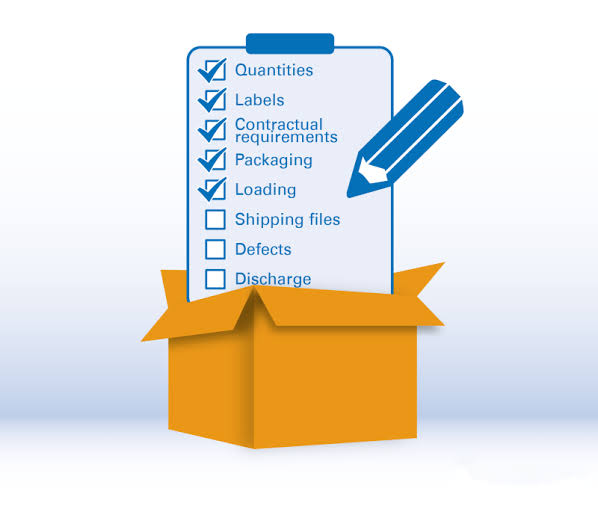
✅ Requirement sheet made (specs, packaging, compliance, qty).
✅ Longlist made from clusters + platforms + web + fairs.
✅ Factory vs trader checked.
✅ RFQ made standard for quotes that can be compared.
✅ Samples tested and specifications written down.
✅ Trial order finished and quality control done before shipping.
✅ Contract includes lead time, defect policy, and packaging standard.
✅ Shipping terms chosen (EXW/FOB/CIF/DDP)
✅ Reorder paperwork organized for scaling.
FAQ
Is it safe to look for Chinese manufacturers online?
Yes, as long as you check the supplier's identity, lock the specs, sample, and inspect before shipping.
Do I always need a sourcing agent?
Not all the time. A local partner can lower risk and improve execution (QC, consolidation, supplier follow-up) if you're overseas, buying a lot of SKUs, or increasing volume.
What do buyers do wrong the most?
Not doing spec lock and QC. Most "bad suppliers" turn into "bad outcomes" because the requirements weren't written down and checked.