Chinese Shoe Size Chart
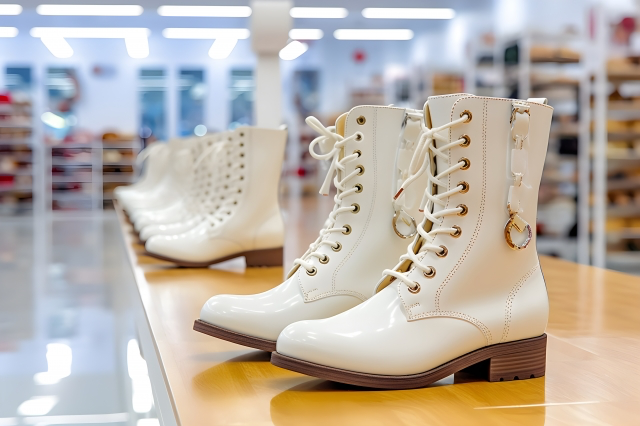
The Chinese shoe size chart differs from the Japanese system in that it uses numerical notation.
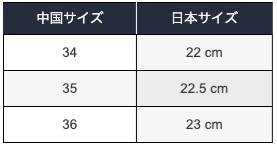
Women's sizes are listed as 34, 35, 36, and men's as 38, 39, 40, etc., but these are not in centimeters.
To convert between Japanese and Chinese shoe sizes, use the following formula:
(Chinese size + 10) ÷ 2 = Japanese size
is used.
Women's Size Conversion Chart
Men's Size Conversion Chart
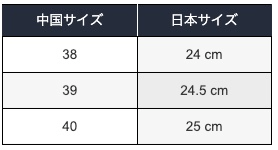
Size Conversion Details
1. Chinese Shoe Sizing
Sizes are numerical values and are not expressed in centimeters.
2. Important Notes
When selling, be sure to accurately convert Chinese sizes to Japanese sizes and clearly indicate them.
This will help prevent buyers from having trouble choosing the right size and reduce the likelihood of returns or complaints.
3. Slight Differences
Shoe sizes may vary slightly depending on the brand or manufacturer.
When selling shoes, careful attention is required, such as specifying how to measure foot length and clearly indicating the corresponding Japanese size.
Additionally, providing buyers with a thorough explanation of sizing in advance will help them feel more confident when purchasing shoes.
Tips for Choosing Shoes and Measuring Your Feet
When choosing shoe sizes, you need to consider not only foot length but also foot width and instep height.
To help customers choose shoes that fit their foot shape, be sure to clearly state the product description and actual measurements.
It is also important to have buyers measure their own foot length accurately.
We recommend following the steps below for measurement.
・Place your foot on a piece of paper and measure the length from the heel to the tip of your longest toe.
・Measure both feet and use the size of the larger foot as your reference.
Since feet tend to swell slightly over time, measuring them at the end of the day will help determine the appropriate size.
Furthermore, clearly stating your return and exchange policies in case of a size mismatch provides peace of mind and makes it easier for customers to make a purchase.
Summary
What did you think?
In this article, we explained how to read Chinese shoe size charts and how to convert sizes between China and Japan.
Let’s help customers choose the right size and improve their satisfaction.
Related Articles
All articlesYiwu Market Guide for International Buyers
The Yiwu Market is a place to find suppliers in China especially for people looking for small items wholesale products with low minimum order quantities, mixed orders, gifts, household stuff, accessories, toys, stationery, packaging and seasonal products. The Yiwu Market is huge it has thousands of suppliers showing their products in one place. You can find anything you need here at the Yiwu Market. The Yiwu Market is not like a store where you pick something and take it home. It is a market. Most booths are like showrooms. Buyers visit the Yiwu Market, place orders and then the products are made or prepared. After that the goods are shipped from the Yiwu Market. To succeed in sourcing from the Yiwu Market you need to know how it works. You should understand what the Yiwu Market is good for, how to choose suppliers at the Yiwu Market how to check product quality at the Yiwu Market and how to ship products from the Yiwu Market. You have to do your research and plan carefully to get the best out of the Yiwu Market. Buyers need to understand the Yiwu Market to source successfully from the Yiwu Market. The Yiwu Market is good for commodities and MOQ wholesale products. The Yiwu Market has products across every consumer category. Buyers should know how to evaluate suppliers at the Yiwu Market and control quality at the Yiwu Market. Logistics is also important once you have bought something from the Yiwu Market.
Why Does Customs Hold Things Up Over "Just One Document"?
“We’re stuck because of paperwork”—this is a phrase you often hear in the world of imports. The goods seem fine. The quantities match. Yet, customs clearance isn’t moving forward. Why does paperwork alone cause such a major problem? In this article, we’ll break down the reasons from a structural perspective.
Yiwu's Ultimate Market Sourcing Guide For Global Buyers In 2026
The Yiwu International Trade Market, also well known as the "World's Supermarket" is the world's largest wholesale market for small commodities. This trading market has been designed to serve importers, product distributors, commodity retailers and e-commerce sellers from across 210+ world countries and regions. With over 75,000 physical booths and 400,000+ product SKUs ranging from small to medium and extra large products, of all diversities,categories and types, the Yiwu International Trade Market has become the top sourcing destination for global buyers seeking cost-effective, diversified and customizable wholesale products. The Yiwu's Ultimate Market Sourcing Guide For Global Buyers In 2026 is a guide aimed at elaborating on the Yiwu Market's core advantages, district layouts/product types, standard procurement/purchasing processes,common pain points, professional sourcing solutions and sourcing agent options for global newcomers and long-term buyers.
Hardware Products and Tools Sourcing from China
When you purchase hardware products from China you can earn a lot of money. However if you only consider the price you will likely end up losing money. You need to think about the strength of the hardware products materials and how accurate the sizes of the hardware products. You also need to consider how well the hardware products resist corrosion and the quality of the surface treatment of the hardware products. Hardware products from China are really different from the things you can buy in stores. China is one of the places in the world where they make hardware and tools. They make all sorts of things like hand tools, fasteners, hardware for furniture, tools for building and tools for gardening. If you want to buy hardware products from China and do well you have to be very careful. You need to be careful about what hardware products you're buying and who you are buying the hardware products from. You need to check the quality of the hardware products. What certificates the hardware products have. You also need to think about how you will get the hardware products, from China to where you need the hardware products to be.