The Process of OEM Manufacturing for Home Appliances
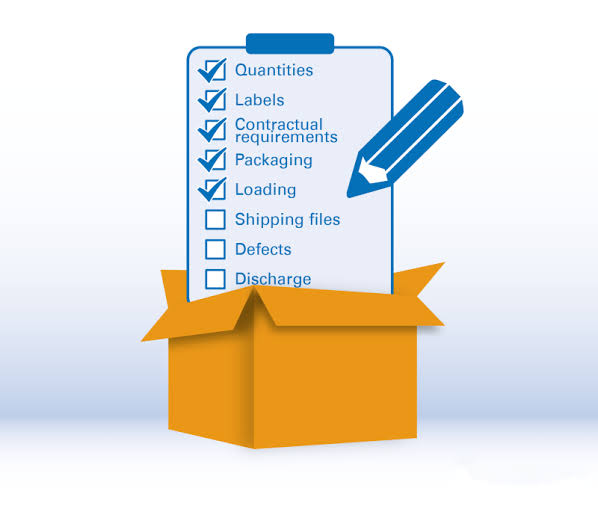
The process of OEM manufacturing for home appliances can be broadly divided into the following steps.
① Product selection and market research
② Factory selection and research
③ Meetings
④ Contract and Order Placement
⑤ Sample production and verification
⑥ Manufacturing
⑦ Inspection and Shipping
Furthermore, when dealing with home appliances, it is essential to have a solid understanding of the difference between AC (alternating current) and DC (direct current).
Many electrical appliances operate using these two types of power.
For example, you may see these designations on devices you encounter frequently in daily life, such as AV equipment that comes with an AC adapter or electric fans that use DC motors.
Understanding the fundamental differences between AC and DC, as well as their respective characteristics, is crucial for the design, production, and use of home appliances.
We hope this article will help you grasp the OEM process for home appliances and proactively avoid potential obstacles throughout the process, from product planning to market launch.
What do AC and DC stand for? What do they mean?
AC (Alternating Current) refers to an electric current whose direction changes periodically.
Because of this property, AC is well-suited for efficiently transmitting electricity over long distances.
The direction of AC changes several times per second; the rate of this change is called the "frequency" and is measured in hertz (Hz).
In contrast, DC (Direct Current) refers to direct current, which is characterized by a current flow that maintains a constant direction.
DC is supplied by dry cell batteries and rechargeable batteries, and because the current flows in only one direction, there are positive and negative terminals.
This is also why you need to align the positive and negative polarities correctly when inserting a dry cell battery into a device.
We use both of these types of current frequently in our daily lives.
AC is supplied from household outlets and powers many home appliances.
On the other hand, rechargeable devices such as smartphones and laptops are charged via adapters that convert AC to DC.
While you don’t need to worry about positive and negative polarity when using a wall outlet, you must check the polarity when using dry cell batteries.
This difference stems from the fundamental characteristics of AC and DC and is essential knowledge for using electricity safely and effectively.
Understanding the science behind these currents we encounter daily enables us to use electrical devices more wisely and troubleshoot issues effectively.
Why is the electricity supplied to household outlets AC?
Many household appliances actually run on direct current.
This is because the internal circuits of electronic devices are powered by DC.
For example, computers, smartphones, and LED lights use DC power internally.
However, the power supplied to homes is alternating current (AC).
This is largely due to efficiency considerations during the power transmission process.
When electricity is transmitted from power plants to consumers’ homes, it travels long distances, resulting in power loss due to resistance in the transmission lines.
To minimize these losses, electricity is transmitted at very high voltages.
Generally, power is transmitted at ultra-high voltages ranging from 150,000 V to 500,000 V.
However, since this high voltage is not suitable for direct use in homes, it is converted to an appropriate voltage by transformers installed in substations and on utility poles.
Alternating current (AC) has an advantage over direct current (DC) in minimizing power loss during this process.
AC voltage is easy to convert; it can be converted from high voltage to low voltage and vice versa, allowing power losses during this conversion process to be kept relatively small.
In the case of DC, larger losses occur when converting voltage, making it unsuitable for long-distance power transmission.
For this reason, AC is used to transmit power to homes, and after being converted to a voltage suitable for household use, it is converted back to DC by the AC adapters and internal circuits of electrical appliances before being used.
While this double conversion process certainly involves some loss, considering the overall efficiency and safety of the power transmission process, the current system is the most rational solution.
As a result, AC is used for household power supply.
What are the pros and cons of cultural exchange?
1. Advantages
There are several notable advantages to using alternating current (AC), but one of the most important is that it is easy to transform.
High-voltage electricity transmitted from power plants can be easily adjusted to the voltage required at the point of use.
For example, electricity transmitted from power plants is sent at very high voltages, but as it approaches residential areas, this high voltage is reduced to a level safe for use within homes.
This ease of voltage transformation significantly reduces the cost of infrastructure such as power lines and substations, leading to a more efficient power supply.
Another advantage of AC is that it is easy to cut off in the event of an accident.
In AC, the voltage cycles between positive and negative, and during this process, there are moments when the voltage and current momentarily drop to zero.
By using this zero point to cut off the power, damage to the electrical system can be minimized in the event of an accident.
This feature is extremely important for enhancing the safety of the power system.
2. Disadvantages
A disadvantage of using AC is that, in order to maintain the target voltage, insulation must be capable of withstanding instantaneous voltages (peak voltages) higher than the average value.
Since the voltage in AC fluctuates over time, a peak voltage of approximately 141 V (√2 times the RMS value) is required to obtain an RMS value of 100 V.
For this reason, electrical appliances and equipment that use AC require higher insulation performance.
Furthermore, since there is theoretically no power generation at the moment when both voltage and current are zero, a voltage higher than the target must be applied to cover this gap and ensure the effective voltage.
What are the advantages and disadvantages of direct current?
1. Advantages
There are several advantages to using direct current (DC), but one of the most significant is that the transmission line configuration is simple, resulting in a reduced design burden.
With DC, power across a wide range of voltage levels can be transmitted using just two wires: positive and negative.
This simplicity facilitates the design and construction of power transmission systems, which is particularly advantageous for localized power distribution and small-scale systems.
While DC transmission is less efficient than AC transmission, this is due to the inherent characteristics of DC, whereas AC systems often require more complex designs.
Additionally, since power factor does not need to be considered in DC transmission, there is the advantage of being able to handle larger amounts of power through the same cables without worrying about the ratio of active power to total power.
Power factor refers to the ratio of the power actually doing work in a power transmission system to the total power, and this power factor is important in AC systems.
In DC transmission, the concept of power factor is unnecessary for power conversion and transmission, enabling more efficient power transmission.
2. Disadvantages
It is difficult to change the voltage.
Due to the nature of DC, where the direction of current and voltage are constant, additional equipment is required to change the voltage.
This can be particularly inconvenient for long-distance transmission and power regulation.
Additionally, DC presents the challenge that it is more difficult to interrupt the circuit in the event of an accident than with AC.
With AC, there are moments when the voltage periodically drops to zero, making it easy to cut off the power at that point; however, since there are no such moments with DC, the cutting-off devices tend to be more complex and expensive.
Furthermore, electric motors and other devices that generate DC often make extensive use of contact parts, which are prone to failure due to contamination and wear.
As a result, maintenance frequency increases, leading to higher costs.
Summary
What did you think?
Understanding why AC is suitable for power transmission and why DC is suitable for certain electronic devices is a key factor in ensuring the success of OEM production.
Furthermore, grasping the basic principles of power supply enables you to improve production efficiency, reduce costs, and develop safe products.
At HubBuyer, we aim to support businesses in understanding these fundamental electrical concepts and applying them to their production plans, enabling them to bring more competitive products to market.
When manufacturing home appliances via OEM, it is essential to understand the types of current and their characteristics, as well as power transmission methods, as discussed in this article.
Please make use of this knowledge to efficiently produce optimal products and meet market needs.
The content of this article was researched and compiled independently by HubBuyer. We hope you find it helpful.
HubBuyer has offices in Japan and China, and our mission is to handle all operations within China and deliver products to Japan (including direct FBA shipping) on behalf of our business clients.
If you are considering importing and selling products from China, we encourage you to use HubBuyer’s services.