The Electrical Appliance and Material Safety Act and the Importance of the PSE Mark
The Electrical Appliance and Material Safety Act and the PSE mark play a vital role in ensuring consumer safety.
While electrical products may pose risks such as fire or electric shock during use, the Electrical Appliance and Material Safety Act establishes regulations to minimize these risks.
The PSE mark serves as a reliable indicator that a product meets safety standards, giving consumers the confidence to purchase products with peace of mind.
The combination of the law and the mark contributes to improving product safety and serves as an important protective measure for both consumers and retailers.
Responsibilities and Obligations of Sellers
Under Article 27 of the Electrical Appliance and Material Safety Act, sellers are responsible for ensuring that the electrical appliances they sell bear the PSE mark and any other labels required by law.
Specifically, they are obligated to verify that products meet safety standards and that the PSE mark and other legally required markings are properly affixed.
They are also responsible for responding promptly to consumer complaints and taking measures to ensure product safety.
These obligations are essential for sellers to provide safe products to consumers and are key elements of legal compliance and consumer protection.
Legal Requirements for the Sale of Electrical Appliances Bearing the PSE Mark
There are legal requirements for the sale of electrical products bearing the PSE mark.
This requires that the products comply with the Electrical Appliance and Material Safety Act.
Sellers are responsible for verifying the safety of the products and ensuring that the PSE mark is correctly displayed.
It is also important to provide information about the products and raise consumer safety awareness.
These legal requirements are essential for protecting consumer safety and serve as standards that sellers must follow to ensure legal compliance and product safety.
Items that sellers must verify
Sellers must verify the following items in accordance with the provisions of Article 27 of the Electrical Appliance and Material Safety Act.
1. Does the product being sold qualify as an electrical appliance?
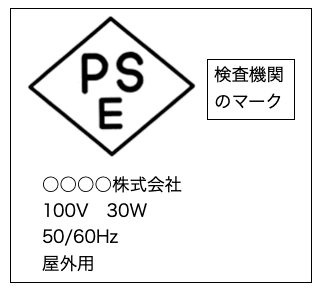
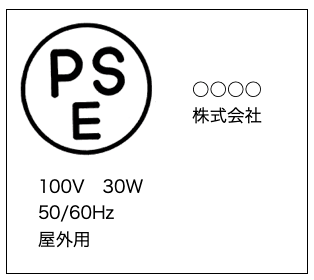
2. If the product is an electrical appliance, is it a specified electrical appliance (diamond mark) or a non-specified electrical appliance (circular mark)?
3. Is the PSE mark affixed to the specified electrical appliance (diamond mark) or non-specified electrical appliance (circular mark) correctly displayed?
4. Are the name of the manufacturer or importer and the name of the registered inspection agency displayed near the PSE mark affixed to the electrical appliance?
5. Is the PSE mark displayed on the surface of the electrical appliance in a manner that cannot be easily erased?
Display Examples:
Example of marking for Specified Electrical Appliances
Display example for non-specified electrical appliances
Reaffirming the Importance of Retailers’ Obligations
The obligations of sellers are crucial to ensuring consumer safety.
Compliance with these obligations ensures product safety, allowing consumers to purchase and use products with confidence.
Compliance with laws and regulations and proper product labeling help build a trustworthy market, benefiting both consumers and sellers.
When sellers fulfill their responsibilities, product safety improves and consumer trust is built.
Initiatives to Maintain Trust with Consumers
To maintain a relationship of trust with consumers, retailers prioritize transparency and integrity.
By ensuring product safety and providing accurate information, they build consumer trust.
It is also important to respond promptly and sincerely to complaints and inquiries, and to listen to consumer feedback.
Furthermore, by engaging in consumer safety awareness campaigns and working to improve product quality, we strengthen our relationship of trust with consumers and build long-term partnerships.
Summary
What did you think?
We’ve discussed the legal requirements for selling electrical products bearing the PSE mark and the obligations of sellers.
The regulations under the Electrical Appliance and Material Safety Act and the importance of the PSE mark are essential for ensuring consumer safety.
By verifying product safety and providing appropriate labeling and information, sellers build trust with consumers.
The proactive role of sellers—including initiatives to raise consumer safety awareness and effective complaint handling—enables the provision of safe products and the realization of sustainable business practices.
In this way, focusing on legal compliance and consumer protection helps create a safer and more reliable market environment.
The content of this article was researched and compiled independently by hubbuyer.
We hope you find this information useful as a reference.
Leave your Alibaba and Taobao sourcing, as well as FBA direct shipping, to hubbuyer.
hubbuyer has offices in both Japan and China, and our mission is to handle all operations within China and deliver goods to Japan (including FBA direct shipping) on behalf of our business partners.
If you are considering importing and selling products from China, please consider using HubBuyer’s services.
References
Ministry of Economy, Trade and Industry: Overview of the Electrical Appliance and Material Safety Act
https://www.meti.go.jp/policy/consumer/seian/denan/act_outline.html
Ministry of Economy, Trade and Industry: Overview of the Electrical Appliance and Material Safety Act and Points of Attention for Sellers
https://www.meti.go.jp/policy/consumer/seian/denan/file/06_guide/seller_guide01.pdf