Types of Containers
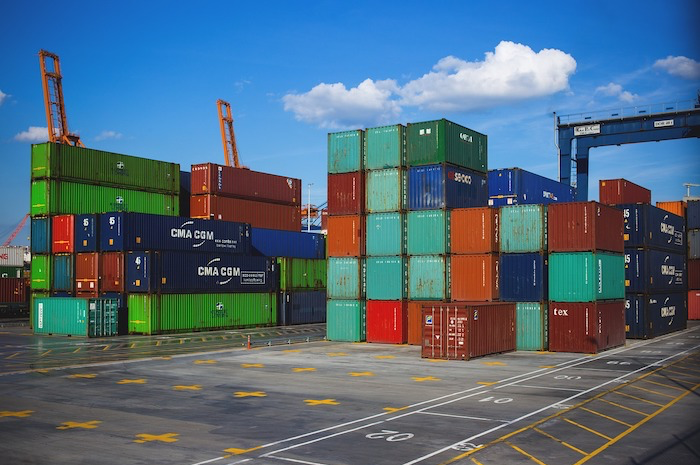
There are typically three types of containers used for imports from China.
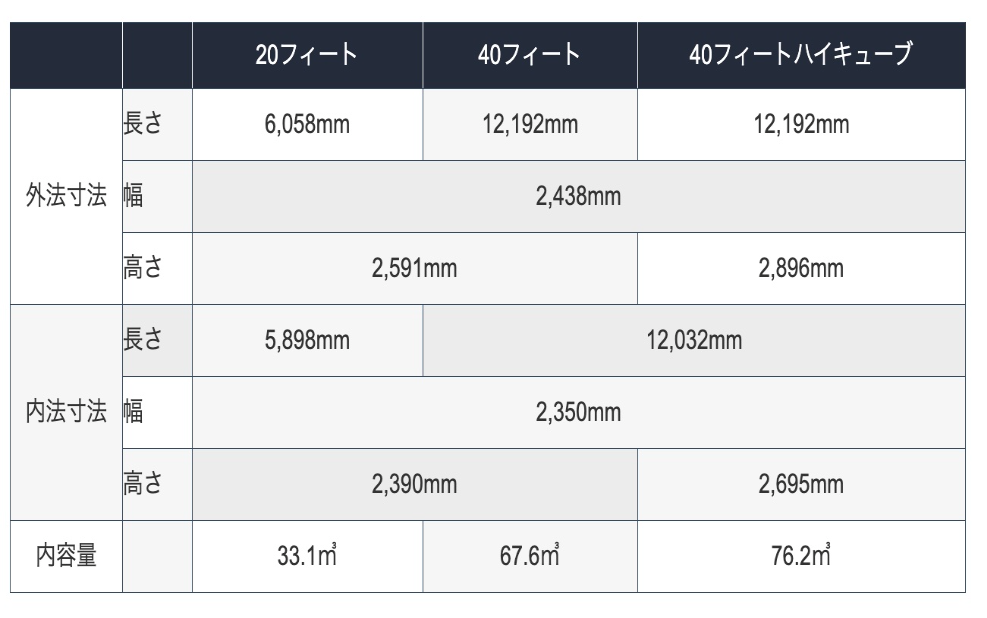
*The dimensions above are for reference only. They may vary slightly depending on the container manufacturer.
How much does it cost?
Costs vary depending on the SKU quantity, shipping carrier, and import timing.
Please contact a HubBuyer representative, and we will provide you with a quote.
As a rough guide, keep the following in mind:
Importing by container costs about one-sixth of air freight.
Importing by container is approximately one-third the cost of fast ship freight
*These are approximate figures.
How long does delivery take?
In most cases, delivery takes about 10 to 15 days after the item leaves hubbuyer.
However, delivery may take longer if customs clearance takes time or due to special circumstances (such as COVID-19 lockdowns).
Points Often Overlooked When Importing via Container
Even if you import goods in containers and haul them from the port by trailer, you might run into trouble if you can’t make the final turn right before the warehouse, so this is a very, very important point that requires checking in advance.
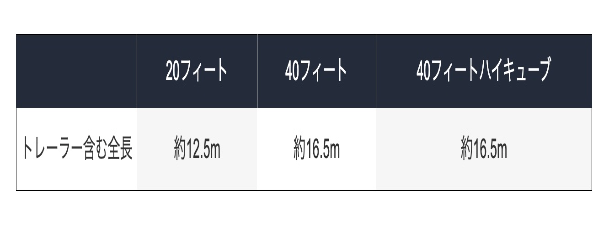
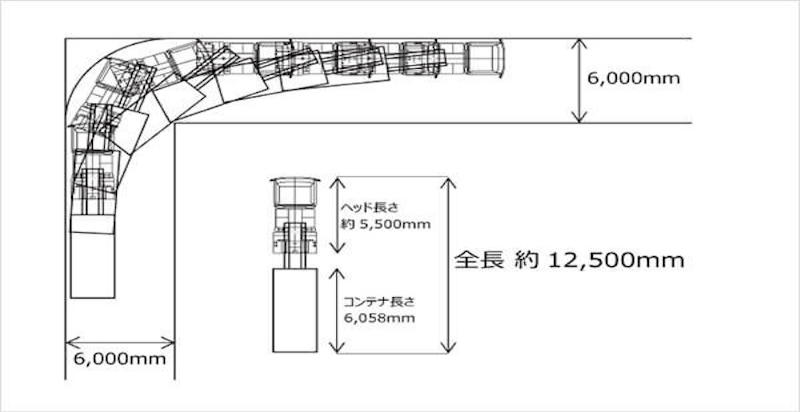
First, let’s look at the overall length when the trailer is attached (while driving on the road).
Overall length with the trailer (head) attached
Minimum width of a right-angle passage
Now that you know the total length, you’re probably wondering about the minimum right-angle passage width.
*Minimum right-angle aisle width: This refers to the narrowest width through which a vehicle can pass when the width of the entrance and exit lanes is the same at a right-angle turn.
Minimum right-angle passage width for a 20-foot container (6 m)
Minimum right-angle passage width for a 40-foot container (7.5 m)
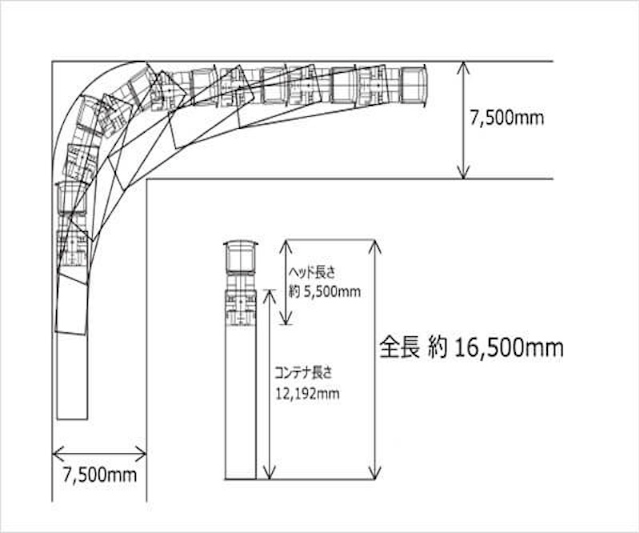
Make sure the container can move smoothly from the main road to the unloading area.
If it’s unclear, measure it with a tape measure.
If there is no space for unloading
What should I do if the road is wide but there isn’t enough space to park a trailer in front of the warehouse?
The answer is to “use the road use permit system.”
You can park on the road in front of the warehouse to perform unloading operations.
You must apply to the police station with jurisdiction over that location.
Pursuant to Article 77, Paragraph 2 of the Road Traffic Act, permission must be granted if any of the following conditions (1) through (3) apply:
(1) When it is determined that there is no risk of obstructing traffic
(2) When it is determined that the activity will not obstruct traffic if conducted in accordance with the conditions attached to the permit
(3) When it is recognized that, although there is a risk of obstructing traffic, the activity is unavoidable in the public interest or due to social custom
In short, the key point is whether or not it will obstruct traffic.
In addition, submission of a safety plan and the deployment of security guards are required.
National Police Agency website
What if the road is too narrow for the container to pass through?
The answer is to use a "de-containerization truck."
A drayage company (transportation company) near the port will perform the unloading operation there and then transfer the goods directly to a truck for delivery.
You should let your customs broker know that you’d like to use a “de-bunkering truck.”
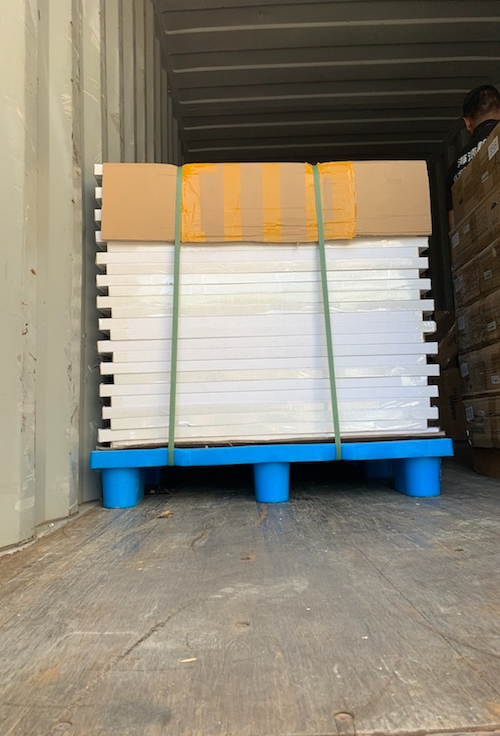
One important point to note is that the goods must be loaded onto pallets when placing them in the container.
If the goods are loaded directly into the container, forklifts cannot be used, so your request may be refused.
Preparing to Receive the Container
1. Securing workers to perform unloading
You must load and unload the containers yourself.
Loading on the Chinese side is handled by HubBuyer’s dedicated loading staff.
On the Japanese side, the importer must perform the unloading. (In the case of unloading onto a truck, the drayage company will handle it on your behalf.)
The trailer driver will not assist with this.
2. Container cutter
Once loading is complete, the container will be sealed with a seal.
Sealing refers to securing the container with metal bolts or wire locks to prevent it from being opened en route.
The importer must prepare a container cutter (bolt cutter) in advance.
They are available for purchase on Amazon. Be sure to get a large, sturdy pair.
If you forget this, you’ll find yourself in a difficult situation where the container has arrived but you can’t open the door, making it impossible to unload the cargo.
3. Broom
That’s right—a broom for cleaning. Once unloading is complete, be sure to clean everything thoroughly with a broom.
If you don’t clean up, you may be charged a cleaning fee later.
The amount varies depending on the extent of the dirt and the shipping company, but as a general guideline, you can expect to be charged between 5,000 and 10,000 yen.
Be sure to take photos before, during, and after cleaning.
It’s even better if you have comparison photos showing the before and after. They might come in handy if the worst happens.
4. Number of staff assigned to the unloading operation
Unloading must be completed within two hours.
Assign enough staff to ensure the work is completed within two hours.
If the operation runs over time, a waiting fee will be charged every 30 minutes or every hour. Keep in mind that this fee is approximately 3,000 yen.
Summary
What do you think? I hope this has cleared up any questions you had about container imports.
HubBuyer has been dedicated to sourcing services from China for over 10 years, offering a wide range of services.
Our user-friendly website and affordable agency and international shipping fees are the secrets behind HubBuyer’s popularity.
Please consider entrusting your China sourcing needs to HubBuyer.
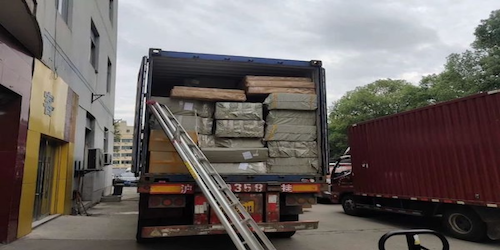
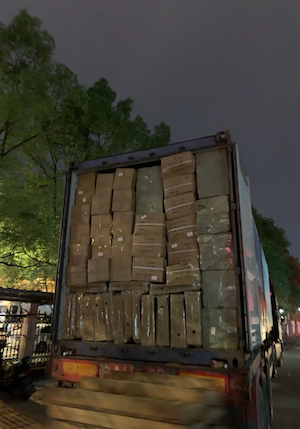
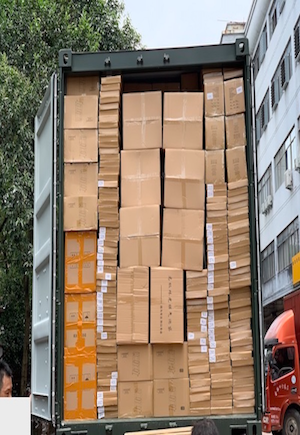
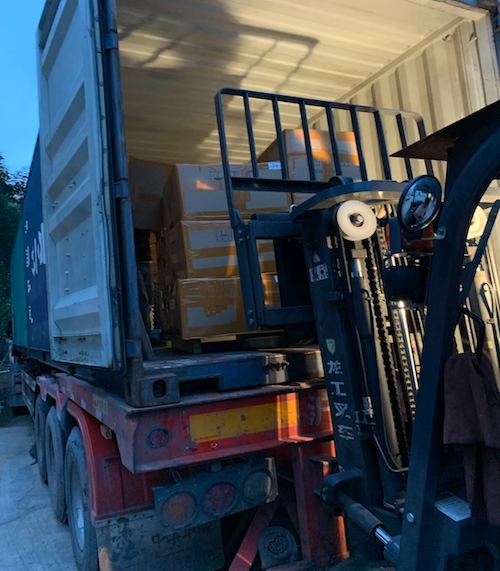
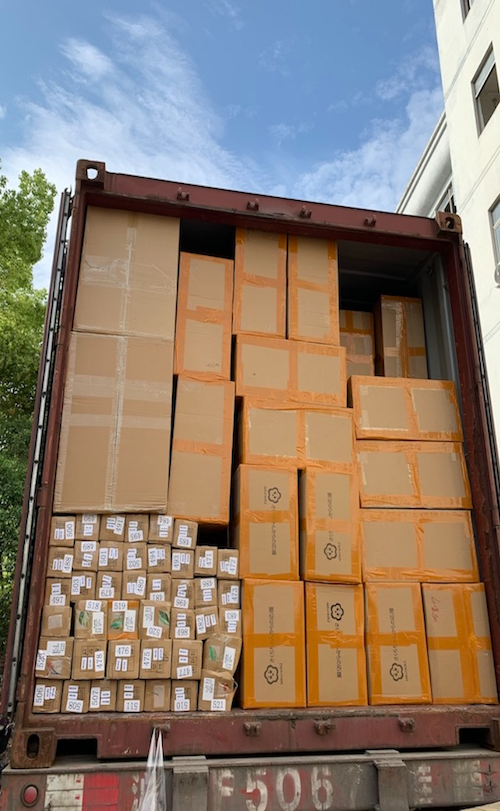
A scene of HubBuyer’s container loading operations