Start With A Clear Product Brief
(Please, don’t skip this)
Before you convey your product requirements to a single supplier, write-up a one-page Product Brief. This will save you probable weeks of product/product specification indecisiveness due to uncertainty and prevent issues like “eye-catchy samples” which end up failing in mass production.
Your product list should Include information such as:
● Product name/usage.
● Target customer base/ desired price points.
● Product core specifications (materials, measurements, colors, performance, customization, packaging criterias for shipment.)
● Quality Requirements (acceptable defects, durability, finishing touches, product tolerances, product returns/refund terms)
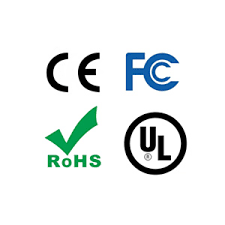
● Compliance requirements (CE/FCC/UKCA, CPSIA, FDA, REACH, etc.)
● Estimated order quantity (commencing orders + scaling forecasts)
● Anticipated landed cost (factory prices + logistics + taxes + fees)
Tip: Do not ask suppliers for “product recommendations”. Ask them to quote your product specifications. You need control.
Choose The Right Sourcing Platforms
China has a multitude of sourcing mediums. The most favourable medium to make use of will depend on your business stage (beginner stage, scaling stage, soaring stage) your budget and the complexities involved with procuring/shipping your kinds of products.
A、B2B platforms (Suited For Fast Starters)
● Alibaba: Skilled in easing access to export-ready wholesalers/factories, supplier credibility and trading safety provision, higher propensity for communication in English.
● Made-in-China / Global Sources: Most times way more direct-factory inclined for certain categories.
You could use Made-in-China / Global Sources when you need:
● Quicker product sourcing/product discoveries.
● Smaller quantities-to-medium product MOQs.
● Export-ready wholesalers/suppliers.
B、Chinese Sourcing Platforms For Domestic Use Only
(Have a track record for being best in pricing but worse in workability)
● 1688: cheaper than Alibaba,provides access to a huge variety of products, but contains strictly domestic-focused listings.
● Taobao: Mostly retail/small wholesale; best for product testing and accessory purchases.
Make use of these when you need:
● Lesser prices per unit item.
● Excessive access to product varieties.
● Quicker sample testings (but you may require the assistance of an agent/help).
C、Trade Shows
(best for serious scaling)
● Canton Fair, Global Sources Hong Kong (category-specific fairs)
Make use of these when you need :
● In person meet ups for supplier verifications and product vettings.
● Way more convinient leverage for business talks and negotiations.
● Quicker and easier “supplier” authenticity and credibility filtering.
D、 Sourcing Agents
(best when you need execution)
Agents bring you assistance in form of:
● Potential supplier filtering.
● Language barrier eradication + transactionary aid.
● Consolidation, quality control, pictures, repackaging, shipment (If necessary).
● Local purchases from within the Chinese territory from 1688 and Taobao.
● Shipment coordinating.
You can equally use an Agent when:
● You can’t understand Chinese listings due to language barriers.
● You want multi-supplier product consolidation services.
● You need to reduce the probability of making costly operational errors.
Find Suppliers The Smart Way (Speedy Filtering)
When sourcing for suppliers or products, your aim isn’t to find “the cheapest supplier”, rather, your goal is to access "the most reliable supplier for your quality + timeline + budget."
Supplier Speedy Filtering Factors.
● Business Sector: factory vs trading company (both have no issue; but you would need to be clarified).
● Years Of Operation (In Business): Not error free but years of operation can help in attempting to attain functional and skillful perfection.
● Export Experience: Do they have a track record of having successfully shipped to your country before? If yes, you could ask for some proof or customer review and if no, then you could use this as your most certain filtering factor.
● Certifications: (Only if relevant and valid) Please do well to always cross-check.
● Product Specialization: An efficient factory/trading company or wholesaler would often specialise in a certain specific product type or category. It will be wise to be weiry of suppliers who specialise in too many categories.
Red flags
● Never makes room for video calls / factory pictures or making available business licenses for quick reviews.
● Be careful with extremely low prices or what we would like to call "Too-good-to-be-true" prices (which might often fall under deceptive advertising and sales tricks/tactics).
● Suppliers who push you into quick payments with zero documentation or accountability are often very very red flags.
● Suppliers who make providing pre-production samples a big deal are equally a red flag.
● Avoid suppliers who donot provide clear answers on product materials and product specifications.
Send An RFQ Which Enforces Clarification
Sending suppliers a Request For Quote message makes them take you more seriously. A strong and properly drafted RFQ forces serious replies and a weak and poorly drafted request for quote might make suppliers take you for granted and be negligent when dealing with you.
Below is a good example of An RFQ Template
(Edit it to suit your product options and you're good to go):
● Product: [name + photo/link].
● Product specifications: [materials, size, color, performance, packaging].
● Product quantity: [e.g., 300 pcs commencing order; 1,000 pcs in the next 60 days].
● Product target price: [Optional, so could be left out, but providing it is always helpful].
● Product branding: Include all branding information such as [logos, customisation packaging, inserts].
● Product compliance: Include the compliance laws for your product which go in line with the logistics laws for your country. [e.g., FCC / CE / CPSIA if needed].
● Product incoterm quote: FOB [Port] and EXW.
● Lead time: Product sample production time + mass production time.
● Request:
1. To know unit price by product quantity tiers.
2. To know the MOQ.
3. To know product sample production cost + shipping cost.
4. To know the production lead time.
5. To know payment terms.
6. For the production material list and the specification sheet.
7. Lastly, request for pictures/videos of current production and of finally produced goods.
Tip: Source for about 10–20 suppliers, vet them and filter them down to 3–5, then make a final pick from the 3-5 suppliers and place your order.
Verify Suppliers (Do Your Basic Due Diligence)
No one is saying you should turn into a detective—but you do need to very security conscious and put in place minimum safeguards.
Ensure you get:
● Video calls: Ask to see the workshop, warehouse and staff.
● Business license: Request a copy of the business license be made available to you
● Factory address: Confirm factory address matches the address placed on the shipping documents.
● References: Ask for reviews from past export customers (some won’t share; that’s normal).
● Order a sample: make sure you always start your procument process by first of all ordering product samples. (never skip this). This could be optional but equally recommended for higher risk orders.
● Use a third-party inspection company like B2B product sourcing companies for factory product audits and pre-shipment inspections.
The Role Of Samples In The Business Scaling Process. The goal is to enhance “repeatability” and not perfection.
A sample is not just to be used in product appearance assessment. It is not just for a “does it look good.” view. It’s role is to help you analyse whether or not suppliers can:
● Adhere to product specifications?
● Repeat and maybe even enhance quality at scale?
● Handle unforeseen customer requirement changes and customer feedback?
How To Best Make Use Of Samples
(best practices)
● Get 2–3 samples from different wholesalers,factories and or companies.
● Try making actual use of the product like a customer would (stress, drop, wash, heat, etc.).
● Assess the packaging box strength and barcode/label requirements.
● Document every issue with pictures, videos and clear explanatory notes.
Pro move: Always demand for a pre-production sample (PPS) after you pay the deposit, before mass production commences.
Transact And Negotiate Like An Experienced Buyer (not like a gambler)
You can negotiate price, but the biggest wins are often expressed in:
● Better payment agreements.
● Better product materials.
● Better defect return/refund terms.
● Better lead time adherance.
● Better product customisation/ product packaging.
● Better product spare part provisions / product part replacement policies.
Negotiation High Points
● Product unit price standards. (300 / 500 / 1,000 / 3,000 pcs).
● Flexible MOQs for commencing orders.
● Free product customization logos and product packaging setups (or reduced tooling fees).
● Good product clearance warranty/DOA policy (dead on arrival).
● Production timeline + penalties (if feasible).
Document Transaction Details (Put all purchase order essentials down in writing)
Your Purchase Order (PO) or contract or written document should include:
● Product name + version/date.
● Full product specification sheet + materials.
● Agreed product sample reference (photo + code).
● Product carton packaging details (carton size, weight, inserts).
● Product quantity + permitted over/under percentage (e.g., ±2%).
● Product quality standard (AQL level if you use it).
● Product quality control assessment requirements (pre-shipment inspection pass).
● Lead time schedules and shipment dates.
● Funding/payment terms.
● Incoterms and destination port/address.
Tip: Most quality disasters happen because the spec was “in chat,” not in the PO.
Understand Incoterms (EXW vs FOB vs CIF vs DDP)
Incoterms defines who bears the burden of product export/import transactions between the buyer and the seller and where export/import responsibilities transfer between sellers and buyers.
● EXW (Ex Works): The factory/wholesaler/supplier ensures products are loaded into the truck, which means buyer picks up goods from suppliers warehouse or factory, loads it into truck with aid of warehhouse workers, and from there on, risk transfers to the buyer and supplier ends its transaction deal at this point. This is often the Lowest price quote with most of the hassle/risk being borne by the buyer.
● FOB (Free On Board): Here, supplier handles the export/import risk from his warehouse till goods arrive at supplier's port. From supplier's port till goods arrive at the destination Country, risk is borne by the buyer. The supplier's deal ends with goods being delivered to port and loaded on ship. (Common for sea freight.)
● CIF (Cost, Insurance, Freight): Supplier is incharge of shipping down to destination port, but once goods arrive at destination Country's port, buyer handles import clearance/duties.
● DDP (Delivered Duty Paid): Supplier/forwarder are incharge of shipping + duty and they get final products down to your door step (less risk to almost no risk at all on the buyer but verify costs carefully).
Rule of thumb:
● For beginners: DDP (simple) or FOB (transparent).
● For experienced importers: FOB or EXW (more control).
Always Calculate Landed Cost (so you don’t “win” and still lose)
After all negociations are made and agreed upon, your product can only be said to be profitable if your landed cost works.
Your Landed Cost can be said to work only if you consider all the following:
● Factory unit price × quantity.
● Cost of tooling/molds (if any).
● Cost of inland China trucking (sometimes included).
● Cost of international freight.
● Cost of insurance (optional).
● Cost of custom duty/tariffs.
● VAT/GST (if applicable).
● Cost of custom broker fees.
● Cost of last-mile delivery.
● Cost of warehousing/FBA prep (if applicable).
Tip: Ask your freight forwarder for an “all-in estimate” early, even before ordering.
Timely Product Quality Control (QC) (Pre-shipment product quality control actually protects you)
Should a buyer only do quality control after the goods arrive the destination Country, it can be dangerous in the sense that any disfunctional products discovered after shipment cannot be exchanged or refunded and this can yeild grieve losses for the buyer. To avoid such incorrigible mistakes, It will be good to insist that suppliers provide the following:
Product QC Step-by-step Requirements:
1. Checks during on-going production (DPI): Such checks can catch problems really early. DPI(s) are of great help for large orders.
2. Checks before Pre-Shipment (Pre-Shipment Inspection (PSI)): This is the most common product quality check method. Here suppliers check finished goods and ensure all is well or provide solutions to possible defects before customer/buyer's final payment is made and final product shipment to the destination Country is done. To a very high degree, this largely prevents losses and benefits buyers.
3. Container Loading Check: Here, suppliers just ensure that correct quality cartons are used, proper and suitable quantities are loaded into the boxes and the right loading methods are used.
What to include in a QC checklist:
● Visible defects such as scratches, slight breakages, misprints, stains and colour/material inconsistencies.
● Product dimensions and packed up carton weight tolerances.
● Request proper checks of product functionalities (like electronic product buttons, charging and sealing etc.).
● If necessary, perform a drop/pressure trial/check.
● Request that the supplier does a clean packaging job making use of all necessary materials which will go into ensuring product protection in transit. (Packaging strength) + Labeling accuracy: Also, labeling accuracy checks are very important as they ensure that products are shipped carrying accurate information such as Adresses, contact information and carton content information.
● Regular sample checks (AQL if you use it).
Choice Of Logistics Route(Pick a medium of shipment based on Speed/Cost or Urgency)
● Air express (DHL/UPS/FedEx): These are the fastest and most expensive shipping routes. The fact that it is an air shipping medium makes its product choices more technical. Air shipping mediums are only best suited for shipping little samples or small high-margin goods.
● Air freight: Speed makes air freight very favourable and good for urgent restocks but it equally comes with a very high cost. If buyer feels like the use of air freight will not lead to any potential "bad business" due to high cost and low margins, then picking air freight will not have heavy negative repercussions.
● Sea freight (LCL/FCL):Sea freight comes at a very cheap cost. It equally does not have too much of technicality as far as the types of products you can send by sea. This makes sea freight very very favourable and best for bulky/heavy goods of all product categories and product types. The only disadvantage when it comes to sea frieght is the fact that it is not time efficient. (Its is a very slow shipping route. (It could take many many months for your product to arrive its destination Country). Should time be of the essence to any purchaser, then sea freight might not be the most favourable choice for you.
● Rail (to parts of Europe/Asia): Shipping by rail could sometimes be a middle ground
If you sell on Amazon:
● Make provision for proper labeling, carton rules and pallet requirements.
● Consider getting a preparation center for your personal use if your supplier can’t follow FBA rules accurately and consistently.
Compliance And Legal Functioning Basis. (do not ignore this)
Based on product categories and end point product destinations, you may need to carry out:
● Product functionality testing (for electronic products, kid's toys, cosmetic products and food-contact items)
● Carefully carryout product labelling/product usage instructive tasks. Clearly write out all Label information/ product warning labels and product guiding usage manuals.
● Ensure that all HS code classifications and documentations are properly done.
● Carry out proper branding/customization checks to avoid going against any branded/copyrighted designs. (IP checks)
NOTE THAT: Should your product ever have anything to do with the categories listed below:
● Kids (CPSIA in the US)
● Wireless/electronics (FCC/CE)
● Skin/food (FDA rules vary by product)
Practical approach: Inquire from a compliance lab or customs broker what necessary compliance and legal documents will be required before you order large quantities of goods in any of these categories.
Regular Mistakes That Must Be Avoided When Sourcing From China.
● Donot choose the lowest price supplier without confirming the product quality.
● Donot transact with a supplier who denies to define product specifications (It will prevent you from arguing later).
● Donot pay a 100% upfront without ensuring that the business deal is completely legal and authentic. You can provide a partial payment and complete your payment when goods are show to you via picture or video and then shipped off to your final destination.
● Donot skip product quality control inspection to “save money”, ensure that either the supplier, the factory or your personal agent is there to perform a pre-shipment quality control for you. This will help you save on lost money due to excess defective products in the longrun.
● Donot ignore or minimise the importance of properly executed quality packaging which will equally save you from lossing money due to defective or damaged inventory.
● Donot order too much on the first run (It is always good to test the waters).
● Donot limit yourself to using only one supplier. Always have atleast 3 or 4 backup suppliers, this will help you scale faster and ensure a consistent inflow of inventory.
A Simple Sourcing Workflow You Can Consistently Practice.
1. Sketch out a product briefing which should contain product specifications.
2. Single out 10–20 suppliers you feel will be able to provide you with good product availability services.
3. Please ensure you request for supplier quotations and compare quotes to help you decide which supplier will best suit you based on quotation prices per unit.
4. After comparing quotes, please go further to single out your top 3–5 top suppliers.
5. Picking out 3-5 top suppliers helps you focus on which supplier products to start requesting samples for testing on.
6. If requested sample qualities please you, negotiate and confirm product specifications with the supplier.
7. If you are satisfied with the transactions you have had with your supplier to this point, you can proceed to placing your order and paying your deposit.
8. A pre-order sample production for your order will then take place and if the sample is approved, then production of the total order will take place.
9. After final production, suppliers can help you carryout product quality inspection and clarify any issues that spring up due to the discovery of faulty products.
10. When all issues are duely handled, goods are all ready for shipment, final payment + shipping can be done.
11. For shipment to be done, Customers can choose the best incoterms that suit them and supplier will follow these terms to get products shipped to the destination Country.
12. When goods finally get to the final consumer and the deal is done, consumer can now provide supplier with post-order reviews + improvements opinions.
13. when customer gets out of inventory he can always repeat this process and ensure business consistency and scaling.
Quick Checklist On Efficient Ways To Shortlist Suppliers.Quick Supplier Shortlisting Methods.
● Check supplier's product category. (What category does supplier specialise in).
● Check if supplier's available products or production capacity can meet up with your desired MOQ + timelines.
● Check if supplier provides clear answers to product questions and has all legally need documentation to backup claims if necessary.
● Check if supplier accepts to allow for the provision of pre-order sample inspections and after production product quality inspections.
● Check if supplier offers stable and consistent communication services.
Before deposit payment
● Perform a final spec sheet confirmation.
● Confirm if packaging provided standards meet up with packaging requested standards.
● Ensure product order (PO) documents are signed.
● Confirm if incoterms and shipment plan are in line with your requested standards.
● Confirm Inspection plan.
Before final payment
● Verify pre-shipment inspection plan.
● Verify content of photos/videos received.
● Verify carton packaging/labellings + quantities.
● Confirm freight bookings.
FAQ
How many suppliers do I contact?
It will be advisable to contact 10–20. After proper assessment, most will be eliminated and you will be left with only 3–5 strong contenders.
Is it advisable to use a factory or trading company?
Both options are proper. Factories are more direct and a little cheaper, but they have higher MOQs and next to no flexibility when it comes to variety. Trading companies can be flexible in managing multiple factories, with lesser MOQs. What matters is transparency, quality control, and accountability.
What payment terms are normal?
Normal is mostly a 30% deposit and a 70% before shipment. PayPal or cards are better for small orders/samples. Use protective methods when possible.
How can one avoid scams?
Don’t rely on price. Verify business authenticity and supplier identity, do video calls, request samples and use inspection services. Be careful with unusual payment requests.