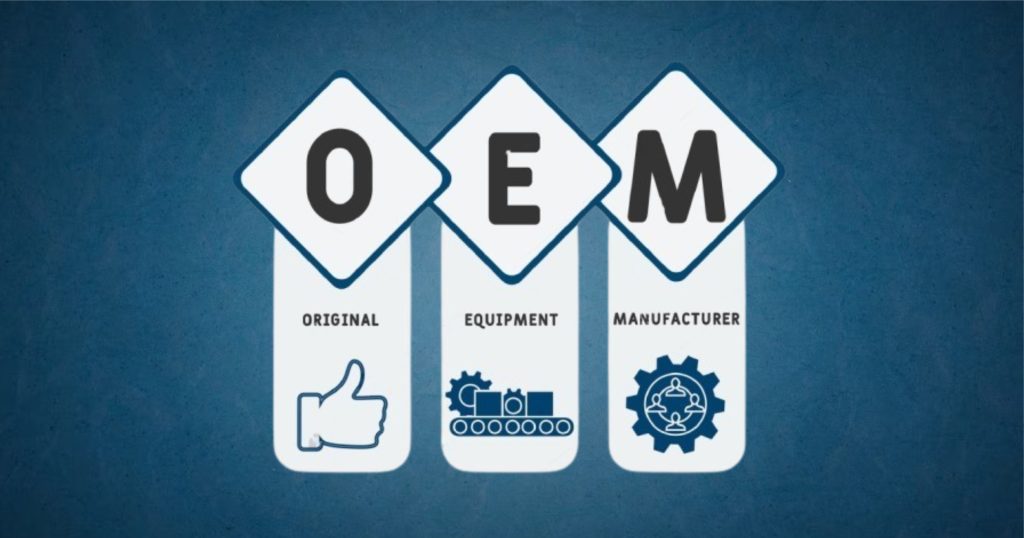
What Does OEM Mean?
An OEM manufacturer produces goods according to the buyer's specifications, including materials, design, features, and packaging, and then markets them under the buyer's brand rather than the factories. "We do OEM" is a supplier's way of saying, "We can customize and manufacture products for your brand."
OEM Meaning in Manufacturing
OEM applies across product categories. In clothing, it means custom fabric, sizing, and branded labels. In accessories, it involves choosing materials, logo methods, and hardware. In electronics, it means specifying capacity, casing, and features — all with your brand on the product and packaging.
OEM vs ODM vs Private Label
OEM (Original Equipment Manufacturer)
Built entirely to your specs. Highest customization and brand uniqueness, but higher MOQ and longer lead times.
ODM (Original Design Manufacturer)
Factory has an existing design you customize (logo, color, packaging). Faster and cheaper, but less unique.
Private Label / White Label
Ready-made product with minimal changes — just your logo and packaging. Fastest to launch, lowest uniqueness.
Quick rule: Choose OEM for a truly unique product. Choose ODM/private label for speed.
What Can You Customize with OEM?
OEM customization covers logo, materials, colors, dimensions, function, packaging, and branding details (labels, hangtags, QR codes). The more you customize, the higher the MOQ and lead time.
OEM Cost Structure and Lead Time
Beyond unit price, OEM costs include sampling/development, tooling (molds, printing setup), and compliance testing. Lead times typically span 1–4 weeks for sampling, 1–3 revision rounds, then 2–6 weeks for bulk production — plus shipping. Always request a full cost breakdown upfront.
Pros and Cons of OEM
Pros
undefined Stronger brand differentiation and identity
undefined More control over materials and quality
undefined Better long-term scalability and higher margin potential
Cons
undefined Higher MOQ and upfront investment
undefined Longer lead times due to development cycles
undefined Greater responsibility for specs, approvals, and QC
When Should You Choose OEM?
OEM is the right choice when you have a clear product idea, want to stand out from competitors, can afford sampling cycles and higher MOQ, and are building a long-term brand. If you're testing a new market with a limited budget, start with ODM/private label first.
FAQ: OEM Meaning
Is OEM just custom logo?
No. OEM usually implies deeper changes — materials, structure, specs, and packaging — beyond a simple logo swap.
Who owns the design in OEM?
It depends on your contract. Confirm IP and tooling/mold ownership in writing if it matters.
Can OEM have a low MOQ?
Sometimes — especially for apparel using in-stock materials — but full OEM typically requires higher minimums.
Key Takeaway
OEM refers to a factory that produces goods according to your precise requirements so you can market them under your own name. Although it has a larger MOQ, higher upfront costs, and longer lead times, it provides the greatest control and differentiation.
Related Articles
All articlesWhy Does Customs Hold Things Up Over "Just One Document"?
“We’re stuck because of paperwork”—this is a phrase you often hear in the world of imports. The goods seem fine. The quantities match. Yet, customs clearance isn’t moving forward. Why does paperwork alone cause such a major problem? In this article, we’ll break down the reasons from a structural perspective.
Yiwu's Ultimate Market Sourcing Guide For Global Buyers In 2026
The Yiwu International Trade Market, also well known as the "World's Supermarket" is the world's largest wholesale market for small commodities. This trading market has been designed to serve importers, product distributors, commodity retailers and e-commerce sellers from across 210+ world countries and regions. With over 75,000 physical booths and 400,000+ product SKUs ranging from small to medium and extra large products, of all diversities,categories and types, the Yiwu International Trade Market has become the top sourcing destination for global buyers seeking cost-effective, diversified and customizable wholesale products. The Yiwu's Ultimate Market Sourcing Guide For Global Buyers In 2026 is a guide aimed at elaborating on the Yiwu Market's core advantages, district layouts/product types, standard procurement/purchasing processes,common pain points, professional sourcing solutions and sourcing agent options for global newcomers and long-term buyers.
Hardware Products and Tools Sourcing from China
When you purchase hardware products from China you can earn a lot of money. However if you only consider the price you will likely end up losing money. You need to think about the strength of the hardware products materials and how accurate the sizes of the hardware products. You also need to consider how well the hardware products resist corrosion and the quality of the surface treatment of the hardware products. Hardware products from China are really different from the things you can buy in stores. China is one of the places in the world where they make hardware and tools. They make all sorts of things like hand tools, fasteners, hardware for furniture, tools for building and tools for gardening. If you want to buy hardware products from China and do well you have to be very careful. You need to be careful about what hardware products you're buying and who you are buying the hardware products from. You need to check the quality of the hardware products. What certificates the hardware products have. You also need to think about how you will get the hardware products, from China to where you need the hardware products to be.
Toys and Games Sourcing from China
Toys and games are really interesting to import because people want them all year round and there are spikes in sales during holidays. There are also some areas within this category such as educational toys, puzzles, board games, plush toys, outdoor toys pretend play sets, building toys, baby products and electronics. China is the place where most toys are made. They can do everything from making cheap ready-made products to creating custom toys from scratch. What makes toys and games different from things we import is that kids use them. This means that making sure they are safe and meet standards is really important. If a toy fails safety tests. Has parts that kids can swallow or has too much lead in the paint it can get into big trouble. This can lead to lawsuits the toy being taken away at customs being removed from marketplaces and even having to recall the product. Because of this making sure toys meet all the safety and quality standards needs to be part of the process from the beginning not something to check off at the end. Toys and games have spikes in sales. Toys and games have sub-niches like toys, puzzles, board games, plush toys, outdoor toys pretend play sets building toys, baby products and electronics. Toys are used by children so toys need to meet safety standards and toys need to meet quality standards.