What Is a Wholesaler?
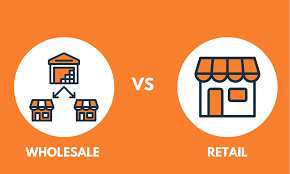
Wholesaler buy goods in bulk from importers or manufacturers and resells them to companies like wholesalers, retail establishments, and Amazon/eBay sellers. Offering services like pallet shipment, bulk price tiers, and occasionally dropped shipping, they make money through volume.
What Is a Retailer?
A retailer purchases inventory from wholesalers or brands and markups it before selling directly to the final customer. They handle tasks including marketing, customer service, payment processing, and last-mile delivery in addition to making money from margin.
A Simple Example
Bottles are sold by a factory for $2 to a wholesaler, who then sells them to retailers for $3, who then sells them to customers for $12. Every tier adds value: shops offer convenience and service; wholesalers give access to distribution.
Which One Should You Work With?
•If you require regular replenishing, desire better-than-retail rates, or are purchasing in quantity to resell, go with a wholesaler.
•If you require quick shipping for personal use, simple returns, or modest quantities, pick a store.
Pros and Cons for Buyers (Resellers)
Purchasing from wholesalers: Consistent inventory and lower unit prices, but less customization and minimum order quantities (MOQs) are required.
Purchasing from retailers (for resale): Quick shipping and simple checkout make it more difficult to make money, and resale restrictions can be in place.
Where Do Distributors Fit In?
Like wholesalers, distributors frequently have a deeper, sometimes exclusive relationship with a brand. They might provide more stringent price guidelines, product training, and authorized warranty handling. Manufacturer → Distributor → Wholesaler → Retailer → Customer is the standard chain.
Conclusion
Who they sell to, how much they sell, and how they turn a profit are the main distinctions. Retailers are more practical for individual or small-quantity purchases, but wholesalers are a better place for resellers to start.
Related Articles
All articlesYiwu Market Guide for International Buyers
The Yiwu Market is a place to find suppliers in China especially for people looking for small items wholesale products with low minimum order quantities, mixed orders, gifts, household stuff, accessories, toys, stationery, packaging and seasonal products. The Yiwu Market is huge it has thousands of suppliers showing their products in one place. You can find anything you need here at the Yiwu Market. The Yiwu Market is not like a store where you pick something and take it home. It is a market. Most booths are like showrooms. Buyers visit the Yiwu Market, place orders and then the products are made or prepared. After that the goods are shipped from the Yiwu Market. To succeed in sourcing from the Yiwu Market you need to know how it works. You should understand what the Yiwu Market is good for, how to choose suppliers at the Yiwu Market how to check product quality at the Yiwu Market and how to ship products from the Yiwu Market. You have to do your research and plan carefully to get the best out of the Yiwu Market. Buyers need to understand the Yiwu Market to source successfully from the Yiwu Market. The Yiwu Market is good for commodities and MOQ wholesale products. The Yiwu Market has products across every consumer category. Buyers should know how to evaluate suppliers at the Yiwu Market and control quality at the Yiwu Market. Logistics is also important once you have bought something from the Yiwu Market.
Why Does Customs Hold Things Up Over "Just One Document"?
“We’re stuck because of paperwork”—this is a phrase you often hear in the world of imports. The goods seem fine. The quantities match. Yet, customs clearance isn’t moving forward. Why does paperwork alone cause such a major problem? In this article, we’ll break down the reasons from a structural perspective.
Yiwu's Ultimate Market Sourcing Guide For Global Buyers In 2026
The Yiwu International Trade Market, also well known as the "World's Supermarket" is the world's largest wholesale market for small commodities. This trading market has been designed to serve importers, product distributors, commodity retailers and e-commerce sellers from across 210+ world countries and regions. With over 75,000 physical booths and 400,000+ product SKUs ranging from small to medium and extra large products, of all diversities,categories and types, the Yiwu International Trade Market has become the top sourcing destination for global buyers seeking cost-effective, diversified and customizable wholesale products. The Yiwu's Ultimate Market Sourcing Guide For Global Buyers In 2026 is a guide aimed at elaborating on the Yiwu Market's core advantages, district layouts/product types, standard procurement/purchasing processes,common pain points, professional sourcing solutions and sourcing agent options for global newcomers and long-term buyers.
Hardware Products and Tools Sourcing from China
When you purchase hardware products from China you can earn a lot of money. However if you only consider the price you will likely end up losing money. You need to think about the strength of the hardware products materials and how accurate the sizes of the hardware products. You also need to consider how well the hardware products resist corrosion and the quality of the surface treatment of the hardware products. Hardware products from China are really different from the things you can buy in stores. China is one of the places in the world where they make hardware and tools. They make all sorts of things like hand tools, fasteners, hardware for furniture, tools for building and tools for gardening. If you want to buy hardware products from China and do well you have to be very careful. You need to be careful about what hardware products you're buying and who you are buying the hardware products from. You need to check the quality of the hardware products. What certificates the hardware products have. You also need to think about how you will get the hardware products, from China to where you need the hardware products to be.