
How a China Dropshipping Agent Works with Shopify
A China dropshipping agen’s function is to enable connection between your Shopify store with suppliers and fulfilment services in China. When an order has been successfully placed by a customer, the agent can buy the product, arrange properly the quality checks, prepare the parcel, and send it directly to the customer. Some agents do work with products from 1688 and Taobao, but others have direct relationships and contact with factories and wholesalers. The manner in which orders are handled depends on whether you use a supplier's own shipping service, an independent dropshipping agent, or a warehouse that holds stock on your behalf. Being abreast with the difference facilitates the choosing process and helps to make an arrangement that is suitable for your store and budget.
1. The direct supplier shipping indicates that the manufacturer or seller receives your order details, prepares the product, and sends it straight to your customer.
2. Third-party dropshipping agents buys products from suppliers on your behalf and handle order processing, packing, and international shipping.
3. Warehouse fulfilment includes buying inventory in advance and keeping it at an agent's warehouse such that individual customer orders can be dispatched as they arrive.
4. Agents can source products from 1688, Taobao, wholesale markets, and factories, and it all depends on the product and supplier arrangements.
5. When a customer places an order on Shopify, the order details are gotten manually by the agent or through an integrated order-management system.
6. The agent verifies the product, quantity, variant, and delivery address before arranging fulfilment.
7. The product is bought from the supplier given that it is not already available in the agent's warehouse.
8. The agent carries out checks the product, makes the packaging ready, and makes arrangement for delivery with the use of an available international shipping service.
9. Tracking information is shared with the seller and it can also be sent to Shopify in an automated way when the provider's system supports integration.
10. Sellers should be able to understand whether the agent purchases each item after an order has been received or if it fulfills orders from inventory they have already purchased and stored.
Sourcing Products from 1688 for Shopify Dropshipping
A sourcing agent facilitates communication with suppliers, confirm product details, and arrange purchases. Before choosing a product, it is important to check more than the price shown on the listing.
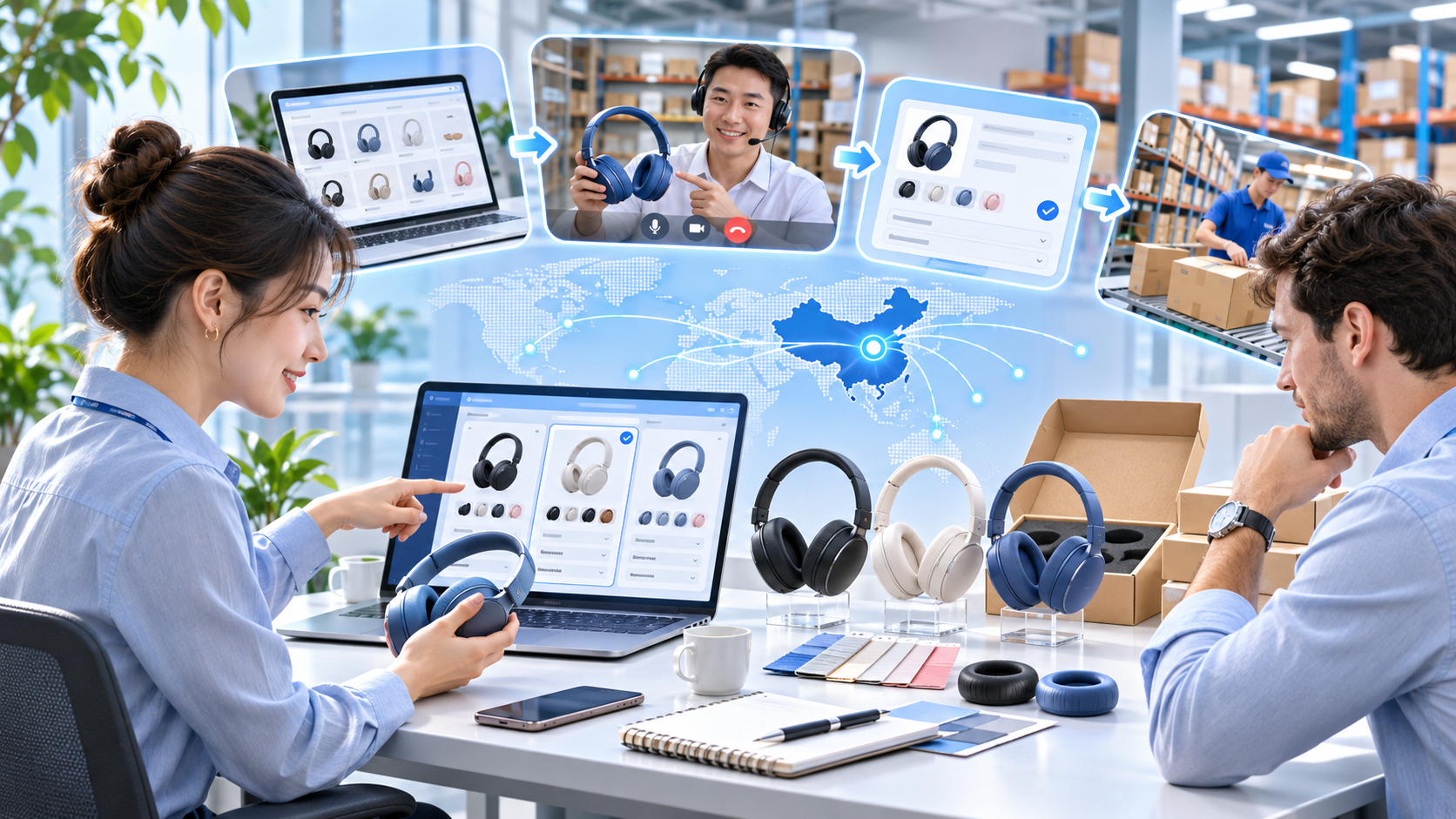
1. Search 1688 with the use of Chinese product keywords, a translated product name, or an image of the item you intend to source.
2. Send the product link or image to your sourcing agent when you need help identifying the correct listing or finding similar suppliers.
3. Ask the agent to confirm the supplier's current unit price because displayed prices may depend on order quantity, product specifications, or purchasing conditions.
4. Confirm the minimum order quantity because some 1688 suppliers only offer wholesale prices when buyers purchase several units.
5. Check whether the supplier has stock available and whether the listed product is ready for immediate dispatch.
6. Confirm the available colours, sizes, materials, models, and other variations before an order is placed.
7. Demand for actual product photographs or videos when the listing images do not provide enough information about the item.
8. Order a sample before committing to a large purchase when product quality, size, or functionality needs to be checked.
9. Ask whether the supplier accepts single-unit purchases because some wholesale sellers do not support one-piece orders.
10. Avoid beginning with bulk purchase, test a product with a small amount of purchases first through an agent who can negotiate sample orders or identify suppliers willing to sell smaller quantities.
11. Compare similar listings from different suppliers to check whether a lower price comes with differences in quality, packaging, or specifications.
12. Confirm the domestic delivery cost from the supplier to the agent's warehouse before calculating the total product cost.
Fulfillment Services provided by Shopify Agent
Every dropshipping agent should not only focus on buying products and handing them over to a shipping company, they should be able to extend their services. These services should encompass the steps between receiving a Shopify order and making sure the right product reaches the customer. It all has to do with checking product details, inspecting items, preparing parcels, and providing tracking information. Before you consider choosing a provider, you should always find out exactly which services are included and how the order process works.

1. Shopify order intake permits the agent to receive customer orders and delivery details from your online store.
2. SKU verification helps to confirm that the correct product, colour, size, model, and quantity are selected for each customer.
3. The product quality control service helps to identify defects than can be easily noticed, damaged items, missing components, or differences from the product that was initially approved.
4. Combined packing permits products from different suppliers to be placed in one parcel where the items and shipping arrangements lets it happen.
5. Branded packaging gives way for sellers to use custom boxes, thank-you cards, inserts, or other packaging materials that reflects and showcases their store's identity.
6. International shipping comprises of preparing and putting together parcels and arranging delivery through suitable courier or freight services.
7. Tracking management gives way for sellers to monitor parcels and update customers on the delivery process.
8. Manual order processing needs the seller to send order information through a spreadsheet, email, messaging platform, or the agent's portal.
9. To transfer new orders without manually entering each one, automatic order synchronization connects the agent's system to Shopify.
10. Some integration also updates tracking numbers and fulfillment status in Shopify after parcels are dispatched.
11. Sellers should check that a provider's Shopify integration is a real working connection instead of depending solely on claims that it supports Shopify.
12. Before a store is connected, confirm which order details, product variants, inventory updates, and tracking information that the integration can synchronize.
13. Make agreements on how cancelled orders, address changes, out-of-stock products, and failed quality checks will be handled before fulfillment begins.
The Cost of China Dropshipping Fulfillment

1. Product cost is known as the amount paid to the supplier for the item that is being sold through your Shopify store.
2. Sourcing or purchasing charges may be levied when the agent buys products from 1688, Taobao, or a factory on your behalf.
3. The cost of moving products from the supplier to the agent's warehouse in China is covered by domestic delivery.
4. Warehouse receiving charges may apply when the agent accepts, counts, records, and stores incoming products.
5. Quality control charges are levied depending on whether basic visual checks are included or more detailed inspections are required.
6. Handling fees takes charge of activities like picking products, preparing parcels, printing labels, and handing orders over to carriers.
7. Packaging charges may apply for branded boxes, protective materials, poly bags, inserts, or special repacking.
8. International shipping is calculated with respect to the destination, shipping method, parcel weight, dimensions, and type of goods.
9. Storage fees can be levied when products remain in the warehouse extending the provider's free storage period.
10. Other surcharges can involve remote-area delivery, fuel adjustments, customs-related charges, special handling, or additional delivery attempts.
11. A product's landed fulfilment cost should include the product price, domestic delivery, sourcing and warehouse charges, packaging, international freight, and any applicable surcharges.
Examples from published provider prices
The following figures are actual published service prices from providers, not universal market rates. They show why it is important to ask what each quotation includes.
| Provider and service | Published charge |
|---|---|
| The Dropshipping Agent – per-order handling | US$0.50–US$1.00 |
| The Dropshipping Agent – basic QC | Free |
| The Dropshipping Agent – first 30 days of storage | Free |
| PandaSugar – dropshipping without holding inventory | ¥15 per package |
| PandaSugar – warehouse fulfilment using stored stock | ¥10 per package |
| China Fulfillment International – pick and pack | US$0.99 per order |
| China Fulfillment International – FNSKU labeling | From US$0.15 per unit |
For a simple order that uses the Dropshipping Agent's published pricing, the service portion would be US$0.50–US$1.00, in addition to the product cost and separately calculated international shipping.For an order that is fulfilled through PandaSugar without holding inventory, the published package fee is ¥15, while warehouse fulfillment from stored stock is listed at ¥10 per package. It should be noted that these examples do not establish the complete landed cost because product prices, domestic delivery, destination freight, packaging extras, and possible surcharges must still be confirmed.
12. For an accurate cost comparison, request a quotation for the same product, parcel weight, dimensions, destination, packaging, and delivery service from each provider.
A useful calculation is:
Total cost per customer order = Product cost + domestic delivery + sourcing fee + warehouse handling + packaging + international shipping + applicable surcharges.
For example, if a product costs US$4, domestic delivery is US$0.50, agent handling is US$0.75, packaging is US$0.30, and international shipping is US$5, the fulfillment cost before any other charges is US$10.55. This is only an illustrative calculation and not a quoted market rate. The actual and most accurate amount should be calculated from your agent's invoice and carrier charge for the specific parcel.
Choosing a Reliable China Dropshipping Agent for Shopify
It is very important to test understand how the provider operates before giving them access to your store or sending them money and this should never be neglected. A small test order can reveal a lot about the quality of their service. The following should be taken into consideration when choosing a dropshipping agent.
1. Always confirm that the agent has reliable purchasing arrangements with 1688 suppliers, Taobao sellers, wholesalers, or manufacturers.
2. Find out if the agent operates its own warehouse or uses another company's facility to receive and prepare products.
3. Check whether the agent can source your products consistently and make alternatives available when a supplier runs out of stock.
4. Ask how product quality checks are conducted and whether you will receive photographs or videos before orders are shipped.
5. Find out how fast the agent processes new orders and how long it takes to purchase, pack, and dispatch products.
6. Ask for information about past shipping performance, including delivery times, tracking accuracy, and parcel loss rates where available.
7. Carry out checks and confirm that tracking numbers are provided promptly and that they can be synchronized with your Shopify store.
8. Request that a complete breakdown is done for product costs, handling fees, packaging charges, storage fees, and international shipping costs.
9. Review the agent's refund and replacement policies for damaged, missing, incorrect, or lost products.
10. Find out how the agent handles customer complaints, shipments that have been delayed, supplier shortages, and other fulfillment problems.
11. Take precautions for when possible problems set in. Check whether the agent has a responsive customer support team that can communicate with you when urgent issues arise.
12. Put in place a small test order to assess the entire process, from product purchasing and quality inspection to packaging, dispatch, and delivery.
13. Finally, compare the test order results with the provider's promises before committing to a long-term business arrangement.
Switching from Dropshipping to Bulk Inventory as a Shopify Sellers
Dropshipping is a very convenient way to begin selling because you can fulfill customer orders without having to buy large quantities of products in advance. Buying inventory in bulk helps to decrease the average product cost, improve stock availability, and make order processing faster. Deciding on the inventory is dependent on how consistently a product sells, the supplier's minimum order quantity, shipping costs, and how much money you can afford to tie up in stock. As a seller, you should be aware of the advantages and risks of both approaches before making the switch.
1. Single-order dropshipping is best when you are still testing new products and do not yet know how consistently customers will buy them.
2. Dropshipping gives way for sellers with limited capital to operate without committing large amounts of money to inventory.
3. Buying in bulk is more attractive when a product brings in regular orders and demand can be estimated with reasonable confidence.
4. Buying products in advance can decrease the unit purchase price when suppliers offer better rates for larger quantities.
5. Bulk purchasing can alter the average international freight cost per item by reducing it because several units are transported together and not being shipped individually.
6. Sellers who experience increasing daily orders may benefit from holding stock because the agent can pick and dispatch products without purchasing each item again.
7. A high supplier MOQ may make bulk purchasing expensive for sellers who are still testing a product or have unpredictable demand.
8. Holding inventory in a China warehouse allows sellers to purchase stock in advance while keeping products close to their suppliers and sourcing markets.
9. A China-based warehouse can be useful for consolidating products from different suppliers before individual orders are dispatched internationally.
10. A US-based warehouse allows sellers to hold inventory closer to American customers and may reduce delivery times for domestic orders.
11. Fulfillment through a US warehouse usually needs more upfront investment because sellers must purchase stock, transport it internationally, and pay for storage and local fulfillment.
12. Holding inventory in the US also includes additional import, customs, storage, and inventory-management responsibilities.
13. Sellers should take into consideration the risk of unsold stock, changing product trends, storage charges, and product damage before buying in large quantities.
14. A slow transition from individual dropshipping to bulk inventory is important for sellers increase order efficiency without taking unnecessary financial risks.
Conclusion
Working with a China dropshipping agent makes operating a Shopify store an easy process, especially when sourcing products from 1688, Taobao, and local manufacturers. In spite of that, the success of this arrangement is highly dependent on more than just finding and getting affordable products. Handling your purchases correctly needs a very competent agent who can manage it, check product quality, process orders efficiently, and provide dependable shipping information. It is also important to understand the full cost of fulfilling each in order that shipping and handling expenses do not get into your profit. If your store begins receiving consistent orders, holding inventory in a China or US warehouse may become a more practical option than purchasing products one at a time. Start by testing your agent's services on a small scale, review the results, and expand your arrangement as your business grows.
Related Articles
All articlesChina Factory Audit: Costs, Checklist, and How to Verify a Manufacturer

Amazon FBA Prep in China: A Complete Guide to Preparing Products for Amazon
China Wholesale Markets by Product: Where to Source Clothing, Electronics, Toys, and More

How to Choose A1688 Sourcing Agent, Fees, Quality Control and Shipping