Pitfall 1: Underestimating the importance of sample verification
A common mistake that beginners in OEM often make is
not thoroughly checking the samples.
A common approach is to
・Making decisions based solely on product page photos
• Ordering only one sample
・Proceeding to mass production immediately if there are no major issues
These are common scenarios.
However, in OEM, this approach can be fatal.
A common scenario is when
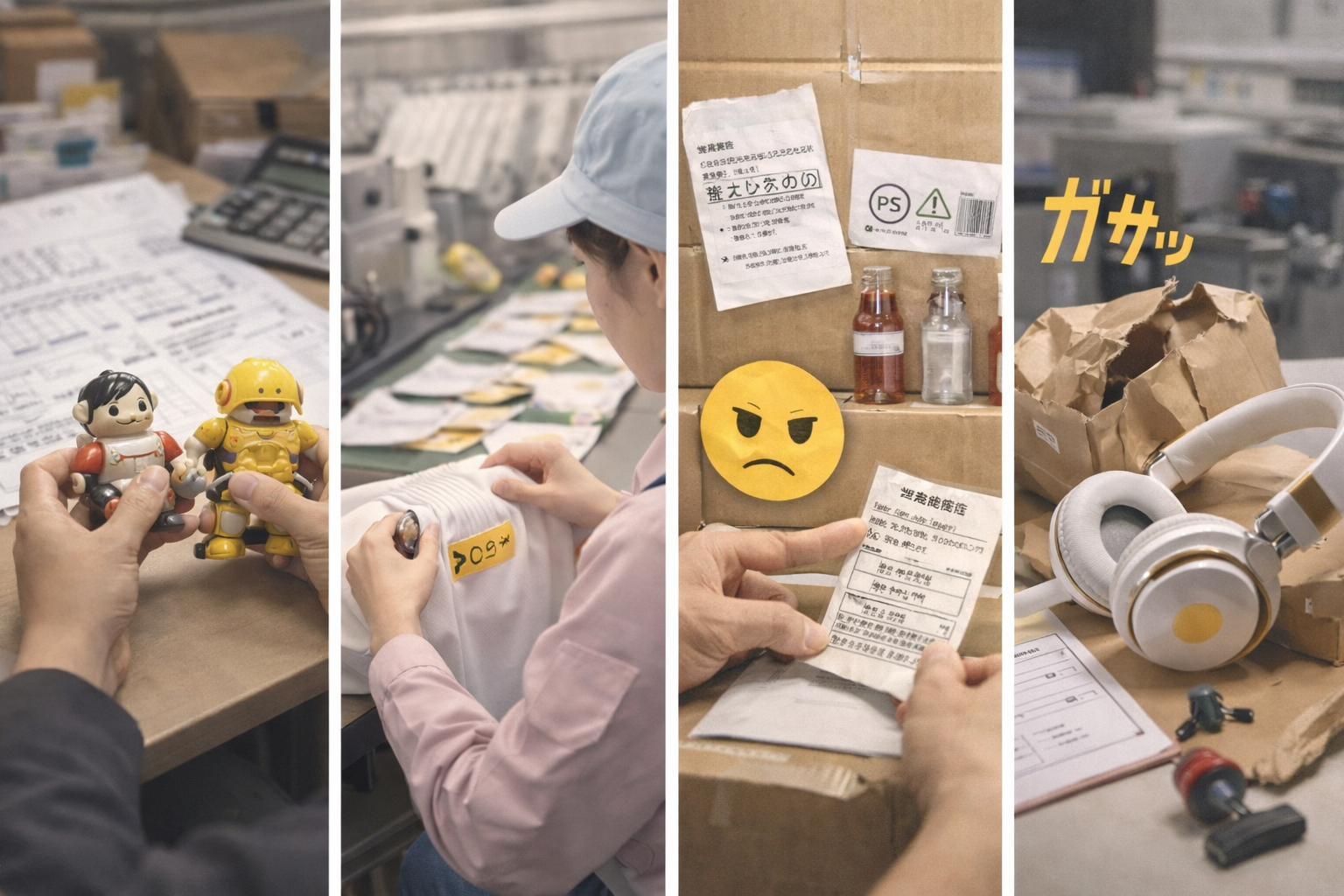
・It looked good in the photos, but the texture of the actual product is different
・The sizing isn’t suitable for the Japanese market
・The stitching and finish are rougher than expected
・The details look cheap
These are common issues.
If these issues are discovered after mass production has begun, they are irreversible.
This is because, with OEM, returns are generally not accepted, and you are solely responsible for all inventory.
In OEM,
it is no exaggeration to say that “80% of the outcome is decided at the sample stage.”
is no exaggeration.
・The first round is for confirming the direction
・Second round: Incorporate revisions
・Finalize the specifications in the third round
Proceeding with this approach in mind will ultimately help minimize both costs and risks.
Pitfall 2: Thinking that "OEM means you can make anything you want"
From the term "OEM,"
"it’s completely original and can be made into anything"
.
However, in reality, OEM does not offer complete design freedom.
The reason is clear.
・Factories have areas of expertise and areas where they are not as strong
・They are optimized for existing equipment and molds
・Unrealistic specifications lead to inconsistent quality
For example,
・Asking a factory that specializes in apparel to perform complex resin molding
・Demanding a completely new structure while ignoring existing molds
・Demanding extremely high quality while trying to keep costs down
Approaches like these are a breeding ground for problems.
What is important in OEM partnerships is
not “imposing your ideal vision as-is,”
but designing in alignment with the realities of the factory.
Start with an existing model,
• what to change
• What to keep unchanged
The success rate of an OEM project depends largely on whether you can make these decisions.
Pitfall 3: Vague instructions regarding logos, printing, and specifications
A very common issue with Chinese OEMs is
misunderstandings caused by vague instructions.
A common issue is that
・The logo is in a different position than expected
・The color tone is slightly different from the intended image
・The print size is smaller or larger than expected
These are common examples.
The key point here is that
the factory is simply making the product “exactly as instructed”
.
“This should be clear enough,”
"They should be able to figure it out from the photo"
This mindset may work in Japan, but it doesn’t work with Chinese OEMs.
With OEMs,
・Drawings
・Specifications (in mm)
・Photos + annotations
・Color codes or reference samples
and other instructions that can be interpreted the same way by anyone are essential.
In other words,
ambiguous instructions = ambiguous products
.
Pitfall 4: Putting Japanese sales rules on the back burner
In the OEM sector, the act of "manufacturing" itself often becomes the primary goal.
As a result, many people end up putting sales regulations in Japan on the back burner.
However, this is extremely dangerous.
In fact, it’s quite common to see
・Products lacking care labels or ingredient lists
・The information on the labels does not meet Japanese standards
・Violating the terms of service of e-commerce platforms
and for these reasons,
resulting in situations where products cannot be sold even though they are fully finished.
OEM isn’t just about making the product and calling it a day.
"It’s only truly complete once it’s ready to be sold in Japan."
To achieve this,
・Verifying labeling requirements
• Reviewing the terms and conditions for each sales channel
・Organizing the necessary documents and labeling information in advance
must be completed before mass production.
In OEM,
"verifying marketability before manufacturing"
This sequence is of the utmost importance.
Pitfall 5: Skipping the inspection process
"I trust the factory, so it'll be fine."
“Since the samples were fine, I feel reassured.”
If you skip quality inspection based on that line of thinking, the probability of OEM failure skyrockets.
In mass production,
・Quality variations may occur within a single lot
・Print misalignment occurs in only some parts
・Packaging conditions may be inconsistent
These issues occur frequently.
These issues
can only be prevented through pre-shipment inspection.
If defective products are discovered after arrival in Japan,
・The hassle of re-inspection
・Repackaging costs
・Delays in delivery
・Lost sales opportunities
.
In OEM,
inspection should be viewed not as a cost, but as insurance
.
Why Is "HubBuyer"'s OEM Model Less Likely to Fail?
At HubBuyer, we address the common pitfalls of first-time Chinese OEM projects
not just based on personal experience, but as a systematic process.
Specifically,
・Identifying a factory’s areas of expertise during the selection process
• Checking every detail during the sample stage
• Verifying specifications and quality against Japanese standards
・Pre-confirmation of labeling requirements and sales regulations
・Identify and address risks before mass production
“Even if it’s your first time with OEM, you’re unlikely to fail”
We have established a system to ensure this.
Summary: The keys to OEM success are "preparation" and "verification"
Chinese OEMs,
can be a powerful tool for building your own brand if handled correctly.
However,
・rushing the process
・Skipping verification
・Making decisions alone
When these three factors overlap, the likelihood of failure skyrockets.
Especially for first-time OEM projects,
utilizing a partner with experience and established systems is ultimately the fastest route to success.
If you have concerns about Chinese OEMs,
or have had unsuccessful experiences in the past,
please take a moment to reevaluate your approach.
HubBuyer is your partner for successful Chinese OEM projects.