Misconception #1: “They should understand without me having to say anything.”
In Japan, communication often relies on reading the room, picking up on subtle cues and sharing common assumptions.
Among people who have lived in the same cultural sphere for many years, there are often situations where intentions are conveyed without the need for explicit explanation.
However, in the context of sourcing from China, this assumption is almost entirely invalid.
For example,
・This finish would be unacceptable in Japan
・This quality level won't sell
・This should obviously be included
For Japanese people, these are“self-evident requirements.”
However, for Chinese factories, conditions that aren’t explicitly stated are considered nonexistent.
The factory's criteria is very simple.
"Not instructed" = "No problem" or "Proceed with the work."
As a result, a disconnect arises where the Japanese side sees it as “beyond common sense,” while the factory side sees it as “exactly as instructed.”
This is not a matter of capability.
It is a design flaw stemming from a lack of shared assumptions.
Misconception #2: "If the sample is good, mass production will be the same."
This is the most common—and most damaging—cause of failure when sourcing from China.
In many cases, samples are
・Handled by experienced workers
・Made carefully and meticulously over time
・Made with profitability disregarded
In other words, samples are“showpieces”for the factory.
Mass production, on the other hand, is a completely different matter.
・Dedicated mass-production lines
・Multiple workers
・Varying levels of skill
・Focus on efficiency and speed
Japanese people tend to assume that “since it's the same factory, the same product should be produced,” but in Chinese factories, it is quite common for the sample team, mass production line and workers to change.
If you proceed after simply confirming the sample and fail to finalize mass production conditions (materials, processes and inspection), a collapse in quality is inevitable.
Misconception #3: "If there is a contract or specification sheet, my rights will be protected."
In Japan, there is a strong perception that a contract represents an absolute promise and that specifications must be followed to the letter.
However, when sourcing from China, the reality is that on-site judgment often takes precedence over written documents.
Particular issues often arise with:
・Ambiguous wording
・Instructions lacking specific figures
・Vague or subjective language
For example,“secure it firmly",“in an inconspicuous spot" and“align them as much as possible”
While these phrases are understood in Japan, they leave room for convenient interpretation on the job site.
What matters is not whether something is written down but how it is understood.
Even if there is a specification document, it is meaningless if interpretations differ.
Misconception #4: “Negotiating a lower price = getting a good deal”
When Japanese people successfully negotiate a lower price, they tend to feel like they've "won" or“done well.”
However, when sourcing from China, unreasonable prices will inevitably be recouped in other ways.
Common actions factories tend to take include:
・Lowering the grade of materials
・Omitting certain steps in the production process
・Simplifying quality inspections
It is not uncommon for these changes to be made without prior notice. As a result, you end up with “products that are cheap but don't sell.”
Even if you think you've won the price negotiation, you've actually lost as a product.
Misconception #5: “Receiving progress reports means everything is under control”
・Progress photos
・Videos
・A message saying "Everything is going smoothly"
When these are received, Japanese people tend to feel that“things are under control.”
However, in reality,
・Which stage of the process the photo shows
・Who made the decision?
・What are the pass/fail criteria?
—it is merely a report and not management?
The real problem only comes to light after completion.
At that point,
・You can't make corrections
・Costs will skyrocket
・You won't meet the deadline
you'll find yourself in this situation.
Misconception 6: “Problems are rare”
In Japan, there is a culture of designing products on the assumption that problems will not occur.
However, when sourcing from China, you must design with the assumption that problems will occur.
・A certain number of defective items will be produced
・Delivery dates may be delayed
・Misunderstandings will occur
With this in mind,
・How to prevent them
・How to detect them early
・How to correct them
If we don't consider these points, a single mistake can result in significant losses.
Misconception #7: "Direct transactions mean the factory is responsible"
When dealing directly with a supplier, Japanese people unconsciously expect that“the factory will handle everything.”
However, the reality is the opposite.
Direct transactions are a business arrangement in which you bear all management responsibilities yourself.
・Quality control
・Process Management
・Inspection standards
・Troubleshooting
If you start without understanding these aspects, you'll end up with a situation where“what was supposed to be cheaper actually ends up costing the most.”
Why Are Japanese People So Prone to This?
Japanese people tend to be:
・Polite
・Diligent
・reliable
However, when sourcing from China, these strengths can sometimes backfire because they fail to articulate the underlying conditions.
"We're just doing what we normally do," "This is standard practice in Japan"—this very mindset is the greatest risk.
Perspectives that HubBuyer prioritizes
At The HubBuyer, we view sourcing from China not as a "price issue," but as a matter of design and management.
・Articulate Japanese standards
・Evaluating samples with mass production in mind
・Plan production processes assuming potential issues
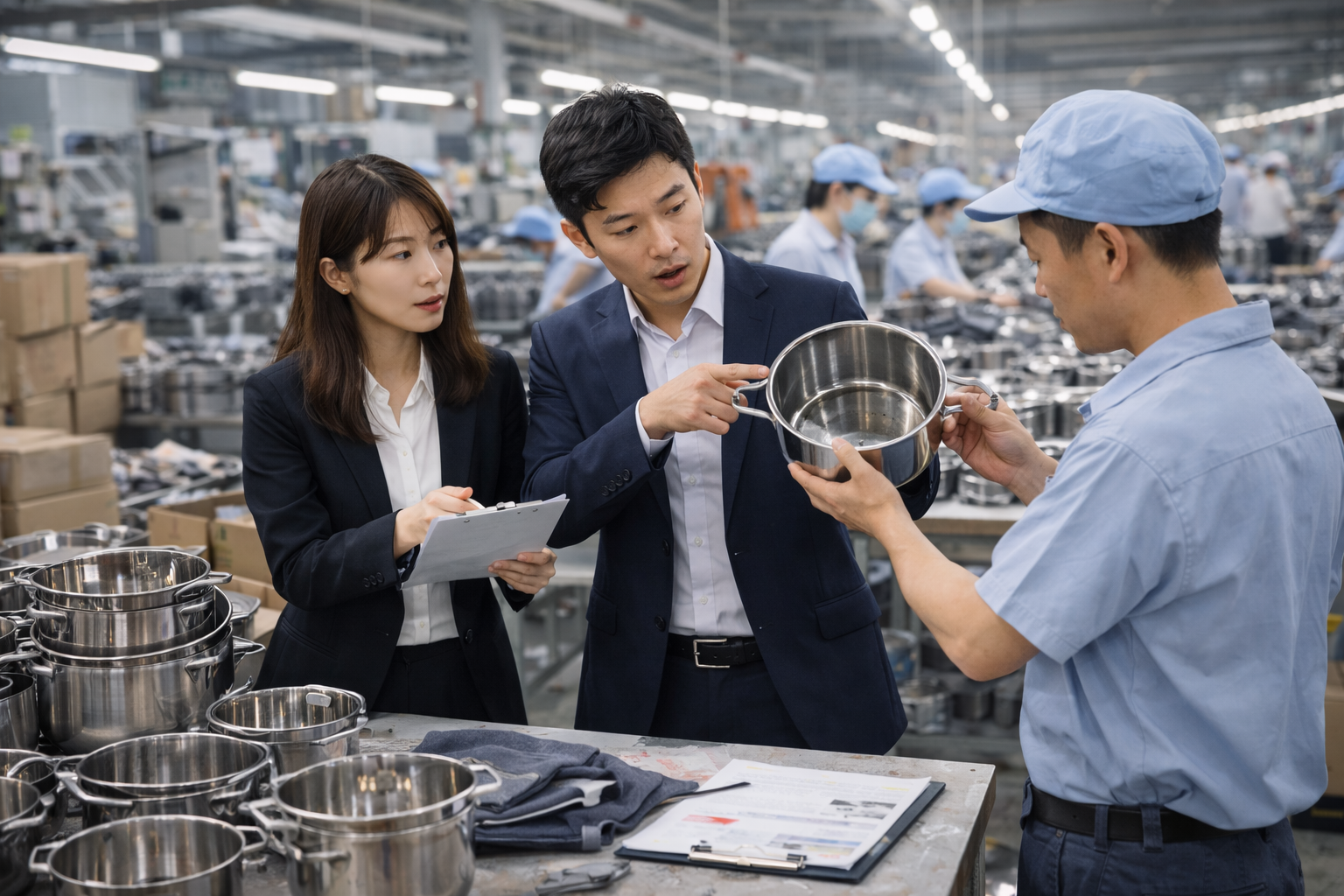
・Inspecting the production site from a third-party perspective
By doing this, we can transform sourcing from China from something "daunting" into a reproducible system.
Summary
Problems with sourcing from China stem more from assumptions than from a lack of knowledge.
Before you source from China, you should understand that:
・The quality of the product should be the same and that it is a success because the price went down
Only when you let go of these common misconceptions among Japanese people will sourcing from China become a truly effective strategy.
Sourcing from China is not something you do based on intuition. It requires careful planning and management.
Getting that first step right is the surest way to avoid failure.
Finally, the benefits of using HubBuyer
As we've seen so far, problems with sourcing from China stem not so much from“choosing a factory”as from a lack of design, management, and shared understanding.
The greatest value The HubBuyer provides goes beyond simply just acting as a "sourcing agent.”It lies in the ability to proceed from the very beginning by eliminating the points where Japanese buyers are prone to misunderstandings.
① Articulate Japanese standards in clear terms, not just based on“gut feelings”
"This is unacceptable," "This won't sell in Japan"
We organize these intuitive feelings into concrete data, photos and examples of what not to do.
Therefore, we do not assume that“they should understand without being told.”
② Checking from the sample stage with “mass production in mind”
We view samples not as“final products,”but as tests to determine whether they can be reproduced in mass production.
This prevents the common pitfall of a product that“looks good only as a sample.”
③ Manage with the factory's unspoken decisions in mind
We design processes and conditions based on the assumption that the factory will prioritize cost, efficiency and on-site judgment.
This makes it less likely for unauthorized specification changes or quality deterioration to occur.
④ Maintaining a third-party perspective on the production floor
This allows us to maintain a perspective that is difficult to achieve in direct transactions:
・Cool-headed corrective decisions
・Negotiations unaffected by emotions
・Realistic revision proposals
⑤ Prepare an“escape route" assuming problems will arise
・Identify potential points of disagreement
・Where to draw the line
・At which stage can adjustments be made?
Designing these points in advance helps prevent“irreparable failures.”
The success or failure of sourcing from China does not depend on the quality of the factory. The biggest turning point is whether you can eliminate the misconceptions that Japanese people often bring to the table from the very beginning.
The strength of using The HubBuyer lies not in“making things easier," but in the ability to proceed within a system designed to prevent failure.
If you want to turn sourcing from China into a reproducible system rather than relying on intuition or good intentions, the difference will undoubtedly show up in the final results.