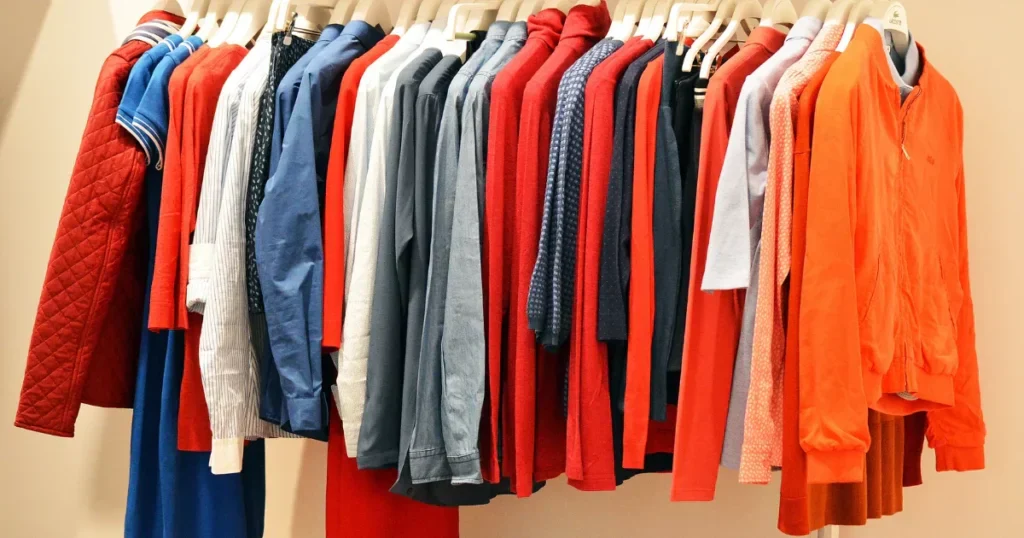
How to Start a Clothing Business with Wholesale
1) Select a Niche: Specify your target market, pricing range, sales channel, and style direction. A store's identity is strengthened by specificity.
2) Select Your Model: For the quickest launch, start with boutique wholesale (purchase and resell completed outfits). Once you know what to sell, add private labels, or you’re branding on already-existing styles.
3) Create a Starter Collection with ten to twenty styles in two to three main categories. Start with easy-to-fit products like big T-shirts and elastic waist jeans and give priority to more sizes in fewer styles.
4) Where to Purchase: B2B marketplaces for cheaper prices; domestic platforms for speed; trade exhibitions for supplier connections; sourcing agencies for complicated imports.
5) Examine Suppliers: Always confirm sizing charts, MOQs, return policies, and corporate identities. Before buying in bulk, order samples from three to five vendors and evaluate the stitching, fabric quality, color correctness, and fit consistency.
6) Set the Right Price: Determine the landing cost (product + shipping + tariffs + packing), then apply your desired margin. At a 60% margin, a $12 landed cost equals a $30 retail price.
7) First Order: Keep it modest, with 10–20 styles, 3–6 pieces per size, and 1-2 colors. Request pre-shipment images, the timeframe, and the size of the carton. 8) Create Your Store: Each product page should have a size chart, a description of the fabric, six to ten images, and an explicit return policy. Regular photography creates a brand-like appearance for your store.
9) Control Stock: Within two to three weeks, reorder styles that sell 70% or more. Clear styles selling under 30% within 4–6 weeks. Save 20–30% for trend testing and 70–80% for established winners.
10) Scale Smart: Once demand is established, switch to sea freight for large orders, diversify suppliers, add private label to top sellers, and negotiate better prices.
Avoiding Common Mistakes
•Purchasing too many styles too soon
•Disregarding refunds and sizing
•Unit cost pricing as opposed to landed cost pricing
•Selecting vendors based on cost
•No formal contract regarding refunds or faults
FAQ
undefined Do I require a business license? Better terms are helpful, though not always, particularly when dealing with domestic distributors.
undefined Custom versus wholesale designs? Custom designs give greater branding but need more money and larger MOQs; wholesale is quicker and less risky.
undefined How much should I begin with? Start modestly with a marketing budget and a test order, then grow in accordance with sell-through outcomes.
Related Articles
All articlesYiwu Market Guide for International Buyers
The Yiwu Market is a place to find suppliers in China especially for people looking for small items wholesale products with low minimum order quantities, mixed orders, gifts, household stuff, accessories, toys, stationery, packaging and seasonal products. The Yiwu Market is huge it has thousands of suppliers showing their products in one place. You can find anything you need here at the Yiwu Market. The Yiwu Market is not like a store where you pick something and take it home. It is a market. Most booths are like showrooms. Buyers visit the Yiwu Market, place orders and then the products are made or prepared. After that the goods are shipped from the Yiwu Market. To succeed in sourcing from the Yiwu Market you need to know how it works. You should understand what the Yiwu Market is good for, how to choose suppliers at the Yiwu Market how to check product quality at the Yiwu Market and how to ship products from the Yiwu Market. You have to do your research and plan carefully to get the best out of the Yiwu Market. Buyers need to understand the Yiwu Market to source successfully from the Yiwu Market. The Yiwu Market is good for commodities and MOQ wholesale products. The Yiwu Market has products across every consumer category. Buyers should know how to evaluate suppliers at the Yiwu Market and control quality at the Yiwu Market. Logistics is also important once you have bought something from the Yiwu Market.
Why Does Customs Hold Things Up Over "Just One Document"?
“We’re stuck because of paperwork”—this is a phrase you often hear in the world of imports. The goods seem fine. The quantities match. Yet, customs clearance isn’t moving forward. Why does paperwork alone cause such a major problem? In this article, we’ll break down the reasons from a structural perspective.
Yiwu's Ultimate Market Sourcing Guide For Global Buyers In 2026
The Yiwu International Trade Market, also well known as the "World's Supermarket" is the world's largest wholesale market for small commodities. This trading market has been designed to serve importers, product distributors, commodity retailers and e-commerce sellers from across 210+ world countries and regions. With over 75,000 physical booths and 400,000+ product SKUs ranging from small to medium and extra large products, of all diversities,categories and types, the Yiwu International Trade Market has become the top sourcing destination for global buyers seeking cost-effective, diversified and customizable wholesale products. The Yiwu's Ultimate Market Sourcing Guide For Global Buyers In 2026 is a guide aimed at elaborating on the Yiwu Market's core advantages, district layouts/product types, standard procurement/purchasing processes,common pain points, professional sourcing solutions and sourcing agent options for global newcomers and long-term buyers.
Hardware Products and Tools Sourcing from China
When you purchase hardware products from China you can earn a lot of money. However if you only consider the price you will likely end up losing money. You need to think about the strength of the hardware products materials and how accurate the sizes of the hardware products. You also need to consider how well the hardware products resist corrosion and the quality of the surface treatment of the hardware products. Hardware products from China are really different from the things you can buy in stores. China is one of the places in the world where they make hardware and tools. They make all sorts of things like hand tools, fasteners, hardware for furniture, tools for building and tools for gardening. If you want to buy hardware products from China and do well you have to be very careful. You need to be careful about what hardware products you're buying and who you are buying the hardware products from. You need to check the quality of the hardware products. What certificates the hardware products have. You also need to think about how you will get the hardware products, from China to where you need the hardware products to be.