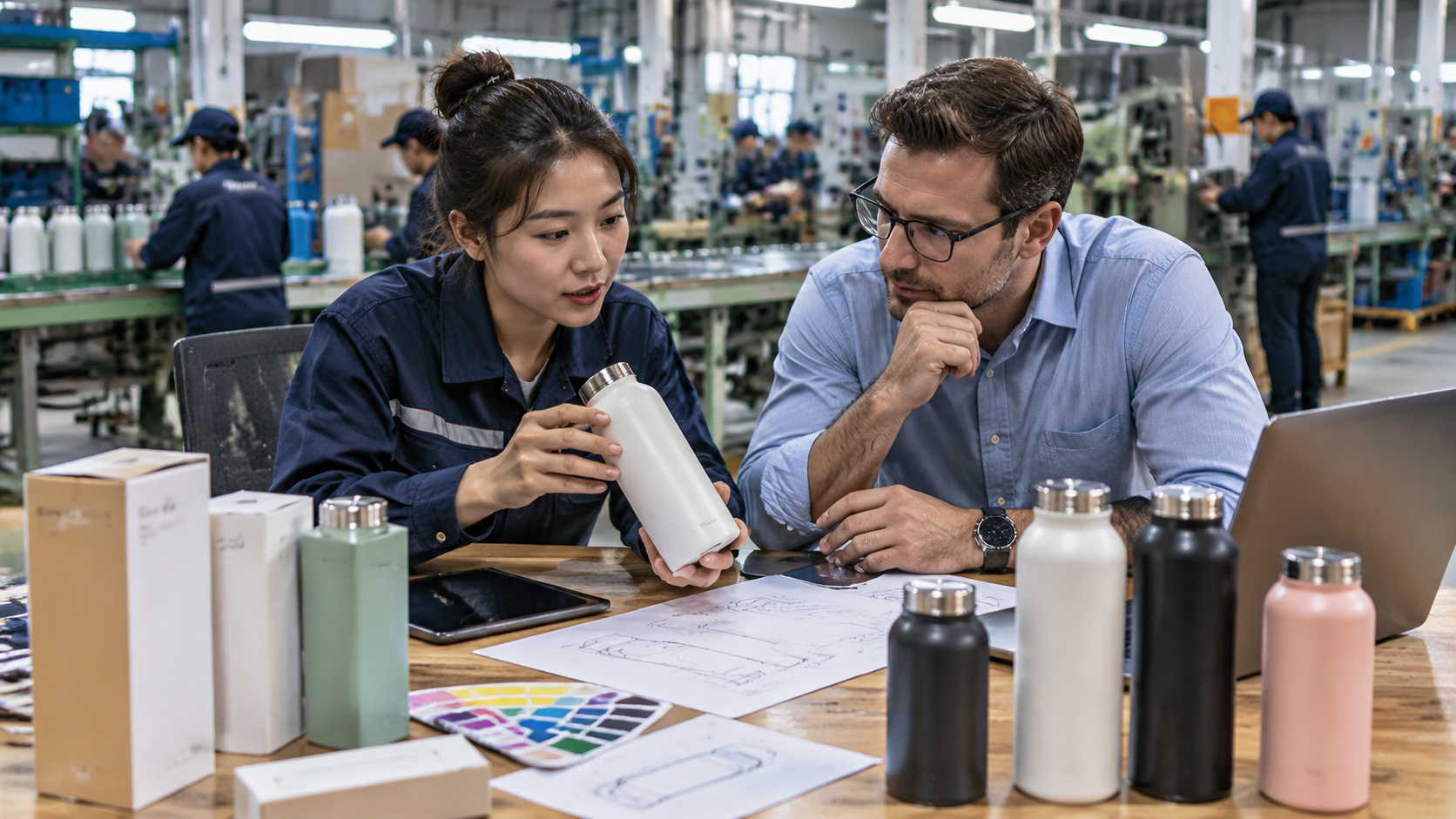
Understanding the Different Ways to Manufacture Your Brand
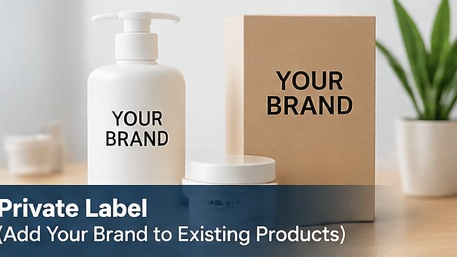
Before getting in contact factories, have in mind how much control you want over the product's design and production. There are three common manufacturing arrangements which includes; Private label, OEM, and ODM, these manufacturing arrangements do not offer the same level of customization or need the same investment. Some businesses only need their logo and packaging added to an existing product, while others can want a completely original design. Your choice determines the cost of development, the minimum order quantities, production time, and how closely the finished product depicts your brand. Consider the following differences before approaching manufacturers.
1. Private labeling permits you to sell an already existing manufacturer’s product under your own brand, usually with customized logos, labels, or packaging.
2. OEM (Original Equipment Manufacturing) includes producing goods according to the buyer’s supplied design, specifications, or technical requirements.
3. ODM (Original Design Manufacturing) permits buyers to select or adapt a product designed and developed by the manufacturer.
4. Private labeling is usually convenient for new businesses that want to launch products without having to invest heavily in product development.
5. OEM is a better fit for brands that already have product designs and need a factory to manufacture them.
6. ODM can decrease development work because the manufacturer already has a product design or established production solution.
7. Private labeling generally entails less customization, while OEM projects can demand more technical coordination and development expenses.
8. MOQs vary by factory, product, materials, and customization level, so no manufacturing model guarantees a particular order quantity.
9. Buyers who are seeking for exclusive designs should make clear intellectual property ownership and whether the manufacturer can sell similar products to other customers.
Finding Factories through the Right Sourcing Channels
There exist several established channels China that aids in the process of connecting buyers with manufacturers, and each one of them serves a slightly different purpose. Online marketplaces are platforms that facilitate the discovery of suppliers, compare product options, and begin
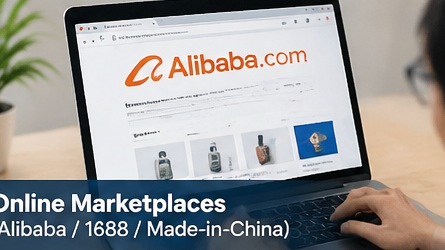
conversations without having to travel. Activities such as trade fairs and manufacturing clusters provide opportunities and a space to meet suppliers and examine products more directly when they are being showcased. Instead of depending only on one channel, use a combination of sources to build a shortlist of manufacturers worth investigating.
1. A manufacturer-finding channel like Alibaba makes it possible to access a large international supplier network and also makes it convenient to compare product listings, customization options, and supplier profiles.
2. As for the 1688, it is a China-focused wholesale marketplace that enables buyers discover domestic suppliers and compare local-market product options, eventhough language and payment arrangements may require assistance.
3. Made-in-China provides supplier directories and product listings across various manufacturing industries, making it to be useful for identifying potential factories.
4. Another channel like Trade shows such as the Canton Fair gives a chance for buyers to come in contact with suppliers, inspect product samples, discuss customization, and assess communication in person.
5. Manufacturing clusters in cities and provinces like Shenzhen, Guangzhou, Dongguan, Ningbo, and Yiwu assists buyers in locating factories and suppliers who have specialized in particular product categories.
6. Sourcing agents helps with factory identification, supplier communication, sample coordination, price negotiation, and production follow-up.
7. Online directories are as well useful for building an initial supplier list, but a product listing on its own does not prove that the seller owns or operates a factory.
8. Buyers should always contact several potential manufacturers and compare their production capabilities, customization experience, communication, and commercial terms before making any decision.
Checking Whether a Factory Can Actually Make Your Product

It is always advisable to stay keen when evaluating and assessing a manufacture’s production and customization capabilities. Sometimes, a manufacturer can showcase attractive product photos and impressive certificates which often do not automatically prove that they can produce your specific design. Some suppliers are trading companies that outsource manufacturing to other factories, while others may have production equipment but limited experience with the customization you need. What you should prioritize is picking a manufacturer who will make your product exactly as you requested, and also consider knowing what processes they can handle, and also whether they can meet your expected order volume. Ask direct questions and request evidence that relates to your product. Some of the things to consider include:
1. Ask for the company's registered business name, registration details, factory address, and the name of the actual production facility.
2. Find out whether the supplier owns its factory or works with subcontracted manufacturers for some or all production processes.
3. Request a live video walkthrough showing relevant production equipment, workstations, storage areas, and finished products.
4. Carry out checks to know if the factory has machinery and technical processes that suit your product's materials, design, and required finish.
5. Demand for examples of previous customized products that show experience with similar specifications.
6. Confirm whether logo printing, engraving, labelling, assembly, and packaging are completed in-house or outsourced.
7. Discuss the factory's normal monthly production capacity and whether it can handle your expected order quantity within the required period.
8. Request relevant product-specific test reports and verify them with the issuing laboratory or certification body where possible.
9. Arrange an independent factory audit or inspection when the order value or production risk justifies the additional cost.
Always remember to ask the manufacturer for explanation on the production process for your exact product, beginning from raw materials to final packaging. Also have it in mind that a factory that understands the technical requirements should be able to discuss materials, equipment, tolerances, finishing, and possible production limitations. Be careful when a supplier responds to every question with a simple assurance that everything is possible but cannot provide practical details.
Setting a Realistic Minimum Order Quantity (MOQ)
Buyers usually encounter issues when approaching Chinese manufacturers; one of these first issues is the Minimum order quantity. The MOQ presented in a supplier's listing may not represent the minimum required for every part of your order. The factory can often accept a small quantity of standard products but will need a larger order for custom logos, colours, labels, or packaging. Knowledge on these separate requirements can help in negotiating a manageable first order without assuming the manufacturer will accept any quantity. There are also many ways to reduce initial production commitments while still creating a branded product.
1. Product MOQ is the minimum number of units the factory is willing to manufacture or supply in one order.
2. Logo customization may have a separate MOQ because printing, engraving, or embroidery requires added preparation and setup.
3. Custom packaging can need a higher minimum quantity because packaging suppliers can produce labels, boxes, or printed materials in batches.
4. Existing molds and standard materials can decrease the cost of development and make smaller trial orders easier to be arranged.
5. Using the manufacturer's existing colours, components, and product designs helps to avoid the extra expense of production that is fully customized.
6. Simple logo printing or standard labels may be more affordable for a first order than custom shapes, colours, or complex finishes.
7. Buyers can ask for a small trial batch that will be used to test market demand before going in for a larger production run.
8. Find out if the factory can supply standard products first and apply customized packaging or branding in a separate process.
9. Confirm whether the agreed MOQ applies to one design, one colour, one size, or the combined quantity across different variations.
For example, a manufacturer can accept an order of 100 standard products but need 300 units for custom printing and 500 pieces for specially printed boxes. Ask for each MOQ separately so you can know if the main limitation comes from the product itself, the branding process, or the packaging supplier.
Getting Samples Right before Placing a Large Order
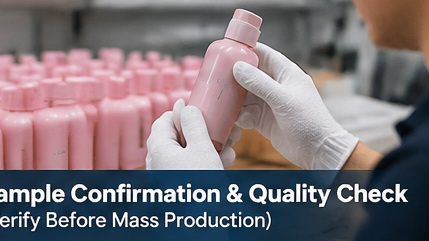
A product sample is one which permits you to evaluate the manufacturer's work before going in for a mass production. It gives you an opportunity to check the materials, dimensions, colours, functionality, finishing, and branding and compare with your expectations. Asking for a sample without providing clear instructions can lead to a product that looks different from what you placed an order for. Buyers should therefore know that it is vital to submit complete and precise specifications and agree on the sample development process before they make any payments. What is finally approved should then become the reference samplefor bulk production. The following are ways to getting right samples.
1. Make available a written product specification covering dimensions, materials, colours, functions, finishes, and other important requirements.
2. Send in clear logo files, preferably in the format requested by the manufacturer, alongside branding placement and size instructions.
3. Include packaging requirements, label designs, barcode details, and any other artwork that should appear on the finished product.
4. Ask whether the sample will be made using the same materials, components, and production processes planned for the bulk order.
5. Make agreements on the sample fee, shipping cost, development lead time, and whether any part of the sample charge can be deducted from the mass-production payment.
6. Make agreements on how many sample revisions are included and whether further adjustments will attract additional charges.
7. Go through the sample inspecting it against your written specifications instead of just approving it based only on appearance.
8. Test the important product functions, durability, fit, finishing, and packaging before giving final approval.
9. Demand for corrections when the sample does not meet up with the agreed requirements and get a revised sample where necessary.
10. Approve and document the final golden sample as the reference for bulk production and quality inspection.
The golden sample makes available a physical standard alongside what the finished production batch can be checked, making it very important.
Understanding the Full Cost of Private Label Manufacturing in China

Note should be taken that the unit price quoted by a manufacturer is only one part of the investment needed to launch a private label product. You can also be asked to pay for sample development, molds, logo printing, packaging, inspection, and international transportation depending on your design. These costs can be different between a basic branded product and one that needs good customization. The quantity ordered matters a lot because some development expenses are fixed and become less expensive per unit when spread across a larger batch. Always consider asking for an itemised quotation so you can understand how the total cost is being calculated.
1. The unit cost for manufacturing a product covers the product itself, including materials, labour, assembly, and standard factory finishing.
2. The development sample fees cover the preparation and production of prototypes or pre-production samples.
3. Tooling and mold charges may apply when your product requires custom shapes, components, or manufacturing tools.
4. If screen printing, embroidery, engraving, or other techniques are methods used, Logo printing and branding costs can be added.
5. Packaging expenses may consist of custom boxes, printed labels, inserts, instruction manuals, and protective materials.
6. Quality inspection costs encompass the checks performed before shipment to check the product specifications, workmanship, quantity, and packaging.
7. International transportation costs are highly dependent on shipment weight, volume, shipping method, destination, and any applicable handling charges.
8. It is very necessary to include customs duties, clearance charges, and destination fees when calculating the total landed cost.
9. Larger order quantities can run down the unit price because the fixed setup and development expenses are distributed across more products.
10. Buyers should compare quotations for standard, lightly customized, and fully customized versions of the same product to know and have an understanding of the cost difference.
| Cost item | Basic private label | More customized product |
| Product unit price | Standard product | Modified design or materials |
| Sample development | Existing product sample | Custom development sample |
| Tooling or molds | Often not required | May be required |
| Branding | Simple logo or label | More detailed branding |
| Packaging | Standard packaging with a label | Custom printed packaging |
| Inspection | Basic product checks | Checks against additional specifications |
The most useful figure here is the landed cost per sellable unit: the total cost of purchasing, customizing, inspecting, shipping, and importing the goods divided by the number of acceptable units received. This aids you price your product more realistically and avoid basing your profit calculation on the factory price alone.
Final Checks before Authorizing Mass Production

1. Make sure to confirm the final product specifications, including materials, dimensions, colours, functions, and acceptable tolerances.
2. Agree on and approve all logo files, artwork, label designs, packaging layouts, and branding positions in writing format.
3. Make it clear who owns any custom molds, tooling, designs, and other intellectual property made for the project.
4. Make agreements on the production start date, the date the product is to be completed, and arrangements for handling delays.
5. Establish measurable quality standards and inspection requirements before the production process begins.
6. Check and confirm whether applicable product testing, safety requirements, and compliance documents are needed for the US market you intend to sell in.
7. Make agreements on the payment schedule, including the deposit, balance payment, and any conditions tied to inspection or shipment.
8. Make confirmations on how defective products, production shortages, and non-conforming goods will be handled.
9. Find out if the manufacturer can reproduce the same specifications and materials if you come back in the future for restocking orders.
10. Always get written confirmation of any agreed changes before the factory begins mass production.
Private Label Manufacturing Checklist
Use this checklist when evaluating a manufacturer and also when preparing your first production order.
Supplier verification
- make confirmations on the manufacturer's registered business name and factory address.
- Establish whether production is handled in-house or subcontracted.
- Make verifications on the relevant manufacturing experience and equipment.
- Check previous customized products and relevant test reports.
- Review production capacity and delivery history.
Product and customization
- Make a decision on the best model to use, whether private label, OEM, or ODM model.
- Confirm the product MOQ.
- Confirm the separate MOQ for logo customization.
- Confirm the separate MOQ for custom packaging.
- make agreements on materials, colours, dimensions, and product specifications.
Samples and costs
- make sure to submit complete product specifications and branding artwork.
- Confirm sample fees and shipping costs.
- Agree on revision limits and sample lead time.
- Inspect and approve the final golden sample.
- Get an itemised quotation for different order quantities.
- Calculate the estimated landed cost per unit.
Before mass production
- Make an approval of the final product and packaging artwork.
- Confirm mold and design ownership.
- Make agreements on quality standards and inspection arrangements.
- Confirm the product testing and compliance requirements.
- Make agreements on payment terms and production deadlines.
- Document defect, shortage, and restocking arrangements.
Conclusion
To find a private label manufacturer in China is not only about locating a factory that gives you the lowest unit price. It comprises of finding a production partner who knows your requirements, can deliver consistent quality, and is willing to work within your budget and order expectations. You should have in mind that choosing the right manufacturing model, comparing sourcing channels, and verifying production capabilities are factors that will go a long way in helping you to narrow your options before spending money on samples or tooling.
It usually makes more sense to begin with an existing product, simple branding, and manageable packaging requirements when you intend to make a first order. This can go a long way in reducing the expenses incurred during development while allowing you to test customer demand. As your business continuous to grow, you can then bring in more detailed customization, negotiate better production terms, or move towards OEM or ODM arrangements. A key point to note is that you should not rush from sample approval to mass production without documenting the details. The specifications you need, golden sample, agreed price, quality standards, mold ownership, and delivery schedule should all be clearly stated to the manufacturer before the production process begins. A manufacturer who is transparent about these matters should be considered above the one who simply promises an attractive price. Careful preparation at the beginning can save money, reduce disputes, and give your brand a stronger foundation for long-term growth.
Related Articles
All articlesChina Factory Audit: Costs, Checklist, and How to Verify a Manufacturer
China Dropshipping Agents for Shopify: Sourcing, Order Fulfillment, and Cost Guide

Amazon FBA Prep in China: A Complete Guide to Preparing Products for Amazon
China Wholesale Markets by Product: Where to Source Clothing, Electronics, Toys, and More