1. Making decisions based solely on the "purchase price"
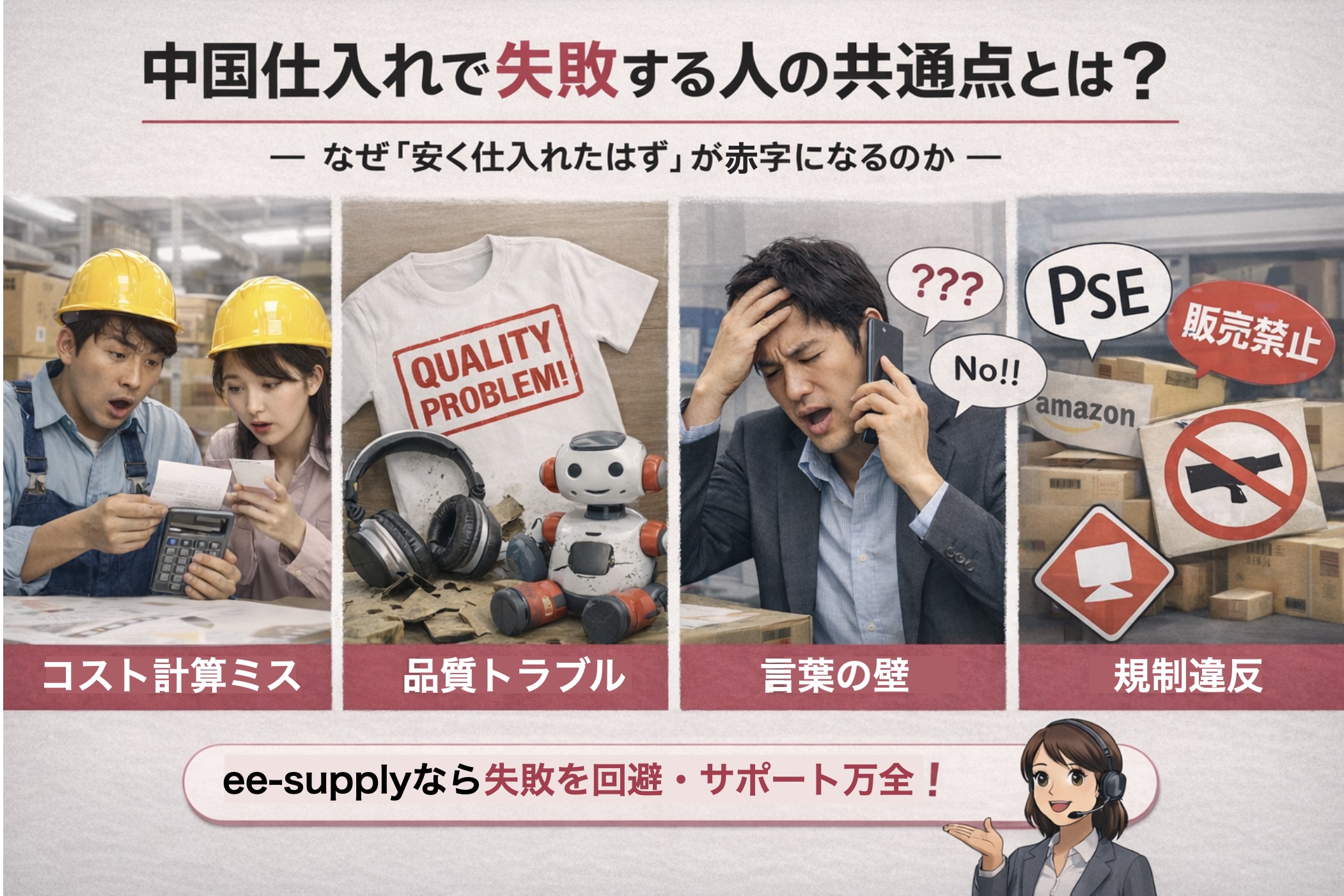
The most common mistake made by beginners sourcing from China is basing their decisions solely on low unit prices.
For example, when sourcing, it may look like this:
・The product price is significantly lower than Japanese wholesale prices
・It looks like there will be a profit
・The cost ratio on paper is low
However, once you actually proceed, the following costs start to pile up:
・International shipping costs are higher than expected
・Inspection and repackaging become mandatory
・High defect rate leads to returns and waste
・Work is required to meet FBA shipping specifications
As a result,
“Even though the products themselves should be cheap, the final cost ends up being higher than expected”
“There is little to no profit left, or the operation runs at a loss”
such situations occur.
When sourcing from China, it is crucial to make decisions based on the final cost (landed cost), not the product price.
・Product cost
・Domestic shipping within China
・Inspection fees
・Repackaging costs
・International shipping costs
・Customs duties and consumption tax
・E-commerce platform fees
It’s pointless to consider whether you’ll make a profit without factoring all of these costs in.
“I thought I was buying cheap, but it ended up costing me more.”
This is the most common mistake when sourcing from China.
2. "Placing too much trust in suppliers"
When you look at Alibaba or 1688, every supplier seems appealing.
・The photos are beautiful
・The product descriptions are detailed
・The prices are low
However, you need to keep in mind that the information on the screen and the actual product are two different things.
In real-world situations, it’s not uncommon to encounter the following:
・The actual item looks different from the photos
・The material differs from the description
・The stitching and finish are inconsistent
・Quality varies from batch to batch
One of the most common pitfalls is
placing a mass production order without checking samples or conducting quality inspections.
"It has good reviews, so it should be fine"
"It’s a Chinese factory, so they must be used to this"
Such assumptions almost certainly lead to problems.
When sourcing from China,
being skeptical is not rude.
In fact, not verifying things is the real risk.
3. Underestimating the "language barrier"
When sourcing from China, language barriers are a major cause of quality issues.
While translation tools can facilitate basic communication,
However, the more detailed the specifications—such as the following—the more likely it is that misunderstandings will arise.
・Nuances in color tones
・Size tolerances
・Texture of materials
・Sewing methods
・Packaging methods
・Position of logos and tags
If these points remain unclear,
mass production will proceed under the assumption that “I thought I said it” or “I thought it was understood,”
and mass production will proceed under these assumptions, resulting in defective inventory.
The more likely you are to fail,
・Relying solely on translation tools
・Proceeding with only minimal communication
・Failing to document specifications in writing
tend to follow these approaches.
When sourcing from China,
it is essential to recognize that
is essential.
4. Lack of understanding of Japanese sales regulations
Just because a product can be manufactured without any issues in China doesn’t mean it can be sold in Japan.
If you proceed without understanding this, the following situations may arise:
・Unable to sell due to missing care labels or ingredient lists
・Non-compliance with legal regulations such as PSE
・Violation of Amazon or e-commerce platform terms of service
・Sudden suspension of sales after listing
In other words,
“You thought you’d sourced a product that would sell, but it won’t sell at all”
This is the most wasteful kind of failure.
Most Chinese factories are not familiar with Japanese sales regulations.
Therefore, unless the Japanese side checks and provides instructions, they won’t take action.
Even before considering price or design,
you must first confirm
must be confirmed first.
5. Not having a "backup plan" in case of trouble
When sourcing from China, problems are not uncommon.
・Delayed delivery
・Large-scale defects
・Sudden refusal by the factory to cooperate
・Loss of contact
The problem isn’t that these issues occur, but rather
but being unable to do anything when they do.
The more likely someone is to fail,
・Relying on a single supplier
・Placing a single large order
・Failing to negotiate contract terms and conditions
.
As a result,
・We cannot negotiate
・No alternative factories
・We end up having to accept the situation
.
When sourcing from China,
it is crucial to plan for potential problems from the outset.
6. Why does using "HubBuyer" reduce the risk of failure?
At HubBuyer, we’ve established a system designed to address the common pitfalls of sourcing from China before they arise.
Specifically,
・We get involved from the very beginning of the factory and supplier selection process
・Thorough sample verification and pre-production checks
・Inspection and repackaging according to Japanese standards
・Pre-confirmation of labeling requirements, legal regulations, and e-commerce platform terms
・Total cost management, including logistics
Rather than simply “purchasing at the lowest price,”
but we design the entire process with the goal of ensuring a successful procurement.
What matters most in sourcing from China is
not personal experience or intuition, but systems and a robust verification process.
Summary: When sourcing from China, "knowledge and planning" make all the difference
Most people who fail at sourcing from China aren’t lacking in ability or effort.
・Lack of information
・Misaligned decision-making criteria
・They shoulder the risk alone
That’s all there is to it.
With the right approach and a reliable support system,
sourcing from China becomes a tool for business expansion, not just cost reduction.
For those just starting to source from China,
and especially those who have failed in the past,
should take a moment to reevaluate “the method itself.”
HubBuyer is your partner for successful sourcing from China.
When it comes to sourcing from China or Alibaba, leave it to HubBuyer.