What is a drop-shipping business model?
A drop-shipping business model refers to a business model in which a company sells products without holding inventory itself.
Products are stored in the supplier’s inventory, and when a product is sold, it is shipped directly from the supplier to the customer.
This model is also known as dropshipping and is commonly used in e-commerce sites and affiliate marketing.
1. Advantages and Disadvantages of the No-Inventory Business Model
Advantages
・Low initial investment
Since you don’t need to hold inventory, there’s no need to buy large quantities of products.
Since there is no risk of unsold inventory or costs associated with inventory management, financial risk is reduced.
・Flexibility in product lineup
Since you can handle a variety of products in small quantities, you can respond flexibly to consumer needs.
Disadvantages
・Low profit margins
Since you cannot receive volume discounts on purchase prices, profit margins are typically lower.
・Difficulties with Quality Control and Delivery Scheduling
Since we cannot directly control product quality or shipping, managing quality and delivery times can be challenging.
2. Key Factors for Success in a Drop Shipping Business
First and foremost, you need to source high-quality products from reliable suppliers.
This is because suppliers guarantee product quality and delivery times; quality issues can damage customer trust, and delayed shipping can lower customer satisfaction.
Additionally, understanding market needs and predicting what will sell in the future is also key to the success of a drop-shipping business model.
By understanding which products are in demand and which are competitive, you can determine the direction of your business.
This requires regular market and product research and demand forecasting.
Furthermore, online marketing strategies also have a significant impact on the success of a drop-shipping business.
Since you do not directly own the products, marketing strategies that effectively showcase products to customers and capture their interest are essential.
This includes SEO optimization, social media marketing, and content marketing.
Excellent customer service also supports the success of a drop-shipping business.
You must respond quickly and efficiently to customer inquiries and issues related to product delivery and returns.
Effective data management is crucial for the success of a drop-shipping business.
By accurately managing and properly analyzing all business-related data—including sales data, inventory data, and customer data—you can evaluate business performance and formulate future strategies.
The best sources for inventory-free businesses are Taobao and Tmall
The recommended sourcing platforms for a drop-shipping business are "Taobao" and "Tmall."
These platforms feature a wide variety of products and high transaction transparency, making them easy for new business owners to get started with.
1. What are Taobao and Tmall?
"Taobao" is a C2C (consumer-to-consumer) online marketplace where individuals and small businesses can sell products.
On the other hand, "Tmall" is a B2C (business-to-consumer) online marketplace where medium- to large-sized companies and brands sell their products; both platforms are operated by the Alibaba Group.
Products are generally sold individually or in small batches, and unit prices tend to be relatively high.
This allows customers to purchase small quantities of items or try out a variety of products.
Product quality varies depending on the seller and the type of product. Tmall tends to have stricter quality control and features more well-known brands and authorized retailers.
On the other hand, Taobao offers a wider variety of products, some of which may be of uncertain quality.
2. How to Search for Products on Taobao and Tmall
The Taobao and Tmall websites feature user-friendly search functions.
To find a product, simply enter the product name or a keyword into the search box, and a list of related products will appear.
You can also select categories and subcategories to narrow down your search to specific types of products.
Furthermore, you can refine your search using various filters, such as price range and seller ratings.
However, since these websites are primarily operated in Chinese, having a basic understanding of the language will allow you to search for products more efficiently.
Alternatively, you can use professional translation services or tools, or rely on an import agent.
3. The Transaction Process on Taobao and Tmall
First, search for the desired product on the platform and review its detailed information.
Check the product’s price, images, specifications, and seller ratings, then select the quantity you wish to order.
Next, add the product to your shopping cart and proceed to checkout.
When making a purchase, you must enter your shipping address accurately.
You will also select a shipping method and payment method. Payment is primarily made via Alipay, though other international credit and debit cards may also be accepted.
Once the order and payment are complete, the seller will confirm the order, pack the item, and ship it.
You can check the shipping status on the platform.
Once the item arrives, check its quality, and if there are no issues, mark the transaction as complete.
If there are any issues, contact the seller or the platform’s customer support.
4. Unique Design Products
Taobao and Tmall offer a wide variety of uniquely designed products.
These products are created by independent brands or designers and feature unique styles and characteristics that set them apart from standard items.
Since they appeal to customers with specific needs and preferences, offering them in a drop-shipping business can give you a competitive edge.
When handling these products, you must thoroughly verify the product quality and design details, and effectively communicate the product’s features and appeal to customers.
It is also important to regularly check customer feedback and reviews and adjust your product selection to meet customer needs.
This ensures that your drop-shipping product lineup remains fresh and appealing at all times.
5. Points to Note and Troubleshooting for Taobao and Tmall
There are several points to keep in mind when conducting transactions on Taobao and Tmall.
First, it is important to check the seller’s ratings and reviews.
These are key indicators of a seller’s reliability; if a seller has a high rating and many positive reviews, you can consider them trustworthy.
It is also important to thoroughly review the product details.
You need to understand the product’s specifications, quality, and materials to ensure it meets your business needs.
If there are any unclear points in the product description, it is advisable to confirm them with the seller before purchasing.
Furthermore, you need to be mindful of language barriers.
Since Taobao and Tmall are primarily operated in Chinese, you may need to use translation tools to understand the product information.
Finally, you must also pay attention to product shipping and customs clearance.
It is important to constantly monitor the product’s shipping status and research customs regulations and fees in advance.
6. Warehouse Storage Services for Drop Shipping
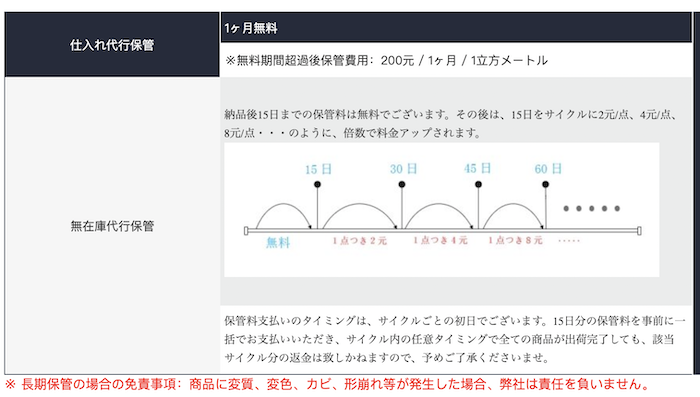
HubBuyer, an import agency specializing in sourcing from China, offers agency services for importing Chinese products.
Not only do they handle everything from product procurement to delivery, but they also provide product storage services.
This service is particularly useful for drop-shipping businesses.
You no longer need to store products yourself, which significantly reduces inventory risk.
When an order is received from a customer, we ship the products promptly.
This shortens delivery times for customers and improves customer satisfaction.
In fact, some Alibaba users operate without holding inventory.
For example, by utilizing the warehouse storage feature in HubBuyer’s drop-shipping plan, you can purchase two units of a best-selling item, sell one, and store the other in the warehouse.
What is a stock-based business model?
A stock-based business model refers to a business model in which a company buys goods in advance and holds them in inventory, then sells those goods from inventory in response to customer orders.
1. Advantages and Disadvantages of the Stock-Based Business Model
Advantages
Since products can be shipped immediately, delivery times to customers are reduced.
・Quality Control
Since products are stored in-house, we can verify and manage their quality.
・Inventory Management
We maintain constant visibility into inventory levels, and through proper inventory management, we can prevent items from selling out.
Disadvantages
・Inventory Risk
If unsold products remain in inventory, the cost of those products becomes a loss.
・Warehouse Management Costs
You need a warehouse or storage space to store products, and operating and managing these facilities incurs costs.
・Cash Flow
Purchasing large quantities of merchandise requires an initial investment, and securing the necessary funds can be difficult.
2. Success Factors for Inventory-Based Businesses
The success of a stock-based business depends on a combination of several factors.
As with drop-shipping businesses, market analysis and forecasting are extremely important.
This is because maintaining inventory that matches customer demand minimizes risks such as stockouts and excess inventory.
This involves market trends, seasonal fluctuations, and the competitive landscape.
Next is the efficiency of inventory management.
Maintaining inventory at appropriate levels streamlines the entire process from product buying to product selling, ultimately improving customer satisfaction. Furthermore, efficient inventory management impacts the business’s cash flow.
Furthermore, product quality and customer service are inextricably linked.
By consistently maintaining product quality and responding quickly and accurately to customer inquiries and complaints, you can earn customer trust.
By establishing an efficient logistics system and delivering products reliably and quickly to customers, you can enhance customer satisfaction while promoting repeat business.
The importance of warehouse management must not be overlooked.
Properly managing the entire workflow within the warehouse—including product storage conditions, picking and packing processes, and inventory tracking and updates—is essential for maintaining product quality.
For businesses that carry inventory, the recommended sourcing channel is Alibaba
For a drop-shipping business, we recommend "Alibaba" as a sourcing platform.
Since it brings together manufacturers, suppliers, exporters, and importers from all over the world, it’s ideal for purchasing large quantities of a wide variety of products.
1. What is Alibaba?
Alibaba is China’s largest B2B (business-to-business) e-commerce platform and an online marketplace that facilitates transactions between businesses.
Generally, products on Alibaba are sold in bulk (lots), and unit prices are set low.
This makes it possible to purchase large quantities of goods and keep unit costs low through bulk buying.
This makes it an ideal sourcing destination for companies that maintain their own inventory.
2. How To Source Products on Alibaba
Searching for products on Alibaba is relatively intuitive; simply enter a product name or category into the search bar to find products offered by numerous suppliers.
Additionally, if you want to set more specific criteria, you can use the advanced search filters.
This allows you to search for products based on specific criteria, such as minimum order quantity (MOQ), price range, and supplier location.
Furthermore, Alibaba offers a service called "Trade Assurance."
This service guarantees that the transaction will proceed as agreed upon in the contract with the supplier.
If you are looking for a new supplier to do business with, it is a good idea to prioritize suppliers that offer "Trade Assurance."
When searching for products on Alibaba, it is important to verify the supplier’s reliability and the product’s quality.
This includes checking the supplier’s details page and carefully reviewing their transaction history, ratings, and detailed product specifications and images.
You can also verify the quality of the products yourself by ordering product samples.
3. The Transaction Process on Alibaba
Go to the Alibaba website and search for products.
Enter the product name or category, and once you find a suitable product, review the supplier’s details and product specifications.
Next, order samples if necessary.
This allows you to verify the product quality firsthand.
If the sample meets your quality standards, contact the supplier to negotiate prices and adjust the minimum order quantity.
Once you have reached an agreement on price and quantity, proceed with the order.
Typically, a contract is signed, and the order is placed based on that contract.
Using Alibaba’s “Trade Assurance” program guarantees that the transaction will proceed as agreed.
Make the payment and wait for the goods to be shipped.
Once the goods are shipped, you will usually be provided with a tracking number so you can check the delivery status.
4. Points to Note on Alibaba and Avoiding Problems
The first thing to consider is the supplier’s reliability.
When conducting transactions on Alibaba, check the supplier’s rating, transaction history, and feedback from other customers.
In particular, if a supplier offers "Trade Assurance," you can consider that supplier to be highly reliable.
Next, you must carefully evaluate the quality of the product.
It is important to review the product’s detailed specifications and examine the provided images carefully.
If possible, we recommend ordering a product sample to verify the quality.
Communication during the transaction process is also important.
Maintaining clear communication is key to avoiding problems and ensuring a smooth transaction.
All communications during the transaction are recorded and can be reviewed later.
Drop Shipping Business Model vs. Inventory-Based Business Model
1. Key Considerations for Choosing a Business Model
・Capital Investment
A no-inventory business model requires minimal initial capital investment, making it an effective option when launching a new business.
On the other hand, inventory-based business models require an initial investment to purchase and store inventory.
Therefore, available funds are a key factor in choosing a business model.
・Control and Quality
In a stock-based business model, you have more detailed control over product quality and shipping.
In a drop-shipping business model, you are heavily reliant on the supplier’s quality and delivery reliability.
・Market Supply and Demand
Market supply and demand also have a significant impact on the choice of business model.
For some niche products, it can be difficult to purchase in large quantities.
The drop-shipping model is well-suited for handling these types of products.
・Risk Tolerance
While inventory-based business models carry the risk of unsold stock, inventory-free models, on the other hand, carry the risk of supply uncertainty.
Your tolerance for these risks also influences your choice of business model.
・Speed and Scale of Expansion
The drop-shipping business model enables rapid expansion, whereas the inventory-based business model tends to become more efficient as the business grows in scale.
2. Differences in Shipping Costs
In a drop-shipping business model, you must consider the shipping costs involved in sending products directly to customers.
Specifically, in a drop-shipping model where products are shipped directly from the manufacturer or wholesaler to the customer, shipping costs can vary significantly depending on the product’s weight, size, and destination.
These costs directly impact product pricing and profit margins, making them critical factors in the success of the business.
In a drop-shipping business, since products are shipped directly to customers, the weight of the shipment is typically relatively light, allowing shipping costs to be kept low.
On the other hand, in a stock-based business model, you must consider both the shipping costs from the manufacturer or wholesaler to your own warehouse or store, and the shipping costs from your own facility to the customer.
Purchasing large quantities of products at once and storing them in your own warehouse may allow you to save on shipping costs to some extent.
However, this also incurs costs for warehousing and storage space, as well as inventory management.
Let’s look at a real-world example based on the practices of HubBuyer, a Chinese sourcing agent.
This shows the shipping cost per kilogram when sending goods from China to Japan (the company’s location) using a stock-holding model.
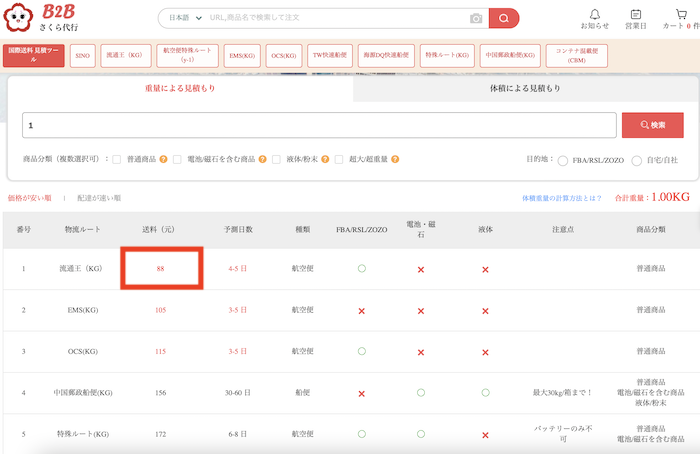
You can see that the cheapest shipping cost is 88 yuan (approximately 1,700 yen).
Next, here is the shipping cost per kilogram when sending goods from China to Japan (to the customer) on a drop-shipping basis.
At HubBuyer, we use Yamato Transport’s international service for drop-shipping.
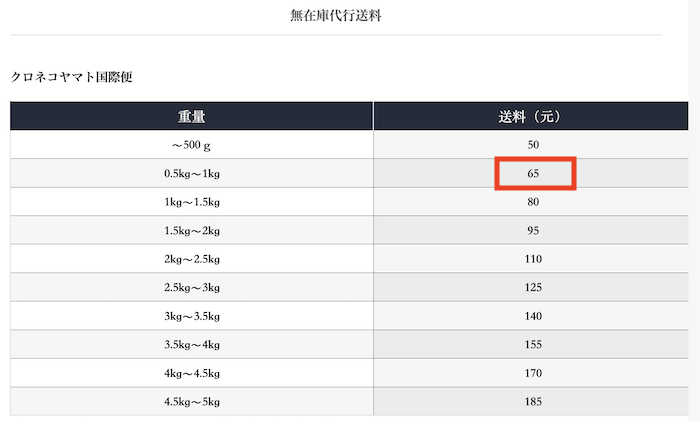
This costs 65 yuan (approx. 1,250 yen).
Comparing the two, it’s clear that the drop-shipping business model has lower shipping costs.
3. Which business model should you choose?
The one which you should choose will depend on various factors, such as the nature of your business, cash flow, risk tolerance and the scale of the business you aim to build.
It is necessary to analyze your business situation in detail and weigh the risks against the potential returns.
Additionally, you have the option to start with a drop-shipping business and transition to a stock-based business once your business has grown.
Summary
What did you think?
It’s a good idea to remember that Taobao is best for drop shipping, while Alibaba is best for inventory-based businesses.
By understanding each business model and the characteristics of the suppliers best suited to them, you can run a more efficient import business.
However, regardless of which business model you choose, you’ll need to consider many factors, such as building trust with suppliers, managing product quality, and mitigating risks.
Furthermore, whether you’re running a drop-shipping or a stock-based business, success depends not only on product selection but also heavily on effective marketing strategies and customer service.
Leverage your company’s strengths and develop a strategy that aligns with your goals.
At HubBuyer, we wholeheartedly support your success as you grow your China import business.
If you have any questions or concerns, please feel free to contact us at any time.
Leave your Alibaba and Taobao sourcing, as well as FBA direct shipping, to HubBuyer. Leave your China sourcing process to the HubBuyer.